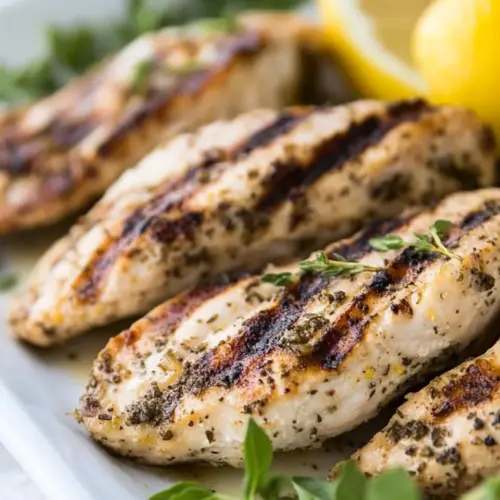
Grilled Lemon Herb Chicken
Grilled Lemon Herb Chicken delivers bright citrus, savory garlic, and a golden sear for an easy weeknight dinner. Juicy chicken marinated in fresh lemon juice, olive oil, and herbs gives a crisp, flavorful result that is perfect for salads or wraps. Simple ingredients, quick prep, and high impact taste make it a go to for busy evenings and casual gatherings.
Equipment
- Grill
- Griddle
- Mixing Bowl
- Whisk
- Rolling Pin
Ingredients
- 1/4 cup fresh lemon juice about 2-3 lemons, depending on size Provide bright, tangy acidity to tenderize the chicken and balance rich flavors; helps break down proteins for a more tender texture and contributes essential citrus aroma to the marinade.
- 2 cloves garlic crushed OR 1 teaspoon garlic powder Add pungent aromatic depth and savory bite when crushed, or provide a convenient savory garlic note when using powder; supports overall umami and pairs well with lemon and herbs.
- 1 teaspoon onion powder Contribute concentrated savory-sweet onion flavor without adding moisture; enhances overall savory profile and complements garlic and herbs in the marinade.
- 2 tablespoons olive oil Bring rich, fruity fat that carries and melds flavors while helping the marinade coat the chicken; also promotes even browning and prevents sticking during grilling.
- 1/2 teaspoon kosher salt plus more to taste Introduce essential salinity to heighten flavors and season the chicken; helps extract moisture in the marinade for improved seasoning penetration and balance.
- 1/2 teaspoon ground black pepper plus more to taste Provide warm, slightly sharp heat that layers with other seasonings; supports overall seasoning balance and enhances the perception of savory flavors.
- 1 teaspoon Italian seasoning Impart a fragrant blend of Mediterranean herbs that reinforces savory, earthy notes and complements lemon and garlic; adds complexity and a classic Italian flavor profile.
- 1 pound chicken breasts or chicken breast tenders Serve as the primary protein base for the recipe; readily absorbs the marinade, grills quickly, and yields tender, juicy slices when properly cooked.
- Chopped fresh parsley for garnish Add fresh, herbaceous brightness and color as a finishing touch; enhances aroma and provides a mild, clean contrast to the grilled, savory chicken.
Instructions
- Whisk together lemon juice, garlic, onion powder, oil, salt, pepper, and seasoning.: The moment you whisk these elements they release a bright bouquet and the oil begins to emulsify, carrying the aromatic oils from the garlic and herbs. You should notice the liquid shimmer as the olive oil disperses, and the smell will be a mix of citrus sharpness and warm spice. This step matters because it ensures even flavor distribution across the chicken . A common mistake is not whisking long enough, leaving oil separated, which can cause uneven coating. If that happens, whisk a little longer or use a jar with a tight lid and shake vigorously until combined.
- If you’re using chicken breasts, pound lightly with a rolling pin to make them even in size.: When you flatten the thicker parts of the chicken the texture becomes consistent and the pieces cook uniformly, which prevents dry edges and undercooked centers. As you pound, you will feel the fibers relax and the flesh become more pliable, and the surface will take on a slightly velvety look. This helps achieve an even golden crust on the grill. Don’t overdo it, as pounding too thin can make the meat tenderize into a mushy texture. Use a piece of plastic wrap to protect the meat and your counter while pounding.
- Place marinade on chicken. Let soak for 15-30 minutes.: As the chicken soaks, the acid in the lemon juice begins to gently break down surface proteins, creating tenderness, while the aromatics permeate the meat. You may notice the marinade becoming slightly more opaque as it mingles with meat juices. Fifteen minutes gives a bright lift, while thirty minutes deepens the flavor. Avoid marinating much longer than an hour for breasts, because too much acid can make the texture mealy. If you are short on time, even a quick 15 minute soak will impart noticeable flavor.
- Preheat grill or griddle to medium-high heat. Lightly oil grill and grill chicken on both sides until done in the middle. Serve warm or room temperature.: Heating to medium high ensures a quick sear that locks in juices and creates appealing grill marks. When the surface is ready it will shimmer, and if you carefully hover your hand a few inches above, you will feel steady radiant heat. Preheating also helps prevent sticking. A common error is placing meat on a cold grill which causes it to cook slowly and lose moisture. Ensure the grates are clean and lightly oiled to promote a crisp exterior.
- This chicken goes great on salad!: As the chicken hits the grate you should hear a satisfying sizzle and quickly see the outer edges begin to brown and caramelize. That sound and color signal the Maillard reaction which brings savory depth. Cook until the internal temperature reaches a safe level for poultry, and juices run clear, watching for flare ups that can char too aggressively. If you see blackened spots forming too quickly, move the piece to a cooler part of the grill. Overcooking is the most common mistake here, so check early and often.
- Serve warm or room temperature: Letting your chicken rest briefly after grilling allows juices to redistribute, giving a moist bite and a calmer aroma. The surface will cool slightly, and if you slice it you will notice juices settle rather than spill out. Serving at room temperature can highlight the marinade flavors more clearly. Avoid slicing immediately after grilling as that encourages juice loss and a drier result.
- This chicken goes great on salad: When placed on greens, the grilled pieces meld with dressings and vegetables, adding texture and savory brightness. The charred edges provide contrast to crisp leaves, while the citrus notes cut through creamy dressings. A frequent oversight is adding hot chicken directly to delicate greens, which can wilt them; let the meat cool slightly before assembling to keep the salad fresh and vibrant.
Notes
- Tip 1 Use room temperature chicken before grilling: Cold meat straight from the fridge will take longer to cook and may end up uneven. Allowing it to sit briefly helps it reach the right internal temperature more quickly, creating a juicier result.
- Tip 2 Pat the chicken dry before grilling if it is too wet: Excess surface moisture interferes with browning, so a quick blot with paper towels encourages crisp searing rather than steaming.
- Tip 3 Reserve some marinade for basting sparingly: Use a small amount while grilling to boost flavor, but avoid heavy basting which can cause flare ups and charring on the grill surface.
- Tip 4 Watch for flare ups when using high heat: Move pieces to a cooler zone to prevent burning and to maintain an even crust without bitter char.
- Tip 5 Slice against the grain for tender bites: Cutting across the muscle fibers shortens them and makes each piece easier to chew, improving the eating experience.