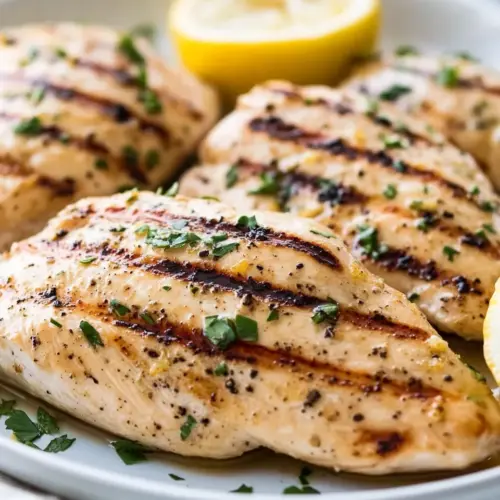
Grilled Lemon Chicken
Grilled Lemon Chicken delivers bright, zesty flavor with a tender, juicy interior. This easy weeknight dinner uses a simple lemon and olive oil marinade for a crisp, charred exterior and savory finish that is perfect for salads, bowls, or family meals, making it a versatile, crowd pleasing choice to make again and again.
Equipment
- Grill
- Instant read thermometer
- Mixing Bowl
- Freezer safe plastic bag
- Tongs
Ingredients
- 1/2 cup lemon juice Adds bright, tangy acidity to tenderize the chicken and balance richer flavors; use freshly squeezed lemon juice for the best brightness and aroma. Helps break down proteins for more tender meat when used in the marinade for at least 30 minutes. Also contributes a citrusy aroma that pairs well with herbs and olive oil.
- 1/4 cup olive oil plus more for oiling the grill Provides a silky base for the marinade and helps carry fat-soluble flavors across the chicken; use extra-virgin olive oil for fruity complexity. Lubricates the grill grates when brushed on to prevent sticking and promotes even browning. Adds subtle richness that balances the lemon juice.
- 1 teaspoon kosher salt Enhances overall savory flavor and helps season the chicken throughout; kosher salt dissolves well in the marinade for even distribution. Adjust quantity to taste or dietary needs, and remember it also helps proteins retain moisture during cooking.
- 1/2 teaspoon freshly ground black pepper Adds mild heat and aromatic depth to the chicken; freshly ground black pepper gives a more pronounced, vibrant flavor than pre-ground. Use it to season both marinade and finished chicken for a warm, peppery bite that complements lemon and herbs.
- 1 teaspoon fresh thyme leaves or 1/4 tsp dried Imparts herby, floral notes that complement the lemon and enrich the marinade's profile; fresh thyme leaves provide brighter flavor while dried is more concentrated. Sprinkle into the marinade and pat onto the chicken to infuse savory, aromatic character during grilling.
- 2 pounds boneless, skinless, chicken breasts (see note 1) Serves as the primary protein providing hearty substance and texture; boneless, skinless breasts cook relatively quickly and absorb marinade flavors well. Pound to even thickness if needed to ensure uniform cooking and avoid overcooking, and consider brining briefly if extra juiciness is desired.
Instructions
- In a small bowl, whisk together lemon juice, olive oil, salt, pepper, and thyme leaves. Place the chicken in a large freezer-safe plastic bag. Pour in marinade, squeeze out air and close the bag. Mash until chicken is evenly coated. Place the plastic bag in a dish and refrigerate at least 30 minutes or overnight.: The aroma of fresh lemon juice will be immediate, sharp and clean, and you will notice the oil smoothing the mixture into a glossy emulsion. Whisking breaks the tension between acid and fat so the flavors marry, which helps the marinade cling to the chicken surface. A common mistake is under-whisking, which leaves the oil separated, causing uneven coating. If the mixture smells flat, add a pinch more salt to amplify taste.
- Preheat grill over medium-high heat for 5 minutes. Oil grates. Place chicken over direct heat on the grill, close the cover, and grill 5 minutes on each side, turning once.: As you put the chicken into the bag, press out obvious air pockets so the marinade can surround each piece. The tactile feel is important, you should be able to move the pieces and see them glisten. Using a freezer-safe bag prevents leaks and makes massaging the marinade easy. Avoid overcrowding the bag, which can prevent even coverage and lead to patchy seasoning.
- Transfer chicken to indirect heat and continue to cook until an internal thermometer inserted into the thickest part of the largest chicken breast reaches 165 degrees, 5 to 10 minutes longer. Remove to a cutting board and tent with foil for 10 minutes. Slice or chop if desired.: Pouring will release a bright lemon scent that should feel lively, not overpowering. Squeeze the bag gently until the marinade distributes and every surface of the chicken has contact. This circulation lets acid tenderize the outer layer and herbs to cling. A pitfall here is letting the chicken sit in too small a quantity of liquid without massaging, which can leave some spots uncoated; massaging ensures full contact.
- Mash until chicken is evenly coated: Run your hands along the bag and feel for slick, evenly moistened meat. The sound is minimal but you will see the marinade smear and cling. This tactile step matters because it speeds absorption and prevents pockets of dry meat. If you skimp on this, the grilled surface can be uneven in flavor and texture, with some bites tasting under-seasoned.
- Place the plastic bag in a dish and refrigerate at least 30 minutes or overnight: In the fridge the citrus will slowly work on the surface, and the scent will mellow into a balanced, fragrant profile. You will notice tightness in the texture after long marination, which is normal and results in a tender bite after cooking. A common error is marinating too long in a strong acid, which can make the outer layer mealy, so for breasts try to stay within the 30 minute to overnight window depending on thickness.
- Preheat grill over medium-high heat for 5 minutes: When the grill reaches temperature you will feel a steady heat if you hold your hand a few inches above the grates, and the metal may shimmer visually. Preheating ensures immediate sear and prevents sticking. Skipping this step often causes the chicken to cling and tear when you try to turn it, so be patient and let the grates get hot.
- Oil grates: Oiling the grates adds a faint scent of toasted oil and creates that satisfying sizzle when the meat hits the metal. Use a high smoke point oil and a folded towel to rub the grates carefully. If you forget to oil, your chicken is more likely to stick and lose its pretty grill marks, which affects both appearance and texture.
- Place chicken over direct heat on the grill, close the cover, and grill 5 minutes on each side, turning once: The immediate contact will create audible sizzling and the surface will begin to brown and release a nutty, caramelized aroma. Turning once helps build a uniform crust, while closing the cover traps heat for even cooking. Avoid flipping repeatedly, which prevents a steady sear and can dry the surface.
- Transfer chicken to indirect heat and continue to cook until an internal thermometer inserted into the thickest part of the largest chicken breast reaches 165 degrees: Moving to indirect heat lets the interior come up to temperature without burning the exterior. You will hear quieter cooking sounds and see the juices settle on the surface. Rely on an instant read thermometer rather than guessing, because undercooked chicken is unsafe and overcooked chicken becomes dry. A common mistake is pulling too early, which results in an underdone center, so wait for that 165 degree target.
- Remove to a cutting board and tent with foil for 10 minutes: Resting is when juices redistribute, so the meat feels juicier and more cohesive when sliced. You may notice the aroma deepen as the meat cools slightly. Tent loosely so steam does not make the surface soggy. If you skip resting, the juices will run out when cut and the texture will be drier.
- Slice or chop if desired: Slicing across the grain yields tender bites and releases a small pop of steam and savory aroma. The visual cue is a moist interior with a glossy surface. Choose a sharp knife and let the meat rest to preserve moisture. Chopping immediately after cutting can compress the texture, so slice smoothly for best presentation.
Notes
- Marinate shorter for texture control — If you need to speed things along, marinate for 30 minutes and the chicken will still have plenty of flavor without risking the surface turning mealy from too much acid exposure.
- Use thyme or dried herbs interchangeably — Fresh thyme gives a brighter herb note, while dried is more concentrated; if using dried, reduce the quantity to avoid an overpowering earthy tone.
- Oil the grates for clean searing — Brushing the grill grates with a little oil right before placing the chicken prevents sticking and helps produce attractive grill marks that also enhance flavor through caramelization.
- Butterfly thick breasts for even doneness — Splitting a thick breast into even pieces ensures everything finishes at the same time and avoids a dry exterior with a cold center.
- Make extras for meal prep — Grill a double batch and store cooled portions in the fridge for up to four days so you can toss pieces onto salads and bowls during the week without extra cooking.