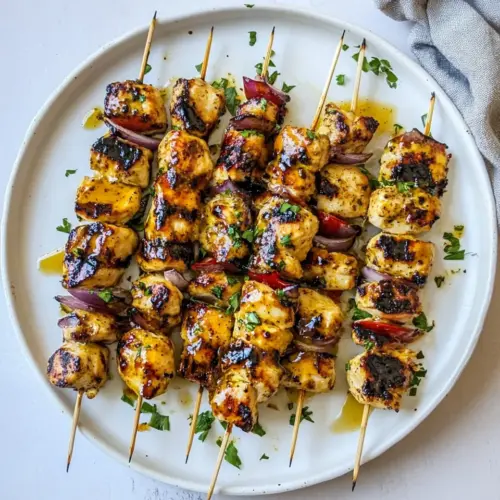
Grilled Honey Mustard Chicken Skewers
Grilled Honey Mustard Chicken Skewers are an easy weeknight dinner that balances sweet, tangy, and smoky flavors. Tender chicken and charred vegetables are brushed with a glossy honey dijon glaze for a crispy caramelized finish. Fast to cook and crowd friendly, this recipe is ideal for summer grilling and makes a satisfying, simple meal you will want to repeat.
Equipment
- Grill
- Tongs
- Mixing Bowl
- Skewers
- Instant read thermometer
Ingredients
- 1 pound boneless, skinless chicken breasts, cut into cubes Provide tender, lean protein that soaks up the honey mustard marinade; cubes grill quickly and develop a smoky crust while remaining juicy inside. Use evenly sized pieces to ensure consistent cooking and safe internal temperature. Marinating for at least 30 minutes improves flavor penetration and helps bind to skewers.
- 2 bell peppers, chopped into 1 inch pieces Add vibrant color, sweet crunch, and a slightly vegetal flavor that balances the tangy marinade; chop into 1-inch pieces so they cook at the same rate as the chicken. Grill briefly to soften edges while keeping some firmness for texture contrast. Can be alternated on skewers to distribute moisture and flavor.
- 1 zucchini, cut into rounds Bring mild, slightly sweet, and tender flesh that grills quickly and absorbs charred notes; cutting into rounds creates uniform pieces that complement peppers and onion. Maintain similar thickness to other vegetables to avoid under- or overcooking. Light brushing with oil prevents sticking to the grill.
- 1 red onion, chopped into 1 inch pieces Contribute sharp, savory bite and caramelized sweetness when grilled; chopping into 1-inch pieces yields even cooking alongside other skewer components. Caramelization enhances the honey mustard profile and adds depth to each bite. Separate layers slightly on skewers so heat circulates and cooks evenly.
- kosher salt and pepper Season dishes for balanced flavor, enhancing both savory and sweet elements while controlling overall taste; adjust amounts to personal preference and recipe requirements. Use kosher salt for even distribution and coarser grains that are easy to pinch, and freshly ground pepper for aromatic heat. Apply sparingly at first and taste after cooking to avoid over-salting.
- 1/3 cup + 3 tablespoons dijon mustard Provide concentrated tang and sharpness that forms the acidic backbone of the marinade; measure carefully as Dijon can dominate if overused. Combine with honey and oil to create a smooth emulsion that clings to chicken and vegetables. Adds depth and a subtle spicy note that complements grilling.
- 1/4 cup + 2 tablespoons honey Supply natural sweetness and help balance the mustard's acidity while promoting caramelization during grilling; adjust amount for desired sweetness. Mix with mustard and oil to form a glossy glaze that browns nicely on the grill. Also helps create a sticky coating that enhances appearance and mouthfeel.
- 2 to 3 tablespoons olive oil Prevent sticking and help distribute flavors evenly by coating protein and vegetables; use enough to lightly dress items without creating excess flare-ups on the grill. Choose quality extra virgin or regular olive oil depending on desired smoke point and flavor. Combine with mustard and honey to create a cohesive marinade consistency.
- fresh chives, for topping Finish skewers with a fresh, mild oniony-herb note that brightens the rich, grilled flavors; chop finely and sprinkle as a topping just before serving. Adds color contrast and a subtle allium aroma that lifts the dish. Use sparingly to preserve the delicate texture and avoid overwhelming the glaze.
- jasmine rice, for serving Serve as a neutral, fluffy starch that soaks up extra honey mustard sauce and balances the meal with comforting body and mild aroma. Cook according to package directions for a tender, non-sticky texture that complements the skewers. Season lightly after cooking to tie together the plate.
Instructions
- Chop the chicken into pieces.: The surface of the chicken should smell fresh and neutral as you cut it, and you will notice clean white flesh giving way under your knife. Uniform cubes ensure even cooking and prevent some pieces from drying while others finish raw. If you rush this step and leave wildly different sizes, you risk undercooked centers or overdone edges, so take the extra time to match pieces. A common mistake is crowding the cutting board, which can cause slippage; use a stable board and a sharp knife for clean cuts.
- Make sure to chop the vegetables to be roughly the same size as the chicken pieces - in larger chunks. This helps the skewers stay uniform in size and helps everything cook in around the same amount of time.: When the bell peppers , zucchini , and red onion are cut into larger, consistent chunks, you will see steam and slight charring at their edges while the interiors stay tender. This visual cue means everything cooks evenly, producing satisfying texture contrasts. The reason this matters is that mismatched sizes lead to either raw vegetables or overcooked chicken . One troubleshooting tip is to line up the pieces side by side before skewering to double check uniformity.
- Whisk together the 1/3 cup dijon, 1/4 cup honey and 1 tablespoon olive oil.: As you whisk, the mixture will turn glossy and slightly thick, and the aroma will brighten with mustard tang and a hint of sweetness. This marinade helps flavor the surface and encourages caramelization on the grill, so whisk until smooth to ensure even coating. If the mixture separates, keep whisking until it emulsifies, and avoid adding too much oil at once or the emulsion may break.
- Make 5 to 6 chicken skewers: skewer a few pieces of vegetables first, then a chunk of chicken, more vegetables, a piece of chicken and so on. I do about 4 to 5 pieces of chicken per skewer, but this is totally up to you! Do as many as you wish. Season them all over with salt and pepper.: While assembling, you will hear the gentle clack of wooden or metal skewers as pieces meet, and the layered arrangement of vegetables and chicken creates visual rhythm. This step matters because balanced skewers cook predictably and are easy to turn on the grill. A common misstep is overcrowding a skewer which can trap steam and prevent browning, so leave slight gaps for heat circulation. If using wooden skewers, soak them first to reduce charring.
- Once all the skewers are ready, place them on a baking sheet. Drizzle and brush most of the honey + dijon marinade mixture all over the skewers. Reserve the rest for after grilling. Let marinate for 15 to 20 minutes.: When you brush most of the marinade over the skewers, look for a thin glossy coating that clings to the surface. Letting them rest allows flavors to start penetrating the outer layer without making the vegetables soggy. If you marinate too long, especially with salt, the chicken can become overly soft on the exterior, so adhere to the suggested brief marinating window. A troubleshooting note is to reserve some marinade for finishing so you do not waste the most flavorful portion.
- Preheat the grill to the highest setting. In a small bowl, I whisk together the other 2 tablespoons of honey and 3 tablespoons of dijon, for brushing the skewers while grilling. This is optional but very delicious!: A screaming hot grill will give you fast searing and attractive char marks, and you will smell that first toasty note as the grates heat. Preheating prevents sticking and ensures immediate caramelization when the skewers hit the grates, which seals juices inside the chicken . Avoid placing cold skewers on a lukewarm grill, which can lead to prolonged cooking and dryness. If flare ups occur, move skewers to a cooler zone until flames subside.
- Place the skewers on the grill. Close the lid and grill for 5 minutes, then use grill tongs to gently turn them and grill for a few more minutes. Turn again once or twice more. I find these take about 10 to 12 minutes total - but make sure your chicken is at 165 degrees F when the internal temp is taken. A few minutes before they are finished, I brush them all over with the extra honey dijon.: This extra glaze will be shinier and slightly thicker, perfect for brushing on during the final minutes. The aroma will deepen as the sugars mingle with mustard, and applying it while the skewers cook helps build layers of flavor and shine. Be careful because the sugars can begin to burn if left over direct high heat too long, so brush sparingly and time it near the end. If the glaze becomes too thick, thin it with a touch of olive oil.
- Remove the skewers from the grill. You can brush with the reserved honey dijon. Serve with the jasmine rice.: When the skewers hit the hot grates you will hear a satisfying sizzle and see immediate searing, which indicates good contact. Closing the lid traps heat and cooks evenly, while periodic turns help develop even char. The goal is audible sizzle and golden to slightly darkened edges, not complete blackening. A frequent error is flipping too often; allow each side a few minutes to develop color before turning. Use tongs to turn gently so pieces do not slide off the skewers.
- Grill for 5 minutes, then use grill tongs to gently turn them and grill for a few more minutes: After the first interval you should notice browned patches and a fragrant, toasty scent. Turning exposes new surfaces to the searing heat and helps render the marinade into a sticky glaze. Continue turning once or twice to ensure even cooking; the visual cue is golden char and the juices running clear. Avoid leaving them unattended, because high heat can go from perfect to burnt quickly. If the grill is running hot, move skewers to an indirect zone to finish.
- I find these take about 10 to 12 minutes total: Use a thermometer to confirm the chicken interior reaches 165 degrees F, which guarantees safety while preserving juiciness. The texture should be springy with a slight give, and juices should run clear not pink. Relying on time alone can be misleading due to grill variability, so check internal temperature for accuracy. A common mistake is removing skewers too early; tent them briefly to allow carryover heat to finish cooking if needed.
- A few minutes before they are finished, I brush them all over with the extra honey dijon: This finishing brush will bubble slightly and create a shiny, slightly sticky glaze that clings to the charred edges, enhancing aroma and taste. Apply in thin layers to avoid pooling and burning of sugars, watching for a glossy sheen as your cue. If you brush too early, the sugars can char and taste bitter, so reserve this step for the end. If you see excessive smoke, lower the heat and finish with the lid open.
- Remove the skewers from the grill: Once off the heat, the skewers will continue to smell warm and inviting, and the glaze will set slightly as they rest. Brushing with any reserved honey dijon after removing preserves shine and intensifies flavor without subjecting sugars to direct flame. Allow a short rest of a few minutes before serving to let juices redistribute. Carving or cutting immediately can cause juices to run out and leave the chicken drier than desired.
- You can brush with the reserved honey dijon: This final touch adds freshness to the glaze and reinforces the sweet tang profile. It will feel silky between your fingers and smell like warm honey and mustard melded together, which makes plating more appealing. Add chopped chives as a finishing flourish to introduce a fresh herbal note. If you skip this, the skewers are still delicious, but the layering effect is less pronounced.
- Serve with the jasmine rice.: The soft, aromatic jasmine rice soaks up any extra sauce, making each bite cohesive and comforting, and its gentle fragrance pairs beautifully with the grilled notes. Scoop rice onto warm plates, place skewers on top, and sprinkle with fresh chives to finish. Be mindful to keep rice warm until service, as cold rice can make the meal feel disconnected. If plating ahead, cover rice loosely to preserve steam and texture.
Notes
- Tip on timing Precut and assemble skewers up to 30 minutes ahead and keep them chilled until the grill is ready so the exterior does not become oversaturated with marinade.
- Tip on glazing Apply the finishing honey dijon during the last few minutes on the grill to create a shiny, caramelized coating, and avoid applying it too early to prevent burning.
- Tip on char control If flare ups start, move skewers to a cooler part of the grill to finish cooking through without excessive blackening.
- Tip on skewer selection Use metal skewers if you plan to grill frequently, they conduct heat and help cook interiors more evenly than wooden ones.
- Tip on rice Keep the jasmine rice covered and warm until serving so it remains fluffy and ready to soak up the glaze from the skewers.