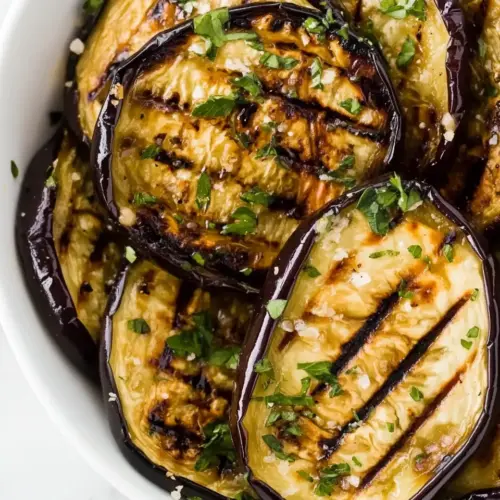
Grilled Eggplant
Grilled Eggplant is smoky, tender, and easy to make with simple ingredients like olive oil, garlic, and fresh herbs. This versatile vegetable dish works as an easy weeknight side or a make ahead component for sandwiches and bowls. Expect crisp edges, a creamy interior, and bright herbal notes that make it impossible not to serve again.
Equipment
- Grill or Oven or Skillet
- Wire rack and baking sheet
- Small Bowl
- Knife and cutting board
Ingredients
- 1 large eggplant or 2 medium eggplants (choose one that is longer than it is wide for smaller diameter slices) Slice and salt to draw out moisture and bitterness; rinsing and patting dry improves texture and helps achieve tender, smoky grilled flesh. Use longer eggplants for more uniform rounds that grill evenly and develop a caramelized surface.
- sea salt or kosher salt Season generously to enhance natural flavors and help balance the eggplant's richness; sprinkle before or after grilling depending on desired crust and moisture retention. Opt for coarse sea or kosher salt to provide a clean, bright seasoning.
- 1/3 cup extra virgin olive oil, plus more as needed Brush liberally to prevent sticking and to promote even browning; extra virgin olive oil also adds fruity depth and helps carry the herbs and garlic flavors into the flesh. Reserve a little oil for finishing or for brushing the grill grates.
- 3 cloves garlic Crush or mince and mix into oil or a finishing drizzle to impart pungent, aromatic heat that penetrates the eggplant's flesh. Rub onto slices before grilling or toss into the finished dish for fresh, pronounced garlic flavor.
- 1 tablespoon chopped fresh herb of choice (thyme, oregano, basil, rosemary, etc) Chop finely and scatter to introduce herbal brightness and aromatic complexity; choose thyme, oregano, basil, or rosemary to complement the smoky, savory profile of grilled eggplant. Add most herbs toward the end of cooking to preserve their fragrance, reserving a pinch for garnish.
- 1/2 teaspoon freshly ground black pepper Grind fresh to provide mild heat and aromatic complexity that lifts the dish; adding it during seasoning rounds out the flavors without overpowering the delicate eggplant. Use freshly ground pepper for the best fragrance and balanced bite.
Instructions
- Garnish with some chopped parsley if desired. A drizzle of balsamic vinegar or balsamic vinegar reduction is a nice flavor touch.: Warm, bright, and aromatic notes finish the dish, with the fresh herb offering a green contrast to the smoky eggplant . The tiny pop of balsamic adds acidity and a glossy sheen that harmonizes with the roasted sugars, making each bite feel complete. A common oversight is adding garnish too early, which mutes its freshness, so save it until just before serving.
- Slice the eggplant into 1/4 inch to 1/2 inch thick rounds, depending on your preference. You can also slice it into lengthwise strips if you prefer. Lay them in a single layer on a wire rack on top of a baking sheet and sprinkle both sides with some salt. Let them sit for at least 20 minutes to draw out the moisture. Pat both sides with a paper towel. In a small bowl, add the olive oil, garlic, herbs and pepper. Let this sit while the eggplants are resting to enable the garlic and herbs to mingle with the oil. Use a spoon to put a little of the olive oil mixture on each side of the eggplants, using the back of the spoon to spread it across the surface. The eggplants are now ready to cook.: As you slice, the sound of the knife meeting the skin and the feel of the flesh will tell you when the blade is sharp enough. Thinner slices cook quickly and develop good char, while thicker slices stay creamier inside. Visual cues are important here, look for uniform thickness so each piece cooks evenly. A common mistake is using a dull knife, which crushes the flesh and creates uneven surfaces that do not brown properly.
- Cooking Options: How to Grill the Eggplant If you're grilling the eggplant, preheat your grill to medium-high heat (around 400-450°F or 200-230°C). Place the eggplant slices directly on the grill grates and grill for about 3-4 minutes on each side or until they are tender and have nice grill marks. Cooking time may vary depending on the thickness of your slices and the heat of your grill. How to Roast Eggplant in the Oven If you're using the oven, preheat the oven to 400 degrees F (204 degrees C). Lay the eggplant on a lined baking sheet, spoon over the garlic-herb olive oil, and roast for 30-35 minutes or until the eggplant begins to brown. How to Pan Fry Eggplant Heat some oil in a skillet over medium heat. Add the eggplant in batches and fry for 3-6 minutes on each side or until softened and browned. Place the finished eggplant in a warmed oven while you finish cooking the remaining eggplant. Add more oil to the skillet as needed. You can use a ribbed cast iron skillet to get those nice grill marks.: As the salted slices rest, you will notice small beads of moisture appear on the surface, a sign the salt is drawing water out. This step helps the texture by preventing a watery interior and encouraging caramelization when cooked. The subtle sound of tiny droplets forming, and later patting them away, is part of the rhythm. Avoid piling slices on top of each other, which traps moisture and prevents proper drying.
- Serve the eggplant with some chopped parsley for garnish if desired. For an additional flavor boost you can give the eggplant a light drizzle of balsamic vinegar or balsamic vinegar reduction. To bump things up even further you can sprinkle some crumbled feta cheese over them.: After resting, the surface will feel less slick, and patting will remove any excess liquid and dissolved salt. This yields more efficient browning and a concentrated flavor. If you skip this, you risk a steamed, pale result rather than a golden, savory one. A typical error is not allowing enough time for drainage, which compromises the finishing texture.
- In a small bowl, add the olive oil, garlic, herbs and pepper. Let this sit while the eggplants are resting to enable the garlic and herbs to mingle with the oil.: You will begin to smell the garlic and herb oils coming together, a heady aroma that previews the finished dish. This brief mingling allows the flavors to infuse into the oil without cooking the garlic, preserving its brightness. If you let it sit for too long in warm conditions, the garlic flavor can become overly dominant, so keep it brief and store at room temperature only for short periods.
- Use a spoon to put a little of the olive oil mixture on each side of the eggplants, using the back of the spoon to spread it across the surface.: As you brush the oil, notice the way the flesh darkens slightly and takes on a sheen, which signals it's ready for heat. The oil promotes even browning and prevents sticking, while the garlic and herb flecks cling to the surface. Overapplying oil can lead to an oily final texture, so aim for a light, even coat rather than saturating the slices.
- The eggplants are now ready to cook.: You will see the flesh glisten and feel slightly tacky, an indicator that the surface is primed for searing or roasting. Choose your cooking method and preheat appropriately so the moment they meet heat the transformation begins. A common misstep is to start cooking before the pan or grill is hot enough, which results in a pale, limp finish rather than an attractive, caramelized exterior.
- Cooking Options: How to Grill the Eggplant If you're grilling the eggplant, preheat your grill to medium-high heat (around 400 to 450°F or 200 to 230°C). Place the eggplant slices directly on the grill grates and grill for about 3 to 4 minutes on each side or until they are tender and have nice grill marks. : When grilling, listen for the distinct sizzle as the slices hit the grates, and watch for defined char lines that indicate those flavor rich Maillard reactions. The scent will shift from raw vegetal to toasty and sweet. Thicker slices may need a touch more time, while thinner ones will char quickly, so stay attentive. Avoid constantly flipping, which prevents proper searing and can tear the flesh.
- How to Roast Eggplant in the Oven If you're using the oven, preheat the oven to 400 degrees F (204 degrees C). Lay the eggplant on a lined baking sheet, spoon over the garlic herb olive oil, and roast for 30 to 35 minutes or until the eggplant begins to brown.: In the oven, the heat concentrates the natural sugars, producing a deep, sweet aroma and a tender, almost creamy interior. Listen for a gentle hissing and look for golden edges and bubbling oil. Rotating the pan once helps ensure even browning. A frequent mistake is overcrowding the sheet pan, which causes steaming instead of roasting, so give each slice breathing room.
- How to Pan Fry Eggplant Heat some oil in a skillet over medium heat. Add the eggplant in batches and fry for 3 to 6 minutes on each side or until softened and browned.: Pan frying offers direct contact and quick browning, creating a savory crust and a soft interior. You will hear a lively sizzle and smell the toasty aroma as the sugars caramelize. If the pan becomes too crowded, the temperature will drop and the slices will steam rather than brown, so work in batches and add oil as needed. Using a cast iron skillet will intensify the sear and create attractive marks.
- Place the finished eggplant in a warmed oven while you finish cooking the remaining eggplant. Add more oil to the skillet as needed.: Holding the cooked slices in a warm oven keeps them tender and ready to serve without overcooking, preserving texture and temperature. The residual heat melds flavors gently. A common issue is stacking slices too tightly while holding, which leads to sogginess, so arrange them in a single layer if possible.
- You can use a ribbed cast iron skillet to get those nice grill marks.: The contact with ridged iron produces caramelized channels similar to an outdoor grill, and the skillet's mass helps maintain heat when adding more batches. The sizzling and sight of browned ridges are good indicators of progress. Avoid using a cold pan, which will absorb oil and prevent proper searing, resulting in uneven color and texture.
- Serve the eggplant with some chopped parsley for garnish if desired. For an additional flavor boost you can give the eggplant a light drizzle of balsamic vinegar or balsamic vinegar reduction. To bump things up even further you can sprinkle some crumbled feta cheese over them.: The final assembly brings fresh and tangy contrasts to the smoky, rich slices, and the garnish adds visual brightness. The acidity of the balsamic cuts through the oil, and a little crumbled cheese adds salty creaminess. Be mindful adding dairy if you plan to store leftovers with the cheese, as it can change texture in the fridge.
Notes
- Trim and slice with care: Use a sharp knife and aim for consistent thickness so all pieces finish at the same time.
- Salt to extract moisture: Let the slices sit for at least 20 minutes after salting to prevent a watery interior and encourage caramelization.
- Infuse the oil briefly: Combine the olive oil, garlic, and herbs and let them meld for a few minutes to deepen flavor before brushing on.
- Preheat your cooking surface: Whether grill, oven, or skillet, hot equipment ensures immediate searing and better color development.
- Work in batches when pan frying: Crowding lowers the pan temperature and leads to steaming rather than browning, so fry in batches.
- Finish with acid and fresh herbs: A drizzle of balsamic and some chopped parsley or basil at the end brightens the dish and balances the richness.