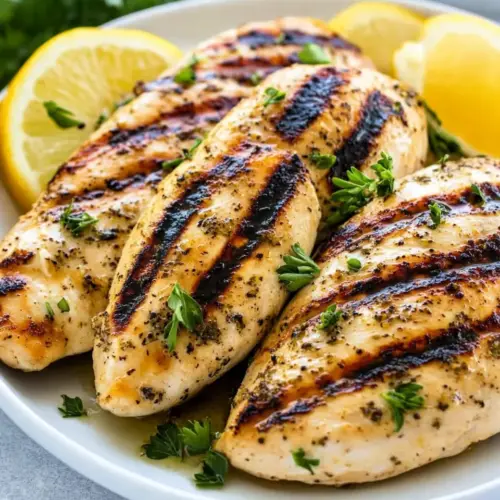
Grilled Citrus and Herb Chicken
Grilled Citrus and Herb Chicken is a bright, easy weeknight dinner that combines zesty lemon and orange with savory dried herbs for a juicy, flavorful result. The quick marinade and short grill time make this a perfect choice when you want something fresh and satisfying without fuss. Try it for summer gatherings or casual family meals, it delivers aromatic, charred edges and tender meat that everyone will love.
Equipment
- Resealable bag
- Grill or Grill Pan
- Microplane or zester
Ingredients
- 2 boneless skinless chicken breasts cut in half Slice into even pieces to ensure uniform cooking; imparts lean protein and a tender texture when grilled, absorbing the citrus-herb marinade for balanced flavor and a satisfying main component.
- 1/4 cup olive oil Whisk thoroughly with citrus juices and herbs to create a glossy, flavorful marinade; provides healthy fats that help carry flavors, prevent sticking on the grill, and keep the chicken moist.
- 2 cloves finely minced garlic Finely mince to release aromatic oils and sharpness; adds pungent savory depth to the marinade that complements citrus and herbs while enhancing browning during grilling.
- zest from 1 lemon Grate finely to capture fragrant oils and brightness; contributes concentrated citrus aroma and a slightly bitter complexity that lifts the overall flavor profile of the dish.
- juice from 1 lemon Squeeze fresh to add bright acidity and tenderizing enzymes; contributes zesty tang that balances richness, helps break down proteins for a more tender bite, and brightens the marinade.
- zest from 1 orange Grate for aromatic sweetness and floral notes; provides a sweeter citrus layer that pairs with lemon for a more complex profile and enhances the grilled aroma.
- juice from 1 orange Squeeze fresh to contribute juicy sweetness and mild acidity; balances lemon with fruity notes, helps tenderize the chicken, and adds a refreshing finish to the marinade.
- 1/2 teaspoon dried basil Sprinkle dried to add herbal warmth and subtle sweetness; offers a gentle basil note that complements citrus and rounds out the herbaceous character of the marinade.
- 1/2 teaspoon dried oregano Add dried to deliver earthy, robust Mediterranean flavor; provides savory depth and a slightly peppery, oregano-driven backbone that pairs well with grilled proteins.
- 1/4 teaspoon dried thyme Use sparingly to provide delicate savory and woody undertones; contributes subtle aromatic complexity and supports the other herbs without overpowering the citrus.
- salt and pepper to taste Season generously to taste for overall balance; enhances and harmonizes all flavors, controls seasoning level, and is essential for bringing out the chicken's natural taste.
- 2 tablespoons chopped parsley Fold in chopped at the end for fresh, bright herbaceousness; adds color, a mild grassy flavor, and a clean finish that refreshes each bite after grilling.
- lemon wedges for serving Serve alongside as an optional garnish to boost acidity and presentation; allows diners to add extra bright citrus juice for personalized tang and visual appeal.
Instructions
- Place the 1/4 cup olive oil, 2 cloves finely minced garlic, zest from 1 lemon, juice from 1 lemon, zest from 1 orange, juice from 1 orange, 1/2 teaspoon dried basil, 1/2 teaspoon dried oregano, and 1/4 teaspoon dried thyme in a resealable bag. Seal and shake to mix.: The moment you combine these ingredients you should notice a burst of citrus aroma, and that oil will visually coat the mixture, creating a glossy marinade. The sensory cue to look for is uniform suspension of herbs and citrus bits in the oil, not separated pools. This mixture matters because the oil helps carry volatile flavors while the acid from the juices begins gentle tenderization of the chicken . One thing to avoid is over zesting in a coarse way, which can leave fibrous pieces that do not blend smoothly; use a fine grater for fragrant, even distribution. If the bag is not sealed well you risk spills and uneven coating, so check the seal before shaking.
- Place the 2 boneless skinless chicken breasts cut in half in the bag, seal, and shake until the chicken is coated with the marinade.: As you add the chicken to the bag, press the air out and move the pieces so they nestle in the marinade, ensuring full contact. When you shake, you should hear the soft slosh of liquid and see the pieces turn glossy, which means they are coated. This technique matters because even coating allows the citrus and herbs to flavor the surface evenly and prevents dry spots during grilling. A typical mistake is overcrowding the bag, which limits movement and leads to patchy seasoning; if you have large breasts, do them in batches. Also, avoid stabbing the meat with a fork to mix, because that releases juices and dries the chicken .
- Refrigerate and marinate for at least 30 minutes or up to 2 hours. Preheat the grill or a grill pan over medium-high heat.: During this resting period the acid will lightly penetrate the outer layer of the chicken , and the aromatics will meld, creating a complex surface flavor. You will notice the marinade slightly thickens as the herbs hydrate. Preheat your grill until it feels hot to the touch and is producing a steady sizzle when you test a drop of water, which indicates it is in the correct medium-high range. This step is key for even searing and those coveted grill marks. Over-marinating beyond two hours can begin to firm the proteins because of the acid, so keep within the recommended window.
- Remove the chicken from the marinade and season both sides generously with salt and pepper to taste. Grill for 4-5 minutes on each side or until chicken is cooked through.: As you place the pieces on the hot grill you should hear an immediate sizzle and smell a burst of citrus and garlic hitting the heat, which is a reassuring cue. Let the chicken sit without moving for a few minutes to develop caramelization and grill marks, then flip once to preserve juiciness. The visual cue for doneness is a golden to light brown exterior with clear juices running and an internal temperature reaching about 165 degrees Fahrenheit. One common mistake is flipping too frequently, which prevents good caramelization and can dry the meat out, so resist the urge to prod. Also, avoid putting wet marinated pieces directly onto the grill as excess liquid can cause flare ups, pat lightly if necessary.
- Remove from the grill and let the chicken rest for 5 minutes. Sprinkle with 2 tablespoons chopped parsley and serve with lemon wedges for serving if desired.: The resting phase is when juices redistribute back into the meat, which you can sense by touch the chicken will feel slightly springy rather than tight. During these minutes the aroma will mellow and the surface will set, making for cleaner slices that retain moisture. Garnishing with fresh parsley adds a green pop and bright herbaceousness, while the lemon wedges let diners add finishing acidity to taste. A frequent misstep is slicing immediately after grilling, which lets the juices escape and results in drier meat, so always wait a short rest before serving.
Notes
- Swap citrus ratios Try more orange and less lemon for a sweeter finish, which will mellow the acid and encourage a gentle caramelization on the grill.
- Add fresh herbs at the end Toss fresh parsley or other quick herbs right after resting to preserve their color and fresh taste rather than cooking them in the marinade.
- Use a grill pan for indoor cooking If outdoor grilling is not possible, a hot grill pan gives similar sear marks and char, just be sure it is preheated to medium high before adding the chicken.
- Control heat to avoid flare ups Trim excess oil from the marinade before grilling to reduce dripping and flames, and keep a spray bottle handy to tame sudden flare ups.
- Rest longer for thicker cuts If your breasts are thicker than halved cutlets, extend the resting time slightly after grilling so the interior finishes gently and juices settle.