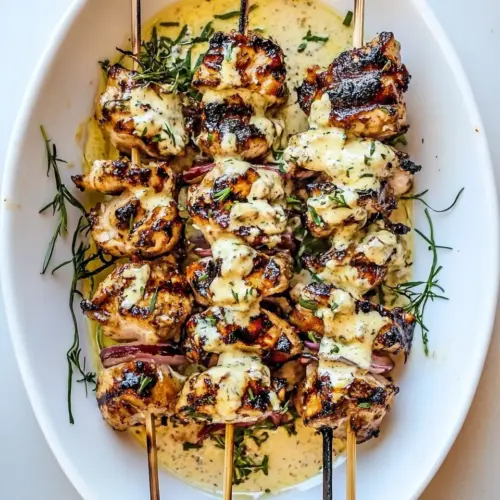
Grilled Chicken Skewers with Alabama White Sauce
Grilled Chicken Skewers with Alabama White Sauce bring crispy, charred chicken skin together with a creamy, tangy Alabama white sauce for an easy weeknight dinner or a show stopping backyard meal. The contrast of crunchy exterior and juicy interior delivers satisfying texture while the peppery sauce brightens every bite. Make the sauce ahead for effortless hosting and a deeply flavorful result.
Equipment
- 5 skewers
- Gas, charcoal, or electric grill
Ingredients
- 2 cups Alabama white sauce Provides a tangy, creamy base for the skewers and serves as a bold finishing sauce that enhances grilled chicken with a mayonnaise-vinegar profile; can be brushed on during grilling and spooned over after serving. Adds moisture and a sharp, slightly sweet contrast that balances smoky char from the grill.
- 4 chicken thighs skin-on Adds rich, juicy meat to the skewers with skin that crisps during grilling to deliver flavorful fat and texture; can be trimmed or left intact depending on desired crispness. Benefits from marinating briefly in the sauce to absorb flavors and helps keep the chicken tender during high-heat cooking.
- 1 tablespoon olive oil Helps to lightly coat the chicken and prevent sticking on the grill while contributing a subtle fruity note; use sparingly to avoid flare-ups from dripping oil. Can be combined with the white sauce or applied directly to the meat before grilling for improved surface browning.
- 2 teaspoons Kosher salt and black pepper Season adds essential savory balance to the dish, with salt enhancing overall flavor and black pepper providing warm, pungent heat; apply evenly to taste before cooking. Adjust the quantity to suit preferences and to complement the acidity of the Alabama white sauce.
- 2 tablespoons chives snipped, for garnish (optional) Finely chopped chives deliver a fresh, mild onion-like brightness as an optional garnish, contributing color and a delicate herbal aroma when sprinkled over finished skewers. Use just before serving to preserve their delicate texture and vivid green appearance.
- 1 tablespoon red pepper flakes for garnish (optional) Adds intense heat and vibrant red color when sprinkled sparingly as an optional garnish; flakes provide visual contrast and a spicy kick that complements the creamy sauce. Use cautiously to avoid overpowering the tangy flavors of the white sauce.
Instructions
- Prepare the white sauce and let chill for 1 hour or up to 3 days.: The bowl of sauce should smell tangy and peppery, with a creamy, slightly thick texture that clings to a spoon. Chilling mellows and melds the flavors, so the first hour is enough to settle the emulsion. If it sits longer, stir before use to re loosen the texture. A common mistake is making the sauce and serving it too cold, which can mute the aromatics, so let it warm slightly before brushing. Use a whisk to reincorporate any separated bits, and taste to adjust seasoning if needed.
- Cut the chicken into strips, around the bone.: When you slice the thighs, you will notice the meat is tender and slightly glossy. Cutting to the bone creates long strips that weave onto skewers and cook evenly. Aim for uniform thickness so each piece hits the heat similarly, which prevents some pieces from overcooking while others lag behind. A common error is uneven pieces, which leads to inconsistent doneness. Use a sharp knife for clean cuts and pat each strip dry to encourage the skin to crisp.
- Weave the strips onto the skewers.: As you thread the chicken , you should feel a slight resistance then a satisfying hold as the meat settles. Weaving creates surface area so more skin contacts the heat, encouraging crisping. Keep spacing consistent so the heat circulates around each piece. Avoid overcrowding which can trap steam and soften the skin instead of crisping. If using wooden skewers, remember they should be soaked to avoid burning.
- Brush the chicken with the oil, and season with salt and pepper.: The sheen of olive oil on the skin should look light and even, not dripping. This step helps the seasoning adhere and promotes a golden crust. Press the salt and pepper gently so it nestles into the skin. Over seasoning can overwhelm, while under seasoning leaves the meat bland. If you spot pooled oil on the surface, blot a little before grilling to avoid flare ups.
- Heat your grill to medium-high heat.: The grates should glow slightly and give off a dry, smoky aroma; you will hear a quiet hiss when you hover your hand at a safe distance. Medium-high gives a clean sear without immediate charring, which is ideal for rendering skin. A common misstep is starting too cold, producing pale, greasy skin. Allow the grill to preheat fully for even contact and predictable cooking.
- When the grill is hot, place the skewers on the grill, over direct heat.: The moment the skewers hit the grates you should hear a steady sizzle and see the skin begin to blister. This immediate sound signals good contact and the beginning of Maillard browning. Position them with space between to allow hot air flow. Crowding will reduce sizzle and encourage steaming. If you notice excessive smoke or flare ups, move skewers briefly to a cooler zone until flames subside.
- Grill until the skin is nice and crispy, about 12 - 15 minutes, carefully flipping occasionally.: As they cook, the skin will darken to golden to deep brown patches and release a fragrant roasted aroma. Turning occasionally ensures even browning and prevents one side from burning. Listen for a sustained sizzle, and watch for juices that run clear near the bone as a doneness cue. A typical mistake is flipping too frequently, which interrupts browning; flip gently and only as needed to brown all sides.
- Brush some of the white sauce all over the chicken and cook for another minute. Flip, and brush more sauce. Cook for another minute and then remove from the grill.: At this point the sauce will steam slightly on contact, sending a vinegary tang into the air and glazing the skin with creamy flecks. The brief cooking helps the sauce adhere without burning, creating glossy, flavored pockets. Cook only about a minute per side to avoid breaking down the sauce from the heat. Overcooking after saucing can lead to a soggy surface, so keep a close eye and remove promptly once glaze sets.
- Garnish with snipped chives and red pepper flakes, if desired. Serve at once with the remaining white sauce on the side.: The bright green chives and flecks of red pepper will contrast the golden chicken , adding aroma and a fresh bite. Serving immediately preserves the crisp texture; as the skewers rest, the skin will soften slightly as steam redistributes. A common oversight is letting the skewers sit too long before serving, which diminishes the crunch. Plate with the extra sauce in a small bowl for dipping, and watch how the combination of heat and creaminess delights every guest.
Notes
- Scale the sauce: If you need less sauce, halve the volume but keep the same ratio of tangy to creamy elements. Store extras in the fridge for up to a week.
- Swap chicken cuts carefully: You can use boneless cuts, but expect less flavorful juices and a different texture because the skin and dark meat contribute richness.
- Control heat: If your grill runs hot, move skewers to indirect heat after initial searing to finish without burning, this helps retain juiciness.
- Make it ahead: Skewer and season the chicken up to six hours in advance, refrigerated and covered, which helps the seasoning penetrate.
- Adjust spiciness: Increase or decrease the red pepper flakes in the final garnish to dial the heat without changing the sauce balance.
- Presentation tip: Slice skewers slightly before serving to make them easier to eat and to show off the juicy interior alongside the charred skin.