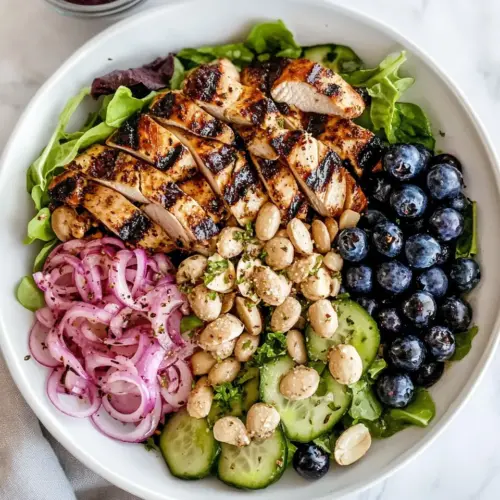
Grilled Chicken Blueberry Salad with Herb Sugared Marcona Almonds
Grilled Chicken Blueberry Salad with Herb Sugared Marcona Almonds offers a crunchy sweet contrast, creamy goat cheese, and juicy grilled chicken for an easy weeknight dinner or summer lunch. Bright balsamic dressing ties the salad together, while sugared marcona almonds add an irresistible crunch. This fresh, colorful salad is a simple way to impress and enjoy seasonal flavors.
Equipment
- Grill
- nonstick skillet
- Blender
- Resealable bag or baking dish
- Instant read thermometer
Ingredients
- 2 boneless, skinless chicken breasts Poach or grill to tender, juicy perfection and slice thinly to top the salad; provides the primary protein and hearty texture that makes the dish substantial for a main course.
- 3 tablespoons olive oil Whisk into marinades or dressings to lend a fruity, peppery richness; helps sear the chicken and adds healthy monounsaturated fats and flavor depth to the salad.
- 3 tablespoons balsamic vinegar Use as part of a marinade or drizzle to add tangy sweetness and concentrated acidity; brightens the chicken and ties the salad components together with savory-sweet notes.
- kosher salt and pepper Season generously before cooking and at the table to enhance all flavors; balances acidity and richness while ensuring the chicken and greens are properly seasoned.
- 12 ounces spring greens, or your favorite lettuce mix Toss as the leafy base to provide crisp, tender greens and varied textures; offers a mild, fresh backdrop that highlights the fruit, cheese, and herbs.
- 4 baby seedless cucumbers, thinly sliced Layer thin slices for a cool, crisp bite and mild cucumber flavor; contributes refreshing crunch that contrasts with the soft avocado and cheese.
- 1 avocado, thinly sliced Arrange thin slices for creamy richness and buttery texture; supplies healthy fats and a silky mouthfeel that complements acidic dressings and tart berries.
- 4 ounces goat cheese, crumbled Crumble over the salad for tangy creaminess and a slightly acidic counterpoint; adds richness and a soft, spreadable texture that contrasts with crunchy elements.
- pickled onions, for topping Scatter sparingly on top for bright, zesty bursts and a bit of crunch; adds a vinegary pop that cuts through richness and refreshes the palate between bites.
- 1/2 cup blueberries Garnish the salad with tart-sweet fruit to add pops of color and juicy acidity; pairs well with goat cheese and balsamic for a balanced sweet-tart contrast.
- 1/4 cup balsamic vinegar Use to finish the dressing or to drizzle over the plated salad for additional acidity; reinforces balsamic flavors used in the chicken marinade and dressing for continuity.
- 1 garlic clove, minced Mince finely and whisk into the dressing to add pungent warmth and savory depth; complements the balsamic and lemon by grounding bright flavors with garlic's savory note.
- 1 tablespoon honey Stir into dressings or glazes to introduce natural sweetness and sticky gloss; helps balance tart balsamic and lemon while providing a gentle floral undertone.
- 1/2 lemon, juiced Squeeze fresh juice into dressings to contribute bright citrus acidity and lift; balances the oil and honey while keeping the salad flavors vibrant and fresh.
- kosher salt and pepper Season the dressing and salad components to taste for balanced flavor; anchors the seasoning profile so each bite has appropriate saltiness and peppery bite.
- 1/2 cup olive oil Blend into vinaigrettes to emulsify and add smooth body while carrying flavors across the salad; supplies richness that helps the dressing cling to greens and toppings.
- 2/3 cup marcona almonds Toast or fry briefly to warm and intensify nutty flavor, then top the salad for crunch; provides a buttery, slightly sweet crunch that contrasts with creamy cheese and avocado.
- 3 tablespoons sugar Coat the almonds with sugar to create a crisp, sweet shell and caramelized glaze; supplies a crunchy, sweet counterpoint that plays off the salad's savory and tart elements.
- 1 teaspoon dried thyme or rosemary Sprinkle into sugared almonds or dressings to add aromatic, savory herbiness; offers a piney or floral note that enhances nuts and complements the balsamic-lemon profile.
Instructions
- Prep the chicken first! You can make this a day or two before - even just marinating it or marinating it and grilling it. Place the chicken into a baking dish or resealable bag. Whisk together the olive oil, vinegar and a big pinch of salt and pepper.: The scent of the vinaigrette at this stage should be tangy and herbaceous, with the oil smoothing the sharp edge of the balsamic vinegar . I like to use my hands to pat the marinade into the surface so the chicken is fully coated, which helps flavor penetrate. A common misstep is skimping on seasoning; under-seasoned meat will taste bland after grilling. If you notice the marinade pooling too heavily on one side, turn the bag or flip the breasts so the flavor distributes evenly. Using a resealable bag also minimizes mess and helps the marinade cling to the meat for better flavor absorption.
- Marinate the chicken for at least 30 minutes, or even overnight. While it marinates, I make the almonds and the dressing below. When ready to grill, preheat your grill to the highest setting. Once the grill is hot, add the chicken (let the marinade run off into the dish) and grill for about 5 to 6 minutes per side, or until the internal temperature reaches 165 degrees F. Once the chicken is done, let it rest for 5 to 10 minutes. Then slice it.: As the chicken soaks in the marinade, you should smell a mellow sweetness from the balsamic and a gentle olive oil aroma, promising deeper flavor. Preheating to a high setting gives you a quick sear that forms a caramelized crust, locking juices inside. Use an instant read thermometer to ensure it hits 165 degrees F without overcooking. Resting is crucial, because slicing immediately will cause flavorful juices to escape, making the meat dryer. One error I often see is flipping too frequently; this prevents proper searing and reduces the smoky flavor you want.
- Assemble the salad with the spring greens. Top with the chicken, blueberries, avocado, pickled onions, cucumbers and almonds. Drizzle with the dressing and serve!: When assembling, aim for a balanced spread so each forkful contains a bit of everything. The greens should look vibrant and slightly glossy from the dressing, while the sliced avocado should be creamy and unbruised. Scatter the blueberries so their juicy bursts contrast the smokiness of the chicken . A common mistake is overdressing; add in stages and toss gently to avoid wilting the greens. Serve immediately so the almonds retain their crunch and the avocado stays fresh.
- Combine all the ingredients in a blender until smooth and blended. You can make this a day ahead of time and store it in the fridge, sealed in a container or jar.: The dressing should be glossy and slightly thick, which helps it cling to the leaves and toppings. As the blender works, you will notice the color become a unified amber and the aroma shift to a balanced sweet and tangy profile. Chilling it for a few hours lets flavors meld and taste mellow; if it tightens up in the fridge, whisk before using. A frequent oversight is failing to taste and adjust; always check for balance between acid and sweetness before serving.
- Place the almonds in a nonstick skillet over medium heat. Stir in the sugar and herbs and cook, stirring often, until the sugar melts and is caramely, coating all of the almonds - about 6 to 8 minutes. Don’t take your eyes off of this as they can burn quickly! Transfer the almonds to a piece of parchment paper to let them cool. Break them into pieces if they are clumped.: The kitchen will fill with the warm, toasty aroma of nuts and caramel as the sugar melts and coats the marcona almonds . Stirring constantly ensures even caramelization and prevents hot spots where sugar burns instantly. Once cooled on parchment, they will harden into glossy shards that add a sweet crunch to the salad. The most common error is letting the pan run too hot, which leads to bitter, burnt sugar; keep the heat steady and attentive. If they clump, gently break them apart with the back of a spoon after they cool to restore the crunchy texture.
Notes
- Swap the greens: Try peppery arugula or a spring mix with baby spinach for a different bite; each green shifts the overall flavor profile while keeping the core components intact.
- Double the blueberries: For a fruit forward version, increase the blueberries to amp the sweet tang, which pairs beautifully with more crumbled goat cheese.
- Make it ahead: Grill the chicken a day earlier and keep it refrigerated; rewarm gently or serve chilled for a picnic friendly salad.
- Herb tweak: Swap thyme for rosemary in the sugared almonds for a piney note, or use a mix for layered aromatic complexity.
- Nut alternative: If you can’t find marcona almonds, try sliced almonds toasted with sugar though the texture and flavor will differ slightly.