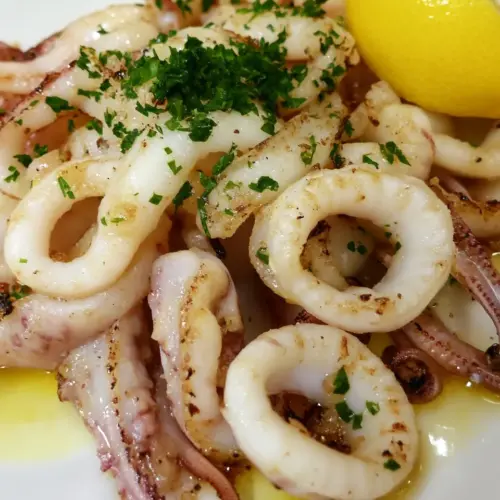
Grilled Calamari
Grilled Calamari brings a bright, citrusy seafood experience with tender squid seared over high heat, finished with fresh parsley and lemon. This easy weeknight dinner or impressive appetizer is crispy at the edges, vibrant in flavor, and ready in under an hour. Try it for summer gatherings when you want something light, quick, and full of coastal charm.
Equipment
- Grill
- Mixing Bowl
- Foil
- Tongs
Ingredients
- 1 1/2 pounds cleaned squid tentacles and bodies Provide tender, slightly sweet seafood flavor and a meaty texture ideal for quick, high-heat cooking; clean and pat dry before grilling to prevent steaming and to promote a good char. Slice bodies into rings if desired and score thicker parts to ensure even cooking and better sauce absorption.
- 3 tablespoons extra virgin olive oil Add fruity, peppery richness and help prevent sticking while grilling; drizzle over calamari before and after cooking to enhance flavor and mouthfeel. Use sparingly to avoid overpowering delicate seafood and choose a high-quality extra virgin variety for best aroma.
- 2 lemons Contribute bright acidity and citrus aroma that balance the richness of oil and seafood; juice and zest as needed to add layers of flavor and finish the dish. Serve extra wedges alongside for diners to squeeze over grilled calamari for fresh brightness.
- 2 garlic cloves minced Provide pungent, aromatic depth and savory bite when minced finely; incorporate into the oil or marinade to infuse the calamari with subtle garlicky notes. Allow minced garlic to rest briefly after chopping to mellow sharpness and distribute flavor evenly.
- 1/4 teaspoon kosher or sea salt Enhance overall seasoning with clean, mineral saltiness that lifts the natural flavors of the squid; sprinkle sparingly and adjust to taste after cooking. Use kosher or sea salt for easy control and even dissolution in marinades or finishing.
- 1/4 teaspoon black pepper freshly ground Introduce warm, slightly sharp heat and aromatic complexity that complements other seasonings; grind fresh over the calamari just before serving for optimal flavor. Balance with salt and citrus to avoid overpowering the delicate seafood.
- 1 teaspoon old bay seasoning or try Skinny Ms. Seafood Seasoning Impart a savory, slightly spicy and herbal blend that echoes classic seafood seasoning profiles; sprinkle into the marinade or oil to give the calamari a coastal, slightly briny character. Choose Old Bay or a similar seafood blend to add recognizable, comforting flavor notes.
- 1 teaspoon dried oregano Provide earthy, piney herbal notes and Mediterranean character that pair well with lemon and olive oil; crush or crumble before mixing into the marinade for more pronounced aroma. Use dried oregano judiciously to avoid drying out the delicate squid.
- 1 teaspoon crushed red pepper Contribute concentrated heat and a touch of smokiness when used sparingly; sprinkle into the seasoning mix to add a lively kick that enlivens the dish. Adjust amount to taste to maintain balance with the other spices and citrus.
- 1 tablespoon parsley fresh, chopped Add fresh, bright herbal finish and color contrast when chopped and sprinkled over the cooked calamari; use as a finishing garnish to lift flavors and presentation. Incorporate into a squeeze of lemon and olive oil for a simple herb drizzle.
Instructions
- Cut the squid bodies along the sides so they lay flat.: The smell of fresh squid is lightly briny and clean when handled properly, and flattening the bodies helps them cook evenly on the hot surface. Visually you want broad, even pieces that will make consistent contact with the grill, which minimizes chewy spots. If pieces are uneven, some will overcook while others remain underdone, so take your time to open them gently. A common mistake is slicing too thinly, which can cause them to dry out quickly under high heat.
- In a bowl combine the olive oil, juice of one of the lemons and the rest of the ingredients, except the parsley.: Right away you will notice the bright citrus aroma mingling with the peppery perfume of freshly ground black pepper and the warm notes from the old bay seasoning . Whisking creates an emulsion that helps the marinade cling, ensuring the garlic and herbs adhere to the surface. This step matters because a well distributed marinade flavors every bite. One common error is not tasting the marinade; a quick taste helps balance salt and acidity before adding the squid .
- Add the squid, toss to coat and refrigerate for 2 hours, tossing every 30 minutes or so, to make sure the marinade gets evenly distributed.: As the squid rests, the citrus and oil gently infuse it, and the texture becomes more receptive to quick grilling. When you toss periodically, you ensure all surfaces receive equal exposure, which is crucial for balanced seasoning. You should smell citrus and savory garlic notes as the marinade works, and the squash of the pieces should feel slightly firmer but not mushy. Avoid marinating much longer than recommended, as excess acid can make the flesh overly soft.
- Preheat the grill to high. Place a piece of foil on the grill and brush it with a light coating of vegetable oil to keep the squid from slipping through the grill grates and sticking to the foil.: A properly preheated grill will radiate heat that sears quickly, producing sizzling sounds and smoky scent as the oil hits the grate. The foil is a practical trick that prevents smaller pieces from falling through while still allowing direct heat contact. Brush the foil lightly, you want a sheen, not pools of oil which can cause flare ups. A mistake is grilling on a cold surface; it will lead to sticking and a pale, unappetizing finish.
- Grill the squid, about 3 – 4 minutes per side, until it turns opaque. Remove from the grill, garnish with the fresh parsley and the remaining lemon, cut into wedges.: When placed on the hot surface, listen for an eager sizzle and watch the edges for the first signs of char. The flesh will change from translucent to opaque and firm up quickly; this is your cue to flip. You want short cook times to avoid rubbery texture, and the goal is a light golden sear with a few darker charred spots for flavor contrast. If you see extensive curling or a stiff, shriveled surface, the heat was likely too high or the cook time too long, so adjust accordingly on the next batch.
- Remove from the grill, garnish with the fresh parsley and the remaining lemon, cut into wedges.: Immediately after removing from heat, the plate will give off a warm, citrusy steam; finishing with fresh parsley adds a bright visual and flavor lift. Squeezing the reserved lemon over the hot Grilled Calamari brings the flavors to life and balances the char with freshness. A common oversight is waiting too long to serve, which allows the seared exterior to cool and lose vibrancy, so plate and serve promptly.
Notes
- Smoky char emphasis Use a piece of soaked wood or wrap a small bundle of herbs like rosemary in foil near the coals. The added smoke layer deepens the savory character, complementing the citrus and herbs without altering the primary ingredient.
- Spice it up Increase the crushed red pepper slightly or add a pinch of smoked paprika to the marinade to introduce a warm, smoky heat that pairs well with the natural sweetness of the squid.
- Herb forward Stir a bit more chopped parsley into the marinade and finish with an extra sprinkling. This amplifies the fresh green note and makes the dish feel brighter and more herbaceous.
- Gently citrus Add a teaspoon of lemon zest to the marinade for an aromatic lift that remains even after grilling. The zest carries essential oils that intensify the lemon character without adding extra acidity.
- Make ahead marinade Prepare the marinade in advance and store it chilled, then toss with the squid when ready. This saves prep time on the day of grilling and ensures the flavors are well married.