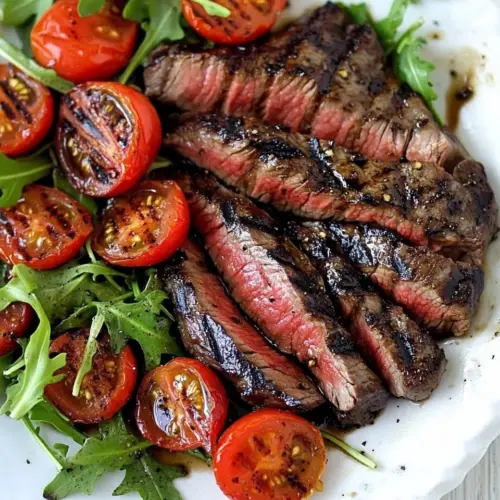
Grilled Balsamic Steak with Tomatoes and Arugula
Grilled Balsamic Steak with Tomatoes and Arugula brings smoky char, tangy balsamic, and peppery arugula together for an easy weeknight dinner that still feels special. Tender marinated flank steak pairs with juicy cherry tomatoes and a bright dressing, creating a balanced, hearty meal perfect for summer gatherings and simple suppers. Make it for company or a casual family night and enjoy the vibrant contrast of flavors.
Equipment
- Grill
- Bowl
- Knife
- Tongs
Ingredients
- 1 -1/2 lb flank steak Season generously to enhance overall beef flavor and help form a flavorful crust during grilling; provides essential savory balance to the dish and aids in drawing out moisture for better caramelization.
- 1 teaspoon kosher salt Add sparingly to season the marinade and final dish with clean, bright saltiness; helps to amplify the natural flavors of the steak and vegetables without overpowering them.
- 1/4 cup balsamic vinegar Provide acidity and sweetness to tenderize the meat in the marinade while adding a deep, tangy backbone to the sauce; contributes a glossy finish and complex flavor when reduced or grilled.
- 1 tablespoon olive oil Coat the steak and salad with healthy fat to carry flavors and promote even browning on the grill; helps blend aromatics and balsamic for a cohesive marinade and dressing.
- 1 garlic clove, grated Infuse pungent aromatic depth and savory complexity into the marinade when grated; helps break down surface proteins and adds a sharp, garlicky note that complements the steak.
- 1 tablespoon fresh mixed herbs, rosemary, basil, sage Offer fragrant herbal complexity to the marinade, contributing piney, sweet, and savory notes that complement beef; chopped fresh herbs also add visual appeal and fresh aroma when grilled or served.
- 1 -1/2 cup halved cherry tomatoes Provide bright, juicy bursts of acidity and sweetness to balance the rich steak; halving concentrates their flavor and makes them easy to toss with arugula for a refreshing contrast.
- 1 bunch, 6 cups baby arugula Contribute peppery, leafy freshness as the salad base that balances the rich steak and vinaigrette; tender leaves add texture, volume, and a pleasant bitter contrast to tomatoes and balsamic.
- 1 tbsp balsamic vinegar Add a touch of sweet, tangy acidity to the salad dressing or finishing glaze to tie together tomatoes and steak; enhances depth and provides continuity with the marinade flavors.
- 1 small clove minced garlic Introduce a mellow garlicky note when minced and mixed into the dressing; adds fresh aromatic lift to the salad and complements the grilled steak without overwhelming other flavors.
- 1 tbsp olive oil Provide a silky, fruity fat in the dressing to bind ingredients and coat leaves evenly; helps mellow the vinegar's acidity and carry herb and garlic flavors throughout the dish.
- 1/4 teaspoon kosher salt Season the salad dressing lightly to lift flavors without making the greens too salty; adds subtle seasoning that balances the oil and vinegar and highlights tomatoes and arugula.
Instructions
- Combine the marinade ingredients in a bowl or blender and pour over the steak. Marinate overnight.: The smell of balsamic vinegar mingling with grated garlic and chopped herbs is the first sign the steak is on its way to greatness, a heady, slightly sweet aroma that will deepen as it soaks. Leave the flank steak covered in the fridge so the flavors penetrate; you will notice the meat darken slightly and feel tacky to the touch when the marinade has done its work. This slow infusion is why I insist on overnight time when possible, it tenderizes and concentrates flavor. A common mistake is using too much acid for too long which can make the surface mushy, so keep the balance and don’t marinate for multiple days. When you remove the steak, let it sit at room temperature for twenty to thirty minutes before grilling to ensure more even cooking and a better crust.
- Combine the cherry tomatoes with salt. Stir in the vinegar, garlic and olive oil.: As you toss the halved cherry tomatoes with a pinch of salt, they begin to release bright juices, creating a lightly saucy base that clings to the arugula . Stirring in the extra splash of balsamic vinegar and the minced garlic wakes up the tomatoes and adds an aromatic lift, while the olive oil gives a glossy coating. The sound here is subtle, just a soft slicking as the dressing coats the tomato halves, and the scent becomes fruity and piquant. Avoid over salting, which can drown the tomato sweetness, and don’t dress the salad too far in advance or the leaves will wilt and the tomatoes will become too soft.
- Heat the grill over high heat, spray the grates and grill a few minutes on each side, until cooked to your taste. Let it rest a few minutes before slicing.: When the grill is searing hot you will hear an energetic sizzle as the steak hits the grates and watch the surface develop a deep mahogany crust. That crust seals in juices and creates smoky, caramelized flavors thanks to the balsamic and sugars from the marinade. Grill times vary depending on thickness, but visually look for a pronounced char and juices starting to bead at the surface. After pulling the steak from the heat, allow it to rest tented for several minutes so the juices redistribute and the texture becomes tender rather than leaking out when sliced. A frequent error is slicing immediately; this causes loss of juice and a drier bite. If flare ups occur, move the steak to a cooler zone to avoid burning while still achieving a good sear.
- Toss the arugula with the tomato mixture.: The moment you fold the peppery arugula into the tomato mixture the salad comes alive, the leaves wilting just slightly under the warmth and taking on the dressing’s acidity. The aroma shifts to a fresher, herbaceous note and the contrast of textures becomes clear, with tender tomato juices and crisp leafy greens. Toss gently so the arugula retains some structure, and taste for seasoning, adjusting salt if needed. Avoid overdressing, which can make the leaves soggy; it’s better for the salad to be lightly coated so it sits well on the warm steak.
- Slice the grilled skirt steak into thin slices and place on a platter, scatter the arugula-tomato salad over the steak and serve right away.: When slicing, cut across the grain of the steak into thin ribbons to maximize tenderness; you’ll see clean, glistening slices that reveal a juicy interior and a charred edge. Arrange the meat on a serving platter and scatter the tomato and arugula salad over the top so each slice gets a hit of acidity and peppery green. The final plate smells of smoke, garlic, and bright vinegar, and visually it pops with red and green against the brown steak. A common misstep is slicing too thickly which makes the meat feel tough, so thin, angled cuts are best. Serve immediately so the contrast of warm steak and cool salad is at its peak.
Notes
- Swap herbs thoughtfully: Substitute the mixed herbs with just rosemary and thyme if you want a woodsy profile that pairs well with the char from the grill.
- Adjust acidity: If you prefer less sharpness, reduce the balsamic in the dressing slightly and add a touch more olive oil to round it out.
- Make it spicy: Stir a pinch of crushed red pepper into the tomato mixture for a gentle heat that complements the peppery arugula.
- Double the salad: If serving as a lighter main, increase the arugula and cherry tomatoes to make the plate more salad forward and less meat heavy.
- Advance prep: Marinate the steak overnight and halve the tomatoes in the morning to streamline dinner time without losing freshness.