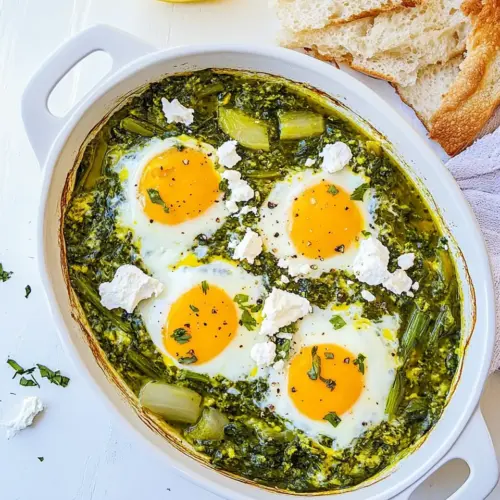
Green Shakshuka
Green Shakshuka delivers a vibrant, creamy green pea sauce studded with caramelized mushrooms and tender asparagus, topped with soft eggs and tangy feta. An easy weeknight dinner or elegant brunch option, this dish blends umami, freshness, and comfort in every spoonful, making it worth trying tonight.
Equipment
- Large deep skillet
Ingredients
- 1 tablespoon olive oil, divided Heat gently and provide the pan’s fat for sautéing vegetables and preventing sticking; contributes a mild fruity flavor and helps distribute heat evenly throughout the dish.
- 2 heaping cups mixed mushrooms, chopped Sauté until tender and caramelized to add savory, umami richness and meaty texture that complements the greens; release earthy aromas that deepen the overall flavor profile.
- 1 teaspoon salt, divided Season evenly to enhance and balance all other flavors; help draw out moisture from vegetables and can be split between cooking and finishing to control seasoning.
- 1 cup leek, white part only chopped (from 3 medium) Sweat until softened to add a mild onion-like sweetness and aromatic foundation; contribute subtle structure and delicate vegetal notes without overpowering the dish.
- 1 cup asparagus, bottoms trimmed, chopped Quickly cook until bright and tender to introduce fresh, grassy flavor and a crisp-tender bite; add green color and a slightly sweet, vegetal contrast to richer elements.
- 1 cup peas, blanched (see notes) Add vibrant color and natural sweetness while contributing pop-in-the-mouth texture; provide a subtle starchy note and help bulk up the sauce with fresh brightness.
- 1 cup vegetable broth Deglaze and create the braising liquid that brings ingredients together; contribute savory depth while controlling sauce consistency and preventing dryness.
- 6 eggs Gently poach in the simmering sauce to provide creamy richness and protein; create silky yolks that enrich the sauce when broken and add satisfying body.
- 3 tablespoons feta, crumbled Sprinkle at the end to lend tangy, salty, and creamy contrast; add a bright, briny finish and small textural crumbles throughout the finished shakshuka.
- Za’atar or black pepper Season at the end to add herbal, citrusy spice or a sharp peppery heat; use sparingly to complement the dish’s savory and tangy elements without overpowering them.
Instructions
- Heat half of the oil in a large skillet over medium heat, add mushrooms and 1/4 teaspoon of salt. Cook mushrooms for 7-10 minutes, stirring every 2 minutes to allow the edges to evenly caramelize. Remove from the pan.: You will smell a deepening, nutty aroma as the mushrooms brown and moisture evaporates, with edges turning a glossy, golden brown. A slight sizzle should be steady but not frantic, indicating the pan is at the right temperature. Listen for that even sizzling, and watch for moisture to disappear before the mushrooms begin to stick and color. The reason this matters is that proper caramelization concentrates umami and prevents a watery base later. A common mistake is overcrowding the pan, which causes the mushrooms to steam rather than brown; if that happens, remove some and finish in batches.
- Add the remaining oil, leeks and 1/4 teaspoon of salt to the same pan and cook until aromatic, about 3 minutes.: As the leek hits the warm oil, you should get a soft, sweet onion aroma quickly, and the white pieces will soften and become translucent. The sound will be a gentle, lower-pitched sizzle compared to the mushrooms. This step builds an aromatic foundation that supports the pea broth, creating layered flavor. Avoid browning the leeks too much here because they can become bitter; keep the heat at medium and stir occasionally.
- Add asparagus, mix to combine and cover to steam, 4-5 mins.: When you add the asparagus , toss so the pieces glisten and then cover to trap steam, which will gently cook them through. You want bright green stalks that yield to a fork with slight resistance. The visual cue is that the color deepens and the surface looks glossier. This quick steam preserves texture and prevents mushiness, which is crucial for contrast with the soft eggs. A pitfall is leaving the lid on too long, resulting in limp asparagus, so check after 4 minutes.
- While asparagus steams, blend peas, veggie broth and 1/4 teaspoon salt in a high speed blender until smooth.: When you blend the peas with the vegetable broth , you should see a vibrant, silky green liquid. The sound will shift to a steady hum and then a smoother tonal quality as the mixture emulsifies. This creates the sauce body, capturing pea sweetness and bright color. If the purée is grainy, blend a little longer or add an extra splash of broth to achieve velvety consistency. A frequent error is underblending, which leaves a coarse texture instead of a luxurious base.
- Return mushrooms to pan, add pea broth & stir to combine. Allow the broth to slightly reduce.: Returning the browned mushrooms to the pan injects concentrated flavor into the green sauce. Stirring combines glossy mushroom bits with the pea purée, and as the mixture simmers, it will reduce slightly and thicken. You should see gentle bubbling and notice an intensified aroma as water cooks off and flavors concentrate. This reduction helps the sauce cling to the eggs. Watch the heat closely, because boiling vigorously will break the emulsion and dull the color; simmer gently instead.
- Make 6 holes and gently drop in the eggs, keeping the yolks intact; sprinkle eggs with remaining 1/4 teaspoon of salt.: The surface should be simmering but calm when you create wells for the eggs . Drop each egg carefully so the yolk remains whole, giving you that silky center when serving. The whites will start to set around the edges first and will transform from translucent to opaque. This precise placement influences presentation and ensures even cooking. A common slip is cracking eggs directly into the pan too forcefully, which can break yolks and alter texture.
- Cover and simmer on medium-low, 5 to 6 minutes, or until the egg whites are cooked through and no longer runny.: As the pan cooks covered, you will hear a soft, muffled simmer and see the whites firming while yolks remain tender. The key is medium low heat, as higher heat will tighten the whites too quickly and overcook the yolks. This gentle approach allows steam to finish the whites without drying the yolks, producing a luscious finish when pierced. Avoid removing the lid too early, which can cause uneven cooking.
- Remove from the heat; top with feta and a sprinkle of za’atar.: Once off the heat, the residual warmth will continue to set the eggs slightly, and adding crumbled feta brings a tangy, creamy counterpoint that softens on contact. The za’atar or black pepper adds aromatic lift and a final touch of complexity. Visually, you want a vibrant green base dotted with white eggs and flecks of crumbled cheese. Don’t leave the feta in while simmering, or it will melt away instead of offering texture; add it at the end for contrast.
Notes
- Reserve oil for staged cooking. Dividing the olive oil ensures you can sear the mushrooms properly and then gently cook the leek and asparagus without burning. If you pour all the oil at once, you may end up with unevenly cooked vegetables and less pronounced mushroom crust.
- Use a high speed blender for velvety pea purée. A powerful blender gives you a smooth, glossy sauce quickly, preventing grainy texture. If your blender is weak, blend longer and add a splash more vegetable broth to help the blades work efficiently.
- Choose meaty mushrooms for better umami. Varieties like shiitake or oyster give more depth than plain button mushrooms, and their texture holds up well in the skillet. If you only have button mushrooms, sauté until they release and reabsorb moisture for better flavor concentration.
- Blanch fresh peas before blending. Blanching brightens color and softens the peas so they blend into a silky body. Frozen peas often blend fine without blanching, but fresh peas will benefit from a brief simmer and ice bath first.
- Finish off-heat with crumbled feta. Adding feta after removing from heat preserves its crumbly texture and tang, which contrasts beautifully with the warm pea base. If you add it too early, it will melt and lose that bright bite.