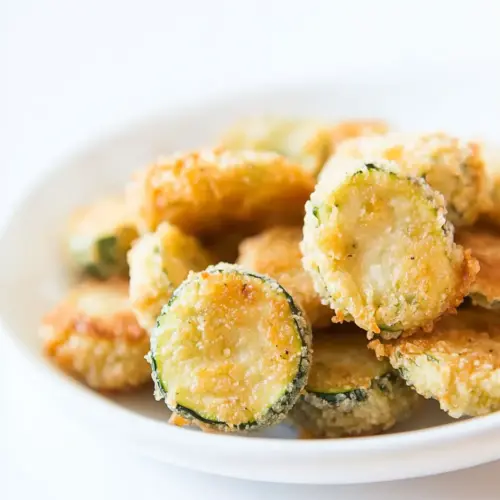
Green Pepper Fried Zucchini
Green Pepper Fried Zucchini features crispy breadcrumb crust, tender zucchini centers, and a subtle vegetal kick from TABASCO Green Pepper Sauce. This easy weeknight side or appetizer is crunchy, flavorful, and made with simple pantry ingredients for a quick summer favorite you'll make again and again.
Equipment
- Heavy bottom saucepan
- Thermometer
- Shallow Bowls
- Baking Sheet
- Slotted Spoon
- Grated cooling rack
Ingredients
- 3 medium zucchini, sliced 1/4 inch thick Provide bulk and tender texture when cooked; slice evenly for uniform frying and to ensure consistent doneness. Absorb flavors from batter and seasonings while keeping the interior moist, contributing a mild, slightly sweet vegetal note to the dish.
- 2 large eggs Bind the coating ingredients together and help create a golden, crisp exterior when fried; whisk lightly to combine yolks and whites for even coating. Add richness and structure to the breading, improving adhesion to the zucchini slices.
- 2 teaspoons TABASCO Green Pepper Sauce Impart tangy, mildly piquant green pepper flavor and subtle heat; stir into the egg wash or batter to distribute bright, herbal spice throughout. Enhance overall savory balance and add a distinctive peppery accent to the fried zucchini.
- 2 cups breadcrumbs Create the crunchy outer layer that browns during frying and provides textural contrast to the tender vegetable; choose a consistent crumb size for even coating. Season if desired and press the zucchini into the breadcrumbs to ensure thorough coverage for crisp results.
- 2 tablespoons fennel fronds Contribute a delicate anise-like aroma and fresh herbal brightness; finely chop fronds and mix into breadcrumbs or sprinkle over finished zucchini. Complement the savory and peppery elements, adding a fragrant lift without overpowering other flavors.
- 1 teaspoon salt Season the dish to enhance natural flavors and control overall saltiness; dissolve in the egg wash or mix with breadcrumbs for even distribution. Use measured amounts to avoid oversalting while ensuring the zucchini and coating are properly seasoned.
Instructions
- Pour oil into a heavy bottom saucepan a third of the way up. Heat oil over medium-high heat until it reaches 340 degrees F.: The oil should fill the pan about one third high, creating enough depth for the zucchini slices to float slightly and cook evenly. You will notice a gentle shimmer on the surface when the heat begins to spread, and the pan will emit a faint oil aroma. Using too little oil makes the slices stick to the bottom, causing uneven browning, while too much oil can become dangerous splatter. Choose a sturdy, heavy bottom pan so the temperature stays steady while you add batches.
- Place eggs and TABASCO Green Pepper Sauce in a shallow bowl and beat until combined. In a second bowl whisk together breadcrumbs, fennel fronds and salt. Create an assembly line by placing zucchini slices next to the eggs and breadcrumbs. Dip zucchini slices into the eggs, allowing any excess to drip off. Next dredge zucchini slices through the breadcrumbs until it is completely covered. Repeat with remaining zucchini slices. Place the zucchini slices on a baking sheet.: At the correct temperature the oil will flow smoothly and small, transient ripples will form around a wooden spoon if you test it. You want 340 degrees F for a quick crisp without burning the breadcrumbs; this temperature yields a golden color in under two minutes. A common error is overheating the oil which causes the crust to darken too fast while the interior remains raw. Use a thermometer to maintain consistent heat because temperature swings are the main cause of uneven frying.
- Deep fry zucchini slices in batches until golden brown, about 1 1/2 minutes to 2 minutes. Remove with a slotted spoon and set aside on a grated cooling rack to drain. Serve immediately.: When you whisk the eggs and TABASCO Green Pepper Sauce , you will see the wash become homogeneously colored and slightly frothy. The aroma will carry a mild green pepper note, hinting at the seasoning that will flavor the crust. This mixture is key to adhesion; if it is not well combined, the breading can clump or fall off. Avoid over seasoning with the sauce in the wash, which can make the coating soggy if left to sit too long.
- In a second bowl whisk together breadcrumbs, fennel fronds and salt: Tossing the breadcrumbs , chopped fennel fronds , and salt releases the herb oils and distributes seasoning. The smell should become subtly herbal and toasty even before frying. This dry mix is what browns and crisps in the oil, so ensure the fennel is evenly scattered throughout. If you leave large clumps of herb, some areas will burn while others remain bland.
- Create an assembly line by placing zucchini slices next to the eggs and breadcrumbs: Laying out the zucchini slices in order helps you maintain a steady rhythm for dredging and frying. A tidy assembly line reduces hands on time so the coating stays fresh and does not become soggy. You will notice that working quickly keeps the eggs from congealing and the breadcrumbs from absorbing moisture. A frequent slip up is overcrowding the workspace which leads to inconsistent coatings.
- Dip zucchini slices into the eggs, allowing any excess to drip off: As you submerge a slice, watch how the wash clings and then releases excess liquid, leaving a thin glossy layer. This sticky sheen is the sign that the egg will lock the crumbs in place. Letting too much wash remain results in a heavy, gummy crust, while too little prevents proper adhesion. Use a flicking motion to shake off the excess rather than wiping, since wiping can remove the binding layer entirely.
- Next dredge zucchini slices through the breadcrumbs until it is completely covered: When the crumbs coat the slice uniformly, the surface will look matte and textured, studded with tiny specks of fennel fronds . Press lightly to ensure good contact, but do not compress, as compressed crumbs form a dense crust. A telltale sign of insufficient coverage is visible green flesh peeking through the crumbs, which leads to soggier spots during frying. If you see gaps, recoat those edges quickly.
- Repeat with remaining zucchini slices: Maintaining a steady pace helps prevent the earlier coated pieces from sitting too long and becoming damp. The breadcrumb texture is at its best when fresh, so rotate through batches logically. If you pause, the coating can start to weep moisture and lose crispness. Keep finished pieces on a single layer on the baking sheet to avoid sticking together.
- Place the zucchini slices on a baking sheet: Laying the coated slices in a single layer on a baking sheet gives them a resting stage before frying, and it prevents the breading from compressing. You will see the crumbs settle and dry slightly, which helps them crisp faster when they hit the oil. Crowding slices on the sheet leads to uneven drying and can cause clumping during frying, so leave space between pieces.
- Deep fry zucchini slices in batches until golden brown, about 1 1/2 minutes to 2 minutes: As each slice hits the oil you will hear a lively sizzle and see bubbling around the edges; this sound is the moisture escaping and the crust sealing. Aim for a warm, golden brown that indicates the crumbs are cooked through. Frying in small batches maintains the oil temperature; adding too many at once drags the oil down and yields greasy, undercooked centers. If the slices brown too fast, lower the heat slightly and allow the oil to return to 340 degrees F before adding more.
- Remove with a slotted spoon and set aside on a grated cooling rack to drain: Lift the slices out when they are evenly colored, letting excess oil drip back into the pan. Placing them on a grated cooling rack prevents steam from pooling under the crust, preserving crispness. The aroma will be toasty and herb laden, and the first bite should crack crisply. Avoid stacking pieces on paper towels as this can trap steam and make them soggy; the rack is the best way to maintain texture.
- Serve immediately: Freshness is everything because the contrast between the hot, crunchy coating and the tender zucchini interior is at its peak right away. Serve while still warm so the crumbs retain their crisp snap and the flavors of the TABASCO Green Pepper Sauce are lively. A common mistake is letting the slices sit too long which dulls the texture and flavor, so plan your plating so each piece reaches the plate hot.
Notes
- Temperature control is crucial, monitor oil with a thermometer so it stays around 340 degrees F, which ensures rapid crisping without burning the crumbs.
- Dry the zucchini slices, pat them well before breading so the egg wash clings and the coating does not slide off during frying.
- Season the breadcrumb mix, incorporate the fennel fronds and salt evenly so each bite has balanced flavor and aromatic lift.
- Work quickly in an assembly line, this prevents the egg wash from congealing and the breadcrumbs from absorbing moisture.
- Fry in small batches, overcrowding drops the oil temperature and leads to greasy results, so maintain space between pieces when frying.
- Use a rack to drain, resting the fried slices on a grated cooling rack preserves crunch by avoiding trapped steam.