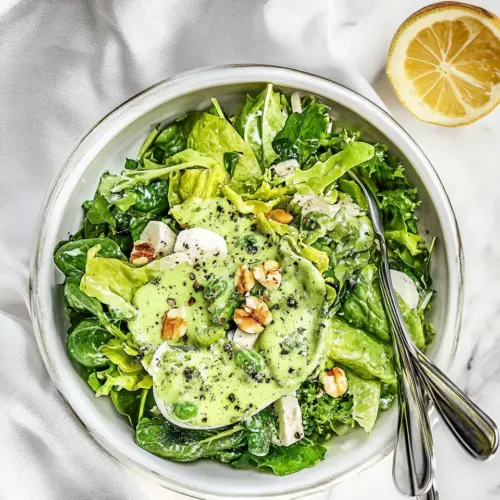
Green Goddess Salad
Green Goddess Salad is a creamy herb forward salad with bright lemon, silky mayonnaise and sour cream, and crisp vegetables for texture. This easy, fresh salad makes a perfect easy weeknight dinner side or light lunch, offering crunchy almonds and buttery avocado for contrast. Make the dressing ahead for a quick assembly and a fuss free, impressive dish to serve.
Equipment
- Duke’s Mayonaise
- Food Processor
- Large Mixing Bowl
Ingredients
- 1/2 cup mayonnaise Provides a rich, creamy base for the dressing and lends body and smooth mouthfeel to coat the salad evenly. Balances acidity and herbs while adding a mild, tangy backbone that complements the other creamy elements.
- 1/4 cups sour cream Adds a cool, tangy creaminess that lightens the mayonnaise and contributes a slightly tart dairy flavor to the dressing. Helps create a balanced texture and brightens the overall dressing profile when whisked with lemon juice and herbs.
- 1 clove garlic, smashed and peeled Adds a pungent, aromatic kick that brightens the dressing and enhances savory depth when finely minced or crushed into a paste. Acts as a flavor bridge with anchovy and herbs, boosting umami and freshness in small amounts.
- 1 anchovy filet Provides concentrated umami and saltiness that deepens the dressing's savory profile without overpowering the herbs. Dissolves when mashed into the dressing to give subtle savory complexity and balance to the creamy base.
- 1/2 lemon, juiced Delivers bright acidity that cuts through the richness of mayonnaise and sour cream and balances flavors. Freshly squeezed juice also enhances herb flavors and provides a clean, citrusy lift to the dressing.
- 1/2 cup parsley leaves, lightly packed Contributes fresh, grassy, slightly peppery flavors and adds a verdant green color when blended into the dressing. Supplies herbal brightness and aromatic oils that make the dressing taste lively and garden-fresh.
- 1/4 cup tarragon leaves Imparts anise-like, sweet herbal notes that pair well with parsley and chives to create a complex herbaceous dressing. Adds distinct aromatic character and helps elevate the overall herbal profile of the salad.
- 1/4 cups sliced chives Offers mild oniony, delicate allium flavor and a soft, bright green color when sliced into the salad or blended in the dressing. Provides subtle bite and fresh aroma that complements the creaminess and herbs.
- 2 cups romaine hearts, roughly chopped Provides a crisp, hearty base and substantial texture to the salad with slightly bitter, refreshing leaves. Holds dressing well and adds crunch and structure to balance softer ingredients like avocado and snap peas.
- 2 cups mixed salad greens Adds a variety of leaf textures and flavors, from tender to slightly peppery, enhancing overall salad complexity. Contributes volume and a mix of colors while allowing the dressing and other toppings to shine.
- 2 persian cucumber, cut into 1/4 inch thick half moons Supplies a crisp, watery crunch and mild cucumber flavor that refreshes the palate between bites. Adds textural contrast and lightness, and the thin half-moon slices distribute evenly for pleasant mouthfeel.
- 1 avocado, sliced Provides creamy, buttery texture and rich, slightly nutty flavor that complements the dressing and greens. Adds healthy fats and a silky contrast to crunchy vegetables, enhancing overall salad satisfaction.
- 1 cup snap peas Contributes sweet, fresh snap and crisp texture that adds a lively crunch to the salad. Offers a bright green color and vegetal sweetness that pairs well with the herb-forward dressing.
- 1/2 cup diced celery Adds cool, crunchy texture and a subtle, slightly bitter vegetal flavor that enhances salad complexity. Works as a refreshing contrast to creamy elements and helps create a more varied mouthfeel.
- 1/4 cups sliced almonds, for garnish Provides toasted nutty flavor and crunchy garnish that adds final texture and visual appeal to the salad. Sprinkled on top, it delivers pleasant contrast and a subtle savory note to each bite.
Instructions
- Add the mayonnaise, sour cream, garlic, and anchovy filet to the bowl of a food processor and pulse until the garlic and anchovy are minced, about 30 seconds.: Right away you should notice a savory aroma as the garlic and anchovy break down, releasing an umami and pungent scent that signals depth. Pulsing rather than running continuously helps you control texture, preventing the garlic from turning bitter. If the mixture smells overwhelmingly sharp, pause and scrape down the bowl, then pulse more gently. A common mistake here is overprocessing, which can heat the mixture and flatten the fresh herb flavors.
- Next add the lemon, parsley, tarragon, and chives.: As you add the lemon , you will get a bright citrus scent cutting through the savory notes. The fresh parsley , tarragon , and chives will release their green, aromatic oils, filling the kitchen with layered herb fragrances. Adding herbs after the initial mince helps preserve their vibrant color and flavor. Avoid using wilted herbs, which will yield a duller tasting dressing.
- Pulse until the herbs are finely chopped and the dressing is your desired consistency, about 45 seconds.: During pulsing you want to stop and check the texture frequently; the dressing should look smooth but still verdant, flecked with green. Listen for a change in sound as the processor moves from chopping to creating a smoother emulsion. If it seems too thick, add a small splash of lemon juice or a teaspoon of water to loosen without thinning too much. A typical error is making it too thin so it does not cling to the greens .
- Season with salt and pepper to taste.: After tasting, you should perceive a balanced interplay of tang, cream, and herb notes. Salt will amplify the umami from the anchovy and mellow the raw garlic , while pepper adds a soft warmth. Season incrementally and taste after each addition. Oversalting is easy here, so err on the side of conservative seasoning.
- Store this dressing in an airtight container in the fridge for up to three days.: Stored chilled, the dressing will thicken slightly and the herb flavors will meld into a more rounded profile. Before using, give it a stir or brief shake to reincorporate any separated liquids. The dressing will keep well, but fresh herbs lose brightness after several days, so plan to use it within the window. A common slip is leaving it at room temperature too long, which reduces freshness and food safety.
- Add romaine, salad greens, cucumber, avocado, peas, and celery to a large bowl.: The bowl should look and feel vibrant, with the crisp romaine and tender mixed greens forming a textured bed. The sliced avocado will add creamy visual contrast, while the cucumber , snap peas , and celery bring bright crunch. Toss gently to combine, using tongs or clean hands, to preserve the avocado slices. Overmixing can bruise delicate leaves and mash the avocado.
- Drizzle over the dressing and toss to combine.: As you drizzle, watch the dressing cling and coat the leaves; you should see a light sheen, not a puddle. Toss with a lift and turn motion to distribute dressing evenly, keeping an eye on pockets where dressing can accumulate. The sound will be soft as leaves brush together, and the scent of herbs will intensify. Avoid overdressing, which masks the salad components and makes it soggy.
- Sprinkle over the almonds and serve immediately.: The toasted or raw sliced almonds scattered on top add a finishing crunch and nutty aroma. Serve promptly so textures remain distinct, and the avocado retains its texture. A typical mistake is garnishing too early, which allows the almonds to lose crispness.
- The avocado will brown as it sits so this salad should be served immediately after assembly.: You will notice the avocado edges darken within minutes, which affects the presentation though not the core flavor. To keep the salad visually appealing and texturally fresh, assemble and serve without delay. If you must hold it briefly, keep it chilled and add a squeeze of extra lemon to slow browning.
Notes
- Prep herbs last to keep them vibrant, chop or tear them just before blending so they retain color and aroma.
- Pulse don’t puree when making the dressing to preserve flecks of herb that give visual appeal and bursts of flavor.
- Keep ingredients cold especially the greens and cucumber, for maximum crunch and a refreshing mouthfeel.
- Add avocado at the end to avoid browning, slice it right before you assemble and serve immediately.
- Control salt gradually, tasting between additions to prevent oversalting the dressing.