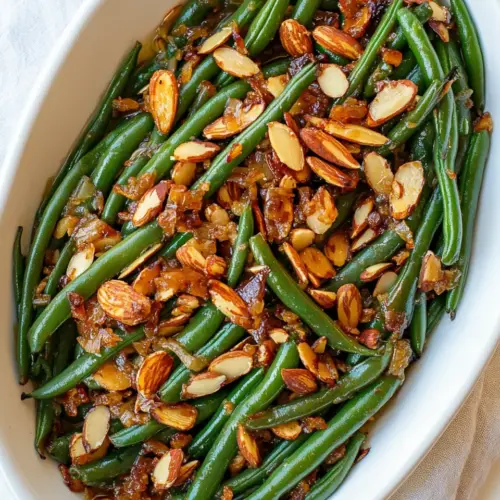
Green Bean Almondine
Green Bean Almondine brings crisp, vibrant green beans together with toasted almonds, fragrant shallot, and bright lemon for an easy weeknight side. The texture contrast and bright citrus notes make it a memorable accompaniment for dinners, and it comes together quickly for a reliable, elegant vegetable dish you will want to make again.
Equipment
- Large Pot
- Bowl for ice bath
- Colander
- Large Skillet
- Wooden spoon or spatula
- Tongs
- Measuring Spoons
- Microplane or fine grater
- Knife and cutting board
Ingredients
- 1 pound (450 g) green beans trimmed Trimmed and blanched until tender-crisp, provides the primary vegetable base and fresh texture for the dish while carrying the flavors of the other components.
- 1 tablespoon (15 ml) kosher salt for blanching water, plus more to taste Dissolved into the boiling blanching water to season the beans from within and help maintain bright color; also used sparingly to adjust final seasoning to taste.
- 1/2 cup (50 g) sliced almonds or slivered almonds Toasted until golden to add a nutty crunch and aromatic depth, serving as the characteristic crunchy counterpoint in the almondine preparation.
- 2 tablespoons (28 g) unsalted butter or olive oil Melted to create a flavorful cooking medium for aromatics and to coat the beans, contributing richness and helping brown the almonds for deeper flavor.
- 1 small shallot finely chopped Finely chopped and gently sautéed to add sweet, onion-like complexity and a delicate savory background without overpowering the other flavors.
- 2 cloves garlic minced Minced and lightly cooked or added near the end to deliver pungent, aromatic bite and elevate the overall savoriness of the dish.
- Juice of 1/2 lemon about 1 tablespoon Squeezed over the warm beans to provide bright acidity that balances the butter and almonds while lifting and harmonizing all flavors.
- Zest of 1 lemon Grated and sprinkled to contribute concentrated citrus aroma and subtle bitter brightness that complements the lemon juice and freshens the dish.
- 1/2 teaspoon kosher salt Sprinkled to season the beans during final assembly, enhancing flavors and ensuring the dish is properly salted without overwhelming the other elements.
- 1/4 teaspoon ground black pepper Ground and added to taste to introduce mild heat and earthy warmth, rounding out the seasoning profile and complementing the almonds.
Instructions
- Bring a large pot of salted water to a boil.: The hiss and rising steam tell you the water is approaching boil, and once it does, the surface will roil with movement. Salting the water is essential, because it seasons the green beans internally as they cook, making them taste lively rather than flat. If the pot takes too long to come to a boil, cover it briefly to trap heat, but be cautious when removing the lid so you do not get splashed. A common pitfall here is under salting the water, which results in bland beans later.
- Add the green beans and blanch for 4 minutes until crisp-tender.: You will hear the water bubble around the pods, and the beans will become a brighter, more vivid green as they cook. Timing matters here; four minutes produces a crisp-tender texture that keeps a satisfying snap. Overcooking will yield mushy, dull beans, so set a timer and test one bean before draining to confirm the texture.
- Transfer the beans to an ice bath to stop the cooking, then drain well.: The immediate plunge into ice water shocks the green beans , preserving both color and bite. You should feel the cold when you lift a bean from the bath, and the surface will firm up quickly. Drain thoroughly, and if the beans retain water they may steam in the skillet later and become limp. A frequent error is skipping the shock step, which leads to overcooked, pale beans.
- Melt the butter in a large skillet over medium heat.: Listen for the gentle sizzle as the butter hits the pan, and watch for a slight foam as milk solids heat. If using olive oil , it will shimmer rather than foam. Moderate heat is key so the fat warms and becomes a flavor carrier without browning too rapidly. If your fat smokes, lower the heat immediately; burnt fat imparts an acrid taste.
- Add the almonds and cook, stirring, until lightly golden, 2 to 3 minutes.: The almonds will begin to crackle and release a toasty aroma that fills the kitchen, turning a warm golden color as they toast. Stir frequently so they brown evenly; uneven toasting causes some pieces to burn while others remain raw. Remove them from the heat promptly if they reach deep brown tones, because burnt almonds taste bitter and will overshadow the dish.
- Stir in the shallot and garlic and cook for 1 minute until fragrant.: You will notice the scent of softened shallot and garlic unfold quickly, adding a savory backbone to the nutty aroma. They should become translucent and aromatic without taking on color. The trick is to keep the heat moderate; too-high heat will brown them too fast and introduce bitterness, while too low will prevent their flavors from releasing.
- Add the drained green beans and toss to coat, 1 to 2 minutes.: As you add the beans, you should hear a brief sizzle as residual moisture meets the warm pan. Tossing ensures each green bean picks up glossy fat and toasted almond bits, and you will see the beans warmed through and slightly glistening. If the skillet seems crowded, work in batches; overcrowding causes steaming rather than sautéing, which yields a softer, less vibrant texture.
- Stir in the lemon juice and lemon zest. Season with salt and ground black pepper to taste, toss once more, and serve.: The citrus will perfume the dish instantly, brightening the nutty and savory flavors with its fresh, tangy lift. The zest disperses essential oils that provide aroma without watering down the dish. Add the juice at the end to keep the citrus flavor lively; adding it too early causes those bright notes to mellow away.
- Season with salt and ground black pepper to taste, toss once more, and serve.: The final seasoning ties everything together. Taste a bean and adjust with the finishing salt and black pepper so the balance feels right. Tossing distributes the seasoning evenly, and a single final turn ensures the flavors have married. Avoid oversalting by tasting before you add more, because it is much harder to correct an over salted dish than to add salt gradually.
Notes
- Make ahead Blanch, shock, and drain the green beans up to one day ahead. Pat them dry and store in the fridge, then finish sautéing just before serving so they maintain their snap.
- Almond timing Toast the almonds first, then remove them briefly if you are worried about burning. Return them at the end of the sauté so they stay crunchy and bright in flavor.
- Fat choice Use butter for a richer finish or olive oil for a lighter profile; both carry flavor but change the mouthfeel in subtle ways.
- Heat control Cook over medium heat and be ready to lower it. High heat can scorch the garlic and almonds, turning them bitter in seconds.
- Flavor twists Add a pinch of red pepper flakes or a teaspoon of capers with the shallot for a zippy variation that complements the lemon and almonds.
- Storage Leftovers can be kept in an airtight container in the fridge for up to three days. Reheat gently in a skillet to restore texture, avoiding the microwave which tends to soften the beans.