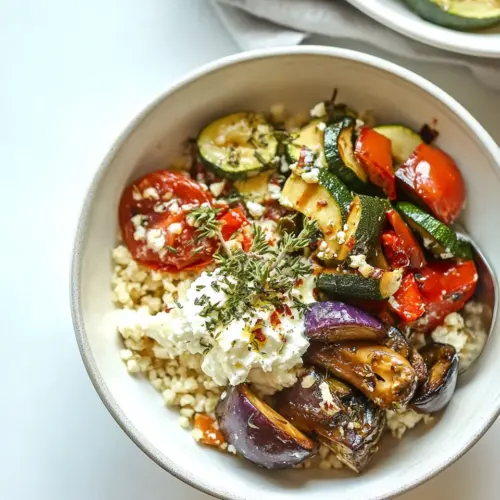
Greek Veggie Bowls
Greek Veggie Bowls are a colorful, herb forward bowl with roasted eggplant, bell peppers, zucchini, and lemony cauliflower rice topped with creamy hummus and optional feta, offering a crispy roasted edge and bright fresh herbs for an easy weeknight dinner that feels special.
Equipment
- Oven
- Baking Sheet
- Parchment Paper
- Medium Saucepan
- Knife
Ingredients
- 1 red bell pepper cubed Cube and roast to add sweet, crisp texture and vibrant color to the bowl, balancing savory vegetables when caramelized.
- 1 green bell pepper cubed Cube and sauté or roast to contribute a slightly bitter, fresh crunch and bright green hue that complements other roasted veggies.
- 1 eggplant cubed Cube and roast until tender to introduce a meaty, smoky texture and absorb seasonings for hearty Mediterranean flavors.
- 1 red onion sliced Slice and char or caramelize to provide a sweet, savory backbone with mild sharpness that softens during cooking.
- 1 large zucchini sliced Slice and grill or roast to deliver moist, tender slices with mild flavor and a pleasant bite that pairs well with herbs.
- 2 cups grape tomatoes Halve or leave whole and roast to add bursts of juicy sweetness and acidity that brighten the entire bowl.
- 2 tablespoons extra-virgin olive oil Drizzle over vegetables before roasting or finishing to carry flavors, promote caramelization, and add healthy fats.
- 1 teaspoon fine sea salt Season throughout cooking to enhance overall flavor, balance sweetness, and bring out the natural tastes of the vegetables.
- 1/2 teaspoon black pepper Grind fresh over vegetables to add subtle heat and depth, complementing herbs and bright citrus notes in the dish.
- 1 teaspoon extra-virgin olive oil Whisk into dressings or drizzle sparingly to provide a finishing touch of healthy fat and a smooth mouthfeel.
- 1 garlic clove minced Mince finely and mix into dressings or toss with roasted vegetables to infuse a pungent, savory aroma and depth.
- 1/2 onion finely diced Dice very finely and combine into the cauliflower base or dressing to add subtle allium sweetness and texture.
- 1 bag cauliflower rice or 1 head of cauliflower, riced Rice or pulse and lightly sauté to act as a low-carb grain alternative, providing bulk and a tender, fluffy base.
- 1/2 lemon juiced Squeeze over the finished bowl to brighten flavors, cut through richness, and add fresh citrus acidity for balance.
- 1 bunch fresh dill chopped Chop and fold into salads, dressings, or garnish to contribute an anise-like freshness and aromatic lift to each bite.
- 1 bunch fresh cilantro chopped Chop and incorporate into herb mixes or garnish to lend a clean, citrusy green flavor that ties components together.
- 1 bunch fresh parsley chopped Chop and sprinkle over the finished dish to bring peppery, slightly bitter notes and a vibrant green visual accent.
- 1/2 teaspoon black pepper Grind freshly for additional warmth and complexity, ensuring seasoning layers remain balanced across components.
- 1/2 teaspoon fine sea salt Sprinkle selectively to refine seasoning levels, enhancing savory notes while harmonizing herbaceous and acidic elements.
- Hummus for topping (homemade or store-bought) Spoon over bowls as a creamy, savory topping to add richness, tang, and a smooth contrast to roasted vegetables.
- Optional: crumbled feta cheese Crumble lightly over the finished bowls as an optional salty, tangy accent that enhances the Mediterranean profile.
Instructions
- Preheat oven to 400°F.: The kitchen will warm and you may notice a slight hum from the oven as it reaches temperature. Preheating ensures the vegetables start roasting immediately on contact, which promotes browning and blistering rather than steaming, and that initial sizzle is what creates that caramelized aroma you want. If you skip preheating, veggies can cook unevenly and miss those golden edges, so resist placing them in a cold oven.
- Line a baking sheet with parchment paper and spread veggies across it in one single layer. Toss with extra-virgin olive oil, sea salt, and black pepper. Bake for 45-50 minutes, or until veggies are soft and start to blister.: You will hear soft crackles and notice the edges darkening to rich brown spots, especially on eggplant and bell pepper . The olive oil will shimmer and carry the aroma, and juices from grape tomatoes will burst, creating small caramelized pools. Leaving space between pieces is critical, because crowded pans steam and never develop those crisp, roasted notes. If your pan is overloaded, transfer to two sheets for the same result.
- Heat oil in a medium saucepan over medium-high heat. Add in onion, garlic, and herbs and cook until the onion turns translucent. Add in cauliflower rice and lemon and cook for 5 minutes. Take off heat and set aside.: As the oil warms you will see faint ripples and smell a mild grassy fragrance from the extra-virgin olive oil . Heating to medium-high ensures the aromatics soften quickly without burning, and it helps the onion and garlic release their sugars and fragrance. If the oil smokes immediately, turn the heat down to prevent bitter, burnt flavors.
- Assemble the bowl! Place roasted veggies and cauliflower rice in serving bowls of choice. Top with hummus, feta cheese (if using), and serve right away or store in an airtight container for later.: The pan will give a soft sizzle, and the diced onion will become glossy and fragrant, releasing sweetness that melds with the pungent aroma of minced garlic . The herbs will wilt and perfume the pan. Stir frequently so the garlic does not develop brown edges, which taste acrid; if you see browning, reduce heat and stir in a splash of water to cool the pan.
- Add in cauliflower rice and lemon and cook for 5 minutes.: The cauliflower rice will steam gently, shrinking and taking on the herb and citrus flavors. You should hear a soft hiss as moisture evaporates, and the rice will lose its raw vegetable crunch and become tender with a slight bite. Stir to distribute the lemon juice so it brightens the mixture evenly. Overcooking will make it mushy, so keep it lively and al dente for the best texture.
- Take off heat and set aside.: Removing the pan from direct heat preserves a fresh herb aroma and prevents the cauliflower from continuing to soften beyond the ideal point. The residual warmth will keep the rice enjoyable without turning it pasty. Leaving it on the heat too long will flatten flavors, so transfer promptly.
- Assemble the bowl!: The moment of combination is sensory rich, with the roasted vegetables offering smoky notes and the cauliflower rice giving a lemony, herbal lift. Place the warm components into bowls so steam rises and mingles the aromas. Spoon a generous dollop of hummus on top, and if using, sprinkle crumbled feta cheese for tang. A common mistake is assembling cold ingredients, which dulls aroma and mouthfeel, so aim to serve while the elements are warm.
- Place roasted veggies and cauliflower rice in serving bowls of choice.: As you arrange pieces, notice the glossy char on the vegetables and the way the herbs clump lightly in the rice. Distribute components so each bowl has a balance of textures and flavors. If one bowl ends up heavier on vegetables, swap pieces so everyone gets a mix. Avoid piling everything in one area which can lead to uneven bites.
- Top with hummus, feta cheese (if using), and serve right away or store in an airtight container for later.: The hummus will add a creamy mouthfeel that calms the acidity of lemon and the robustness of roasted eggplant . If storing, let the elements cool slightly to avoid condensation in the container, which can make vegetables soggy. Reheat gently to preserve texture, and add fresh herbs after reheating to restore their bright character.
Notes
- Roast in single layers: Crowding reduces browning and produces steamed vegetables, so use two trays if necessary to keep pieces separated for even caramelization.
- Uniform cuts matter: Cut vegetables to similar sizes so they cook at the same rate, preventing some pieces from turning mushy while others remain firm.
- Protect fresh herbs: Add chopped herbs at the end or toss them into the warm rice rather than the oven to keep their brightness and aroma intact.
- Toast garlic gently: Cook minced garlic only until fragrant to avoid bitterness from burnt edges; lower heat if it begins to brown too quickly.
- Use quality olive oil: A good extra-virgin olive oil lifts the entire dish, but use it sparingly so vegetables crisp instead of swimming in oil.
- Make ahead strategy: Roast vegetables and prepare the cauliflower rice ahead, then assemble bowls within 1 to 2 days for easy meals; add hummus fresh when serving.