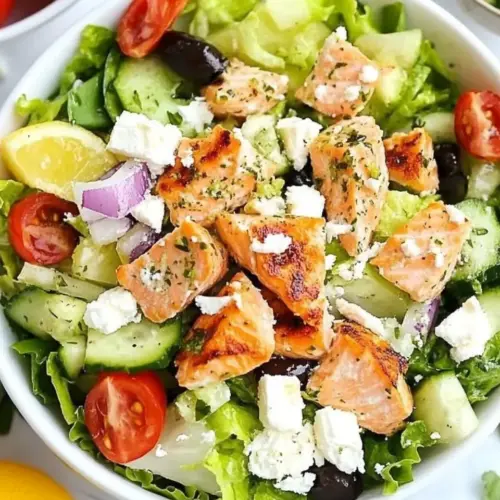
Greek Salmon Salad
Greek Salmon Salad delivers flaky seared salmon atop crisp Romaine lettuce with juicy Roma tomatoes, briny olives, and tangy feta cheese. The bright lemon and honey vinaigrette makes this an easy weeknight dinner or light lunch that feels fresh and satisfying, with a perfect balance of textures and Mediterranean flavor. Try it for a quick, healthy meal that still feels special.
Equipment
- Skillet
- Mixing Bowl
- Whisk or jar for dressing
- Tongs or spatula
Ingredients
- 8 oz . salmon skinless Grill or pan-sear to provide the main protein and hearty texture for the salad; cook until just opaque to preserve moisture and flavor. Pair with seasonings listed to enhance its natural richness and ensure a satisfying, filling component. Allow to rest briefly before flaking into bite-sized pieces for even distribution throughout the salad.
- 1 tablespoon olive oil Drizzle or rub over the salmon and vegetables to add healthy fat and a fruity, peppery note that enhances overall flavor. Use during cooking and in the dressing to create cohesion between components and help transfer seasonings. Choose extra-virgin for more depth and brightness in the dish.
- 1/2 teaspoons salt Season the salmon and salad components to bring out natural flavors and balance the dressing; adjust amount to taste. Dissolve into the dressing or sprinkle directly on the fish before cooking to enhance savory notes. Keep additional salt on hand for final seasoning after assembling the salad.
- 1/4 teaspoon black pepper Crack over the salmon and salad to add a sharp, warming bite that complements the citrus and herbs. Use freshly ground for best aroma and flavor, adding during cooking and finishing for contrast. Balance carefully to avoid overpowering delicate ingredients like feta.
- 4 cups chopped Romaine lettuce Chop to form the crisp, leafy base that provides bulk and a fresh, crunchy contrast to the warm salmon. Rinse and dry thoroughly to prevent dressing from becoming diluted and to help the leaves hold vinaigrette. Toss gently with dressing just before serving to maintain texture.
- 3 Roma tomatoes Slice or chop to add juicy acidity and a sweet-tart component that brightens each bite and complements the dressing. Remove excess seeds if desired to reduce moisture, and cut into wedges or chunks for easy mixing. Combine with cucumbers and onions for a classic Mediterranean flavor profile.
- 1/2 cup sliced red onion Slice thinly to provide a sharp, pungent counterpoint and textural contrast within the salad. Soak briefly in cold water if a milder flavor is preferred, then drain well to preserve crispness. Scatter evenly to ensure small bursts of flavor without overwhelming other elements.
- 1 cup chopped cucumber Chop or dice to contribute refreshing crunch and coolness that balances the richer salmon and cheese. Peel if preferred, then seed or leave as-is depending on desired texture and water content. Combine with tomatoes and olives for a traditional Greek salad base.
- 1/2 cup olives sliced Slice or halve to deliver a briny, savory pop that heightens umami and adds complexity to each forkful. Choose Kalamata or other Mediterranean varieties for authentic flavor, and pit if necessary before slicing. Mix into the salad to distribute salty notes throughout the dish.
- 1/3 cup feta cheese Crumble over the salad to add a creamy, tangy, and slightly salty component that ties the Mediterranean flavors together. Use as a finishing garnish and incorporate some into the dressing for cohesive flavor. Break into small pieces so it melds easily with greens and vegetables.
- 1/4 cup olive oil Whisk into the dressing or use for additional cooking oil to add smoothness and mild fruitiness that binds flavors. Combine with lemon juice and mustard to create an emulsion that clings to greens and salmon. Use measured amounts to avoid overly greasy texture on the salad.
- 2 tablespoons lemon juice Squeeze into the dressing to provide bright acidity and freshness that cuts through the richness of salmon and feta. Balance with oil and honey to form a well-rounded vinaigrette that lifts all components. Add gradually and taste to reach the desired tang.
- 1 tablespoon honey Stir into the dressing to provide a touch of sweetness that balances the lemon and salt for a harmonious vinaigrette. Heat slightly with lemon for easier incorporation if needed, or whisk vigorously to dissolve. Adjust quantity to personal preference for sweetness level.
- 1 teaspoon minced garlic or 1/2 teaspoon garlic powder Mince or combine in powdered form to add aromatic pungency and depth to both the cooked salmon and the dressing. Use fresh minced garlic for bold flavor or powder for a more subtle, shelf-stable option. Integrate with oil and lemon to infuse the dressing with savory complexity.
- 1/2 teaspoon dried oregano Sprinkle into the dressing and over the salad to contribute warm, herbaceous Mediterranean flavor that complements tomatoes and cucumber. Toast lightly if desired to release oils and amplify aroma before adding to the vinaigrette. Use sparingly to avoid overpowering delicate ingredients.
- 1/2 teaspoons salt Season the dressing or fish to reinforce savory balance and enhance other spices without overwhelming the dish; use the listed amount as a starting point. Add incrementally and taste to avoid over-salting, considering the saltiness of olives and feta. Reserve a pinch for finishing if needed.
- 1/4 teaspoon pepper Grind into the dressing to add a mild, earthy heat that pairs well with dried oregano and lemon; use fresh grinding for best aroma. Sprinkle during cooking or into the vinaigrette to create subtle warmth and complexity. Adjust to taste to keep flavors balanced.
- 1/2 teaspoon Dijon mustard Emulsify into the dressing to help bind oil and lemon into a smooth vinaigrette with a slight tang and stability. Whisk thoroughly to create a cohesive dressing that clings to greens and flakes of salmon. Use as the final step in dressing preparation to achieve desired texture.
Instructions
- Season salmon on both sides with salt and pepper.: Close your eyes to the small pleasures, smell the faint briny scent of the salt and the warm pepper aromatics as you rub them into the flesh. This initial seasoning sets the foundation for flavor, drawing out a little moisture so the surface will sear more readily. If you skip proper seasoning at this stage, the fish can taste flat after cooking, so resist the urge to under season. A common mistake is over salting immediately before serving rather than ahead of cooking, which can make the surface too salty. Look for the flesh to feel slightly tacky to the touch after seasoning, which indicates the salts are doing their job.
- Heat up olive oil in a pan (cast iron is recommended). Sear salmon for about 3 to 4 minutes on each side, until cooked through.: Warm the pan until it is hot and the oil shimmers but does not smoke, releasing a faint fruity aroma. The sound you want is a steady, confident sizzle when the salmon hits the pan, which signals good contact for a crisp exterior. Cast iron distributes heat evenly and encourages a golden crust, which adds a toasty, caramelized flavor that contrasts the tender interior. Avoid a pan that is not hot enough, which leads to sticking and a pale, steamed surface rather than a seared one. If your oil starts smoking, lower the heat and allow it to cool slightly to prevent bitter char.
- In a large mixing bowl, combine Romaine lettuce, tomatoes, cucumber, olives, onion and feta cheese.: Listen for a steady sizzle and watch the edges of the salmon change color from translucent to opaque as it cooks, moving inward from the sides. The exterior should develop a warm golden brown crust that yields a faint caramel aroma, while the inside remains moist and flaky. I press gently with a spatula to check resistance; it should feel firm but still springy. Overcooking robs the salmon of its natural oils and leaves it dry, so aim for an internal texture that flakes easily but still glistens. If you are unsure, remove it a little early and let carryover heat finish it for a minute or two.
- In a small jar, whisk together olive oil, lemon juice, honey, garlic, spices and Dijon mustard. Shake well. Pour over salad.: Hear the crisp rustle of the Romaine lettuce and notice the freshness of the chopped cucumber , the juicy scent from the tomatoes , and the briny perfume of the sliced olives . Toss these elements gently so the textures remain distinct, and sprinkle the crumbly feta cheese on top so it melts slightly against any warm bits of fish later on. The mixing step builds the salad structure, ensuring each forkful includes greens, vegetables, and salty accents. Over mixing can bruise the leaves, so be gentle; also avoid adding dressing too early or the lettuce will wilt and lose its crunch.
- Serve salad with salmon on top.: When you shake or whisk the dressing, watch the oil and lemon form a silky emulsion, with a glossy texture that clings to the spoon. The bright citrus aroma of the lemon juice contrasts with the mellow sweetness of the honey , while the minced garlic adds a fragrant complexity. The little pop of dried oregano and the emulsifying power of Dijon mustard make the dressing cohesive. A common error is to pour oil in too quickly which prevents proper emulsification; instead, add oil slowly while whisking, or shake vigorously in a jar until smooth. Taste and adjust salt and pepper to balance acidity and sweetness.
- Shake well Pour over salad: When you pour the dressing, look for a glossy sheen coating the leaves and vegetables, which tells you it is evenly distributed. Toss lightly so every piece is kissed by the vinaigrette without becoming saturated, preserving the crisp crunch of the Romaine lettuce . The olfactory cue is a citrusy, herbaceous uplift across the bowl, and visually the salad should gleam slightly rather than appear drenched. A common mistake is overdressing which wilts greens and dilutes texture, so start with less and add more if needed. If the salad seems dry, a tiny extra splash of lemon juice can brighten it without adding weight.
- Serve salad with salmon on top: Plate by arranging a bed of the dressed greens, then place the warm, seared salmon on top so its juices mingle a little with the leaves, creating pockets of rich flavor. The contrast between warm fish and cool greens is part of the appeal, and you should notice a pleasant warmth and savory aroma when served immediately. Slice the salmon or leave it whole, depending on presentation; in either case, the flaky texture should be evident and the crust should remain intact. Avoid letting the fish sit too long on the salad, which will release excess moisture and soften the greens. Serve promptly to preserve the textural contrasts.
Notes
- Adjust salt carefully, season in stages and taste before adding more, because the feta cheese and olives already contribute saltiness and you can easily overdo it.
- Control dressing intensity, start with less dressing and add gradually, tossing gently between additions to keep the Romaine lettuce crisp and avoid overdressing.
- Mild onion option, if the red onion feels too sharp, soak slices in cold water for five to ten minutes to soften the bite while preserving texture.
- Check salmon doneness, use visual cues the flesh should turn opaque and flake easily, and remove from heat just before it feels fully firm to maintain juiciness.
- Emulsify dressing, whisk the olive oil into the mustard and lemon slowly or shake vigorously in a jar for a smooth, glossy vinaigrette that clings to the salad.