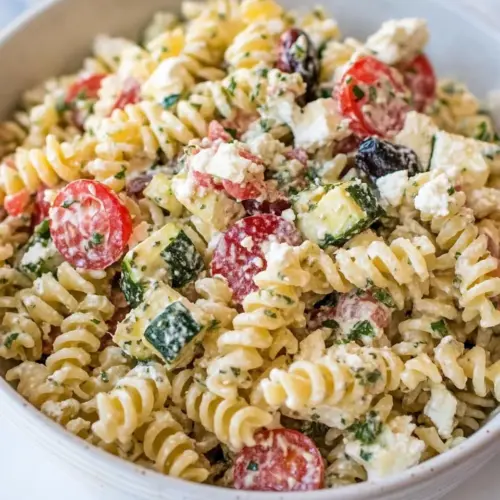
Greek Pasta Salad
Greek Pasta Salad is a creamy tangy bowl of fusilli tossed in a herby yogurt mayonnaise dressing with crisp cucumber, sweet red bell pepper, and crumbled feta cheese, perfect for an easy weeknight dinner or summer potluck. The dressing is bright with lemon and fresh herbs, making each bite both refreshing and satisfying, a reason to make it whenever you want a simple crowd pleasing salad.
Equipment
- Pot
- Colander
- Baking Sheet
- Mixing Bowl
- Whisk
Ingredients
- 1 pound fusilli pasta Cook until al dente and provide the pasta base that carries the creamy dressing and mix-ins; toss while warm to help absorb flavors evenly and prevent clumping. Ensure even cooking and cool slightly before combining with cold ingredients to maintain texture and avoid wilting vegetables.
- 1 tablespoon olive oil Drizzle to lightly coat pasta and add a subtle fruitiness that helps keep the salad from sticking together; use high-quality oil for a cleaner flavor profile. Incorporate into the dressing or toss with warm pasta for better distribution without overpowering other ingredients.
- 1 cup Greek yogurt Act as the primary creamy component offering tanginess and body to the dressing; its thickness contributes to a luscious texture that binds the salad ingredients. Choose full-fat yogurt for richness or a lighter version for fewer calories while maintaining the characteristic Greek flavor.
- 1/4 cup mayonnaise Provide additional creaminess and a touch of richness to balance the tang of the yogurt; mayonnaise helps emulsify the dressing for a smoother consistency. Adjust quantity to taste to control richness and mouthfeel without overwhelming the yogurt's tang.
- Juice from 1/2 a lemon Brighten the dressing with acidity and lift flavors throughout the salad; freshly squeezed lemon juice adds a clean citrus note that cuts through creaminess. Use freshly squeezed juice for best flavor and adjust amount to balance tang and salt.
- 1/2 tablespoon chopped fresh dill Infuse a fresh, herbaceous note with a mild anise-like flavor that complements yogurt and feta; dill adds dimension and a traditional Mediterranean profile. Chop finely and mix into the dressing so small pieces disperse evenly for consistent flavor.
- 1 tablespoon chopped fresh parsley Add a bright, slightly peppery freshness that enhances overall herbal complexity and visual appeal; parsley provides balance to richer components. Finely chop to distribute throughout the salad and prevent concentrated pockets of herb flavor.
- 1 tablespoon chopped fresh chives Contribute a delicate onion-like sharpness with a mild grassy note that elevates the dressing; chives offer subtle bite without overpowering. Slice thin and fold into the mixture last to preserve texture and fresh flavor.
- 1 teaspoon salt Season to enhance and unify flavors across the salad; proper salt levels amplify the tang of yogurt and brightness of lemon. Add gradually and taste as you go, considering the saltiness of feta before final adjustment.
- 1 large cucumber diced Provide crunchy, hydrating texture and a clean, cool flavor contrast to creamy dressing; diced cucumber adds freshness and balances richer ingredients. Remove excess seeds or salt briefly to avoid watering down the salad and dice uniformly for even bites.
- 1 large red bell pepper diced Supply sweet, crisp, and slightly vegetal notes with vibrant color that complements the other mix-ins; diced red bell pepper contributes crunch and visual appeal. Dice to match cucumber size for consistent texture and distribute evenly for balanced flavor in each serving.
- 1 cup crumbled feta cheese Offer salty, tangy creaminess with a crumbly texture that defines the Greek character of the salad; feta adds savory depth and umami. Crumble by hand over the finished salad or gently fold in to preserve pockets of flavor without overpowering other components.
Instructions
- Bring a pot of water to a boil. Boil the pasta according to package directions. Drain it well, toss it with the olive oil, and spread it in an even layer on a baking sheet. Chill the pasta in the refrigerator for at least 20-30 minutes.: The smell of boiling water is neutral, but you may notice a slight minerally scent depending on your tap water, and a vigorous boil should produce lively, rolling bubbles; this vigorous boil ensures the fusilli pasta cooks evenly and prevents it from sticking together during the initial phase. Why this matters, the active boil keeps the pasta moving which helps each spiral hydrate uniformly resulting in even texture rather than gummy centers. Troubleshooting tip, do not add pasta to a water that is barely simmering because it can lead to clumping and uneven cooking. When you see consistent, rolling bubbles across the pot surface, add the pasta gently and stir right away to separate the noodles.
- Mix the yogurt, mayonnaise, lemon juice, dill, parsley, chives and salt in a medium bowl. Cover and place in the refrigerator to all the flavors to develop.: As the pasta cooks you will hear a low, steady murmur from the pot and see the water foam slightly; taste testing for al dente is the best indicator, look for a tender exterior with a slight bite in the center. The reason this technique matters is that undercooked pasta tastes chalky and overcooked pasta will become limp and absorb too much dressing, making the salad heavy. Common mistake to avoid is relying on the timer alone because brands vary; start tasting two to three minutes before the shortest recommended time to catch the perfect texture.
- When ready to serve, mix the pasta, dressing, cucumber, bell pepper, and feta cheese together in a large bowl. Transfer to a serving bowl and serve.: After straining, the pasta will steam and release an aromatic breadcrumb of cooked starch; let it sit for a moment to lose excess heat before tossing with oil so it does not steam the dressing. Proper draining prevents watery dressing and dilution of flavors later on. A frequent error is shaking the colander too aggressively which can break delicate spirals, instead allow gravity and a gentle shake to do the work.
- Toss it with the olive oil: Once drained, the thin film of olive oil should give the pasta a subtle sheen and soft fragrance of fruit or grass, helping each spiral stay separate and allowing the dressing to adhere evenly later. This step matters because oiled pasta resists clumping while chilling and keeps texture bright. Avoid adding too much oil as it can coat everything and make the salad slick rather than lively.
- Spread it in an even layer on a baking sheet: Laying the pasta out thinly helps it cool quickly, producing a firmer, chewier bite; visually you want a single, loose layer rather than a compact mound so cold air reaches every piece. Fast cooling prevents residual heat from wilting the herbs and vegetables when combined later. A common pitfall is layering too thick, which traps steam and leaves the center warm and soft.
- Chill the pasta in the refrigerator for at least 20 to 30 minutes: Cooling the pasta produces a satisfying firm texture and stops cooking, you will notice the steam subside and the pasta feel cool to the touch when ready; chilling also helps the dressing cling better when tossed. This matters because warm pasta can dilute the dressing and change the salad mouthfeel. If you skip adequate chilling, the salad can become limp and lose contrast between creamy and crisp elements.
- Mix the yogurt mayonnaise lemon juice dill parsley chives and salt in a medium bowl: When you combine these, the aroma of herbs should bloom against the tang of Greek yogurt and lemon , creating a balanced dressing with both acidity and cream. Emulsifying them until smooth ensures an even coating on the pasta later, which is why gentle whisking matters. Watch out for lumps of yogurt or unmixed mayonnaise; whisk thoroughly until homogeneous so every bite tastes the same.
- Cover and place in the refrigerator to allow the flavors to develop: Chilling the dressing briefly lets the herbs release their oils and the acid soften sharp edges, and you will notice the fragrance deepen after resting. This development period creates a more cohesive, rounded flavor that ties the salad together. Do not leave the dressing out at room temperature for long, as dairy based dressings should be cooled promptly for food safety.
- When ready to serve mix the pasta the dressing cucumber bell pepper and feta cheese together in a large bowl: As you toss, listen for the soft shuffle of pasta and the light clink of cheese; the salad should look glossy and studded with colorful vegetables and crumbled feta cheese . Gently folding keeps the vegetables crisp and the cheese intact, preserving contrasts. A common mistake is overmixing which can break apart the feta and bruise the vegetables, making the salad pasty and less vibrant.
- Transfer to a serving bowl and serve: Once plated, the salad should present a harmony of pale cream dressing, verdant herbs, and jewel like peppers, inviting immediate tasting; a final sprinkle of extra chopped herbs brightens the look. Serving chilled ensures each component maintains its intended texture and temperature. Avoid serving it too cold straight from the fridge without a few minutes to ease the chill, as flavors become more expressive as the salad approaches cool room temperature.
Notes
- Heat management: Cool the pasta quickly on a baking sheet so it firms up and does not steam the dressing.
- Dressing consistency: Whisk the Greek yogurt and mayonnaise until smooth so it clings to the spirals and does not pool at the bottom.
- Herb timing: Add delicate herbs like chives at the end to preserve color and fresh oniony flavor.
- Cheese care: Crumble feta cheese by hand to create irregular pieces that give bursts of saltiness rather than uniform crumbs.
- Make ahead strategy: Prepare the dressing and chop vegetables a day before, but combine them with the pasta just before serving for best texture.