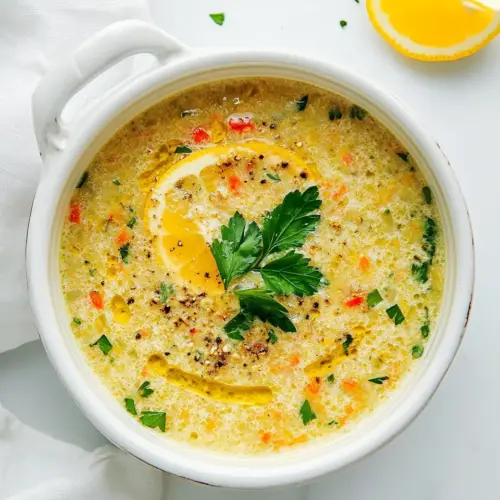
Greek Lemon Soup
Greek Lemon Soup brightens a cold night with creamy, silky texture and a lively lemon finish. This easy weeknight dinner uses pantry staples like white rice and low sodium chicken broth, plus shredded rotisserie chicken for speedy protein. The tempered egg and lemon liaison creates a delicate, velvety finish that feels comforting yet light, making it a must make for simple, satisfying meals.
Equipment
- Large Pot
Ingredients
- 1/4 cup olive oil Sauté in the base of the soup to release fragrant oils and provide a rich, silky mouthfeel; olive oil also helps soften aromatics and carry flavors throughout the broth. Use moderate heat to avoid burning and ensure an even aromatics sauté for best depth.
- 1 cup finely diced yellow onion Sweat gently to build a sweet, savory foundation and contribute body to the broth; finely dicing yellow onion ensures quick, even cooking and integration into the soup. Caramelize slightly if desired to add a subtle sweetness that complements the lemony finish.
- 1 cup finely chopped carrots Soften to add natural sweetness, color, and texture while contributing to the soup’s overall vegetable base; finely chopping carrots helps them meld into the broth and release sugars. Maintain a gentle simmer to keep pieces tender without turning mushy.
- 1 cup finely chopped celery Cook until tender to provide aromatic background notes, slight crunch if preferred, and a classic mirepoix contribution to the soup’s savory profile; finely chopped celery also adds subtle herbal bitterness. Keep pieces small for uniform texture and easier presentation in bowls.
- 1 tablespoon minced garlic Sear briefly to unlock strong pungent and aromatic flavors that brighten the soup; minced garlic disperses evenly and infuses the broth with savory depth. Add later in the sauté process to avoid bitterness from overcooking.
- 8 cups low-sodium chicken broth Simmer as the main liquid medium that concentrates flavors and creates a comforting, savory base; low-sodium chicken broth allows better control of seasoning while contributing body and protein-derived richness. Maintain a gentle simmer to meld ingredients without clouding the broth.
- 1 teaspoon Italian seasoning Infuse gently to provide a balanced Mediterranean herb profile with notes of oregano, basil, and thyme; Italian seasoning contributes warmth and complexity without dominance. Add early to allow flavors to bloom during simmering for cohesive taste.
- 2 bay leaves Steep whole to deliver subtle aromatic depth and a slightly floral bay note that enhances the soup’s savory backbone; bay leaves are removed before serving but leave behind complexity. Use intact leaves to avoid gritty texture and overly intense flavors.
- 1 cup white rice Cook through to thicken and add comforting starchiness while absorbing the soup’s flavors; white rice yields tender grains that create a hearty texture and help make the soup more filling. Rinse if desired to remove surface starch and prevent excessive sticking.
- Salt and pepper Season to taste to balance acidity and deepen savory notes; salt and pepper adjust the overall flavor profile and enhance individual ingredients. Add gradually and taste as rice and chicken concentrate flavors during cooking.
- 2 -3 cups shredded rotisserie chicken Stir in shredded to provide protein, umami, and a satisfying, tender bite; rotisserie chicken adds roasted flavor and convenience while integrating into the broth. Add near the end to heat through without drying and to preserve texture.
- 1/2 cup freshly-squeezed lemon juice Acidify and brighten to give the soup a distinctive tang and lift the savory flavors; freshly-squeezed lemon juice adds clean citrus brightness that defines avgolemono-style soup. Add gradually and taste to achieve a balanced lemon presence without overpowering.
- 2 large eggs Temper carefully to create a silky, velvety emulsion that thickens the broth while adding richness; whisked eggs combined with lemon form the classic avgolemono liaison. Temper with hot broth before adding to the pot to prevent curdling and ensure smoothness.
- Fresh parsley or freeze-dried, optional for topping Garnish lightly to add fresh herbal aroma and a pop of green that complements lemon; fresh parsley or freeze-dried provides mild grassy notes and visual appeal. Sprinkle just before serving to preserve color and flavor intensity.
- Freeze-dried dill or fresh, optional for topping Finish sparingly to contribute a subtle, slightly tangy herbaceous note that pairs well with lemon; freeze-dried dill or fresh adds traditional Greek flavor. Use small amounts to avoid overpowering the soup’s delicate balance.
Instructions
- Heat olive oil in a large Dutch oven or heavy pot over medium-high heat. Add onion, carrot, celery, and garlic. Season with about 1/4 teaspoon each of salt & pepper. Sauté for 8–10 minutes, until softened and golden. (Don’t rush this step; it builds flavor.): You will smell the fruity notes of olive oil as it warms, and the surface should shimmer but not smoke, indicating the right temperature. Heating the oil properly ensures the onion , carrot , and celery will sizzle gently on contact and begin releasing their aromas. If the oil smokes, it will impart a bitter edge, so lower the heat and let it cool slightly before proceeding. Use a heavy pot so heat distributes evenly, preventing hot spots that can burn small pieces.
- Stir in the uncooked rice and Italian seasoning. Cook, stirring constantly, for 1–2 minutes to lightly toast the rice.: When the vegetables hit the pot you will hear a soft sizzling and smell the first savory notes rising. Stir frequently so each piece softens uniformly and the edges develop a pale golden color, taking on a nutty sweetness. The garlic should go in toward the end of this stage so it becomes fragrant but not brown. If you rush with high heat, the outsides will brown too fast while centers remain raw, so aim for medium to medium low heat and patience for even tenderness.
- Pour in the chicken broth and add the bay leaves. Bring to a boil over high heat, then reduce to medium-low. Cover and simmer for 10–15 minutes, or until the rice is tender.: Light seasoning at this stage draws moisture from the vegetables and helps them soften more efficiently while building foundational flavor. You will notice juices forming that carry concentrated aroma into the pot. Over seasoning now can make the final soup too salty after the broth and chicken are added, so add sparingly and adjust later.
- In a medium bowl, whisk together the lemon juice and eggs until smooth. While whisking constantly, slowly ladle about 1-1/2 cups of hot broth from the pot into the lemon-egg mixture to temper.: The cooking will transform raw, sharp vegetables into mellow, sweet, golden pieces that scent the kitchen with comforting complexity. Listen for a gentle change in the sizzle and look for translucence in the onion and slight caramelization on the carrot and celery . If you skip this slow development, the soup will lack depth, so resist the urge to shorten this step.
- Gradually pour the egg-lemon mixture back into the soup while stirring constantly. Remove from heat immediately. Stir in the shredded chicken and adjust seasoning as needed. Remove and discard bay leaves before serving.: Toasting the white rice briefly adds a warm, toasty aroma and helps the grains hold shape as they cook, while the dried herbs begin to bloom. Move the rice constantly for a minute or two so each grain is coated and starts to shine with oil. If you leave the rice untouched it may stick to the bottom and scorch, so keep it moving during this short toasting period.
- Top with fresh or freeze-dried parsley and dill to taste (I love a lot!) if desired, and serve hot with crusty buttered bread.: You should hear a quieter sizzle as the rice picks up heat, and the scent will shift toward a warm, nutty note. This step improves texture by preventing mushiness, because the slight toasting forms a subtle outer layer on the grains. Watch closely because rice can go from toasted to burnt in moments, and burnt rice will impart an acrid taste to the entire pot.
- Pour in the chicken broth and add the bay leaves: As the low-sodium chicken broth hits the pot you will see steam rise and the mixture will loosen from the bottom. The bay leaves release an aromatic, layered note that deepens the broth over simmering. Using low sodium allows you to control final seasoning, so taste before adding extra salt later. Forgetting to remove bay leaves before serving is a common oversight, and biting into one is unpleasant, so mark them for removal.
- Bring to a boil over high heat, then reduce to medium-low: The broth will move from a gentle shimmer to active rolling bubbles, which helps the rice start absorbing liquid. Reduce to medium low to maintain a steady simmer, not a furious boil, so the rice cooks evenly and the flavors meld. Boiling too hard can make rice split and the liquid overly cloudy, changing mouthfeel and clarity.
- Cover and simmer for 10 to 15 minutes, or until the rice is tender: During this time the kitchen fills with a comforting, savory steam and the white rice swells, releasing starch that gently thickens the broth. Test a grain for doneness; it should be tender but not collapsing. Overcooking will turn the rice into a porridge like texture, so keep an eye and taste early if needed to preserve the right bite.
- In a medium bowl, whisk together the lemon juice and eggs until smooth: You will create a pale, glossy mixture that smells bright from the lemon juice . This liaison is the key to a creamy finish, since the eggs will emulsify into the hot broth when tempered. Make sure the eggs are fully whisked to avoid streaks, and use fresh citrus for the most vibrant aroma. If the mixture is lumpy, strain it to prevent uneven texture when added to the soup.
- While whisking constantly, slowly ladle about 1 to 1 1/2 cups of hot broth from the pot into the lemon-egg mixture to temper: As you add hot liquid you will see the egg mixture warm and loosen, smoothing into a slightly warmer, silkier emulsion. This gradual process prevents the eggs from scrambling. If you pour too fast, the eggs will curdle, creating undesired bits in the soup, so pace your ladling and keep whisking steadily.
- Gradually pour the egg-lemon mixture back into the soup while stirring constantly: When you return this warmed mixture to the pot, it will blend into the broth and create a lustrous, creamy sheen without any cream. Stir gently to distribute the emulsion evenly and maintain a gentle heat under the pot to keep everything cohesive. Remove from heat immediately after incorporating to avoid overcooking the eggs, which would break the smooth texture.
- Remove from heat immediately: Taking the pot off the burner locks in the silky texture and prevents the eggs from seizing up. You will notice the surface calming and developing a uniform, glossy appearance. Leaving the pot on heat will risk curdling, so step back as soon as the emulsion is incorporated.
- Stir in the shredded chicken and adjust seasoning as needed: Adding the pre shredded rotisserie chicken warms the meat through and infuses the soup with roasted notes, while you fine tune salt and pepper to taste. The chicken should be tender and fully integrated into the broth. If the meat is cold and chunky, break it apart gently to avoid cold pockets in the final bowl.
- Remove and discard bay leaves before serving: As a final housekeeping step, take out the bay leaves so no one encounters an unexpected tough fragment. This small action preserves the pleasant experience of smooth texture and uninterrupted sipping. Forgetting them is an easy slip, so check carefully before ladling bowls.
- Top with fresh or freeze-dried parsley and dill to taste and serve hot: A finishing sprinkle of parsley or dill adds herbal brightness and a welcoming color contrast, and the hot soup will lift their aromas immediately. Serve while the soup is still steaming to preserve that fresh herb scent. Adding herbs too early can cause them to fade, so reserve them for just before serving.
Notes
- Storage Tip Use airtight containers and store meat and rice separately if you plan to keep the soup longer, this prevents the rice from soaking up too much broth and keeps the chicken texture better for reheating.
- Reheating Tip Reheat gently over low heat and stir frequently, adding a splash of broth if the soup feels too thick, which restores the silky mouthfeel without diluting flavor.
- Tempering Tip Always temper the eggs by adding hot broth little by little to the egg lemon mix while whisking, this prevents curdling and ensures a smooth, creamy finish when incorporated back into the pot.
- Herb Tip Add fresh herbs at the end just before serving to preserve their bright aroma and color, freeze dried herbs can be added earlier but will have a more muted presence.
- Salt Control Tip Because rotisserie chicken and many broths contain salt, taste before adding much extra salt, and adjust gradually to avoid over seasoning.