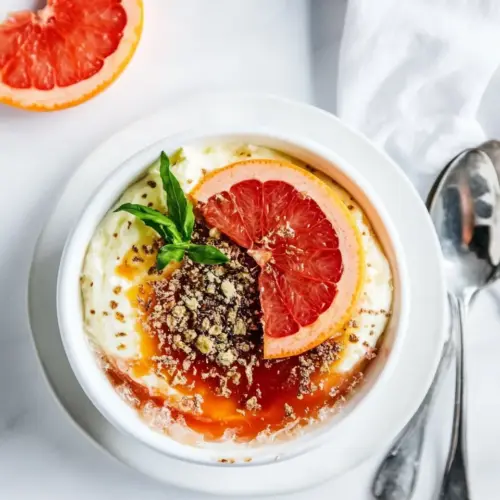
Grapefruit Brulee Breakfast Bowl
Grapefruit Brulee Breakfast Bowl is a bright, slightly indulgent morning treat featuring caramelized grapefruit, creamy Greek yogurt, and crunchy muesli or granola. This easy, quick breakfast balances tart and sweet with satisfying texture, making it perfect for quick weekday starts or relaxed weekend brunches. Try it for a fuss free, elegant bite that feels special without a lot of work.
Equipment
- Oven Broiler
- Baking Sheet
- Aluminum Foil
- Small knife
- Paper towel
Ingredients
- 1 grapefruit Halve and broil until caramelized to create a tangy, slightly charred citrus base that balances sweetness in the bowl. Provide juicy segments and caramelized sugars that contrast creamy and crunchy elements for a bright breakfast centerpiece.
- Brown sugar Sprinkle and torch to form a crisp caramel crust that adds deep molasses-like sweetness and crunchy texture. Enhance bitterness of grapefruit while providing a rich counterpoint to creamy yogurt and honey.
- 1/2 cup Greek yogurt (I used plain 2%) Spoon creamy, tangy yogurt to add smooth body and mild acidity that complements the caramelized grapefruit. Offer protein and creaminess to balance sweetness and provide a satisfying, silky mouthfeel.
- 1/2 cup muesli or granola Scatter crunchy muesli or granola to introduce toasted grains, nuts, and seed textures that add hearty bite and nutty flavor. Absorb some juices from the grapefruit and yogurt, contributing sustained satiety and contrast.
- Honey to taste Drizzle to taste to layer natural sweetness and floral notes that harmonize with caramelized sugar and tart grapefruit. Adjust overall sweetness level and add glossy finish to the bowl.
- 1 tablespoon mint chopped (optional) Chop and sprinkle as an optional fresh herb garnish to bring a bright, cooling note and aromatic lift. Add color contrast and a hint of menthol-like freshness that refreshes the palate between bites.
Instructions
- Turn oven broiler on high.: When you set the oven to broil , you want intense radiant heat from above so the brown sugar melts and bubbles quickly, creating a crisp top without overcooking the fruit. You should hear a faint hiss and see small bubbles form in less than a minute once the grapefruit is under the broiler. A common error is placing the fruit too close to the element, which can char the sugar before it properly caramelizes, so position the rack one to two slots below the broiler and watch closely.
- Peel grapefruit and cut it into 1/2" slices. Cut off the bitter pith around the edge of each slice. If you don't want to have to use a knife to eat them, cut the pieces into quarters from there. Arrange slices on a foil-lined baking sheet. Dab the top of each piece with a piece of paper towel to dry it off. Spread a thin layer of brown sugar on each piece. Broil for around 8 minutes or until the sugar is bubbling but not burned.: Properly preparing the grapefruit ensures pleasant texture and easy eating. After peeling and trimming the pith, slicing into roughly 1/2" rounds gives uniform pieces that caramelize evenly. You should notice the flesh glistening with juice and the edges cleanly trimmed. If you leave too much pith, the segments will taste harsh, so take the time to shave it away carefully.
- Meanwhile, add Greek yogurt and muesli to a bowl.: Removing the white pith is crucial because it carries bitterness that competes with the caramelized sugar. Use a small knife to pare the edges until you see bright, translucent flesh; this exposes the sweetest part of the segment. The fruit will smell fresher after trimming. A mistake I see is rushing this step and ending up with an unpleasant aftertaste, so be patient and precise.
- Once the grapefruit is done, add it to the bowl. Add a bit of chopped fresh mint if desired. Drizzle the whole thing with honey and eat immediately.: Quartering the slices makes the bowl spoon friendly and easy to share. Each quarter should reveal juicy, glistening interiors with clean edges. This also helps the brown sugar adhere to more surface area for better caramel coverage. Avoid cutting pieces too small because they can dry out under the broiler.
- Arrange slices on a foil-lined baking sheet: Lining the sheet with foil captures the melted sugar and simplifies cleanup, and arranging slices in a single layer ensures even heat exposure. You should see the segments sitting comfortably without overlapping, which allows the sugar to bubble uniformly. Crowding leads to uneven caramelization, so leave a bit of space around each piece.
- Dab the top of each piece with a piece of paper towel to dry it off: Removing excess surface moisture helps the brown sugar melt and crisp rather than dissolve into syrup. Gently pressing a paper towel produces a slightly drier, matte surface that browns more evenly under the broiler. If you skip this, the sugar may pool and burn in spots, so take an extra moment to blot.
- Spread a thin layer of brown sugar on each piece: An even, thin coating of brown sugar creates the characteristic crackly top without overwhelming the fruit. Use just enough to cover the surface in a translucent layer, and pat it lightly so it adheres. You should see the sugar granules resting on the flesh. Too much sugar will melt into syrup and burn, so measure visually to keep it modest.
- Broil for around 8 minutes or until the sugar is bubbling but not burned: Under the broiler the sugar should bubble, deepen to a warm amber, and form a slight crust, often within 8 minutes depending on your oven. You will notice a toasty aroma and the sugar shifting from matte to glossy as it melts. Watch carefully for the final minute to prevent burning, since charred sugar tastes bitter and will overwhelm the bowl.
- Meanwhile, add Greek yogurt and muesli to a bowl: While the fruit is broiling, assembling the base keeps the process efficient. Spoon the Greek yogurt into a bowl and nestle in the muesli or granola , listening for the crunch as it hits the creamy surface. This contrast prepares a cushion for the warm grapefruit. A common pitfall is adding the granola too early so it loses its crunch; just combine immediately before serving.
- Once the grapefruit is done, add it to the bowl: Transfer the warm, caramelized grapefruit onto the yogurt and muesli so the sugar lightly melts into the yogurt and creates ribbons of sweetness. The contrast of temperatures should be noticeable, with steam rising briefly and a glossy sugar sheen on each piece. If the fruit sits too long, it will soften and the crust may weep, so assemble and serve promptly.
- Add a bit of chopped fresh mint if desired: Finishing with chopped mint introduces an aromatic lift that brightens the bowl. The herb should smell green and fragrant, and a light scattering enhances the presentation. Too much mint can dominate the citrus, so sprinkle sparingly to complement rather than mask the main flavors.
- Drizzle the whole thing with honey and eat immediately: A final drizzle of honey adds floral sweetness and a glossy finish that ties the components together. Pour slowly to form thin strands that catch the light, and taste to adjust the amount. Serve right away, enjoying the contrast of warm caramel, cool yogurt, and crunchy muesli. Letting it sit will dull textures and make the granola soggy, so savor it immediately.
Notes
- Use whole grapefruit halves, the note in the original recipe works if you prefer a more dramatic presentation, just spread about a tablespoon of brown sugar on each half and stabilize the base by trimming a small slice for a flat bottom.
- Swap granola for muesli, if you want a softer bite choose muesli and add it just before serving so it keeps a little tooth without turning soggy.
- Torch when possible, use a kitchen torch for deeper amber color and more control over caramelization rather than relying solely on the broiler.
- Prefer less sweetness, reduce the amount of brown sugar on each slice and increase the drizzle of honey to taste, which keeps sweetness adjustable after broiling.
- Mint optional, add chopped mint sparingly only at the end for an aromatic lift that does not overpower the citrus.