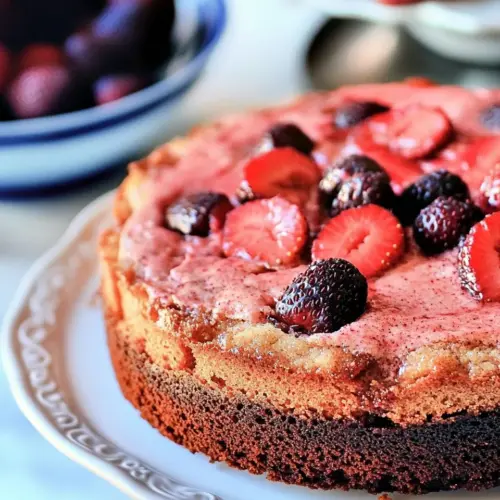
Grandmother Verdie’s Strawberry Cake Recipe
Grandmother Verdie’s Strawberry Cake Recipe is a tender, fruity layer cake that combines the convenience of a white cake mix with bright strawberry flavor from gelatin and halved berries. Moist, soft layers are finished with a lush strawberry buttercream frosting for a showstopping dessert, ideal for spring gatherings or an easy weeknight celebration. Make it for its nostalgic flavor and reliably pleasing texture.
Equipment
- Hand Mixer
- Stand mixer
Ingredients
- 1 Box(473 g) Duncan Hines White Cake Mix, or favorite white cake mix Provides the base structure and primary dry components for the cake batter; choose a trusted white cake mix for consistent rise and neutral flavor that highlights the strawberry elements. Ensures proper leavening and sweetness while simplifying the baking process for reliable results.
- 3 tablespoons (22.5 g) All-Purpose Flour Adds lightness and helps absorb excess moisture from the strawberry syrup and gelatin; flour stabilizes the batter and prevents it from becoming too dense. Use measured spooning for accurate texture and uniform crumb.
- 1 (3-Oz) box(85 g) Strawberry Flavored Gelatin, Jello Imparts concentrated strawberry flavor and sweetness while contributing color and slight gelatinous body; flavored gelatin blends into the batter to enhance fruit notes without adding fresh fruit texture. Dissolve fully for even distribution and to help set the filling or cake interior.
- 1/2 cup (113.5 g) Water Hydrates the gelatin and helps integrate dry ingredients smoothly; water also adjusts batter consistency for optimal mixing and baking. Warm or room-temperature water aids dissolving gelatin more effectively.
- 1 cup (226 g) Oil, coconut oil, or melted butter Contributes richness, tenderness, and moisture to the cake crumb while providing a golden exterior; oil keeps the cake moist longer, coconut oil adds subtle flavor, and melted butter gives a richer taste. Measure carefully to maintain the intended crumb structure and mouthfeel.
- 4 large(200 g) Eggs Incorporates structure, emulsion, and lift through beaten eggs; eggs bind ingredients, trap air, and enrich flavor, producing a stable yet tender crumb. Use large eggs at room temperature for best incorporation and volume.
- 5 ounces (141.75 g) Frozen Halved Strawberries in Syrup, thawed Adds real strawberry texture, natural fruit flavor, and additional moisture from syrup; thawed halved strawberries bring bursts of fruit and visual interest. Drain or chop as desired to control moisture and distribution in the batter.
- Strawberry Buttercream Frosting Provides a sweet, creamy finishing layer that complements the cake with concentrated strawberry flavor and decorative possibilities; buttercream adds richness, smooth texture, and stability for piping. Adjust sweetness and consistency to match serving and presentation needs.
Instructions
- Preheat ovens to 350º F. Prepare three 8-inch round cake pans with butter and flour to prevent sticking.: You will notice the oven beginning to warm and the faint scent of dry heat as it approaches 350º F , which primes the pans and air for even rise. Preparing three 8-inch pans means they heat evenly and are ready the moment the batter is mixed, reducing the time the leavening sits idle. When greasing with butter , work a thin layer into the pan, then dust with all purpose flour , tapping out the excess so the crust releases easily. A common issue is uneven greasing which leads to sticking in spots, so take your time to coat each pan uniformly. If you skip this step or undercoat, the edges can tear when you remove the cakes, compromising presentation. Visually, the pans should look matte with an even satin sheen from the butter, not slick pools; touch them gently to confirm coverage.
- In a large mixing bowl, add cake mix, flour, gelatin, water, oil and eggs, and strawberries and mix well.: At this stage the bowl will combine dry and wet into a glossy batter; you will hear the low hum of the mixer as ingredients emulsify and catch the scent of strawberry flavored gelatin blooming into the mix. The cake mix gives structure while the gelatin lifts the strawberry aroma, so ensure the gelatin dissolves fully by first mixing it with the water so there are no sandy granules left. As you add oil and eggs , the batter should transform into a smooth, ribbonable texture; if it looks grainy or splits, stop mixing and scrape the sides before continuing. Folding in the thawed frozen halved strawberries in syrup by hand at the end keeps their shape and prevents color streaks; be gentle. A typical mistake is overmixing once the fruit is added, which can break down the berries and make the crumb gummy, so mix until just combined.
- Divide the cake batter between three prepared cake pans.: When you spoon batter into the pans you will see a slightly glossy, thick batter that spreads easily. I often weigh pans to ensure even distribution, but if you do not have a scale, use a measuring cup to portion batter so layers bake evenly. Evenness is key for stacking cleanly; uneven layers lead to leaning cakes and frustrated decorators. If batter pools or is uneven in a pan, gently tamp the pan on the counter to level it and release trapped air. Watch for any dry pockets along the edges and smooth them out, because dry pockets bake up as denser areas. Visual cues to look for include batter that fills each pan to an equal height and a smooth top that will rise uniformly.
- Bake until cakes spring back when gently touched in the center and the edges begin to turn loose from the sides of the pan, about 30 minutes. You can follow my tips for how to tell when your cake is done.: The oven will fill with sweet, strawberry fragrance as the cake bakes and the edges will start to pull away from the pan. Use a gentle fingertip press to test the center, expecting a gentle spring back rather than a sticky indentation. The internal texture should feel set and the top should be pale golden, not deeply browned, since this is a white cake. Avoid opening the oven often, which causes temperature fluctuation and can make the cake sink. If you notice raw batter pooling or an underbaked center after the suggested time, extend baking in three minute increments while checking the spring back; conversely, if the top browns too quickly, tent loosely with foil. Trust the feel and the visual separation from the pan more than the clock alone.
- While the cake is baking, make the Strawberry Buttercream Frosting according to the recipe.: The sound of whisking and the aroma of butter and sugar will fill your kitchen as you craft the frosting. A well made strawberry buttercream frosting should be fluffy, smooth, and hold soft peaks that are easy to spread. If using powdered sugar, sift it to avoid gritty texture, and when adding strawberry flavor, balance small amounts at a time to reach the right degree of sweetness and color. Be mindful of frosting temperature; if the butter is too warm the frosting will be too soft, while too cold butter makes it lumpy. A common trap is adding liquid flavorings too quickly, which can make the frosting runny, so add sparingly and adjust consistency with more sugar or a touch of cream.
- After removing the cake pans from the oven, allow them to cool on a wire rack for about 5-10 minutes in the pans, then carefully turn the cakes out onto wire racks to complete cooling.: The first ten minutes of resting help the crumb set so the layers release cleanly. You will notice the pan no longer feels hot to the touch and the cake surface has a slight spring when pressed. Run a thin knife around the edges if needed before inverting to loosen any stuck spots. When you flip the pan onto a wire rack, the cake should slide out with a soft, cloth like texture; if it resists, give it a minute more. Cooling fully is crucial because attempting to frost a warm cake will cause the strawberry buttercream frosting to melt and slide. A frequent error is rushing this stage which leads to a messy finish, so be patient and let the layers reach room temperature.
- Assemble the cooled cake layers onto a cake stand or cake plate and frost each layer with the buttercream frosting until all three layers are frosted. Slice and serve.: When you stack the layers, you will feel a satisfying weight as each one sits on the frosting bed, which helps keep the cake stable. Spread a generous but even layer of strawberry buttercream frosting between layers, smoothing with an offset spatula for a neat edge. Work from the center outward, applying more pressure where needed to push frosting to the edge without squeezing it out. After all layers are stacked, apply a thin crumb coat, chill for a short time to set, and then finish with a final, smoother coat. Watch for frosting that is too soft, which will slide; if that happens, chill briefly to firm up. The finished cake should present clean layers and a velvety frosting sheen.
- Slice and serve.: As you cut into the finished cake you will see distinct, tender layers and feel the soft resistance of the frosting. Use a sharp knife, wiping it between slices for clean edges, and use long, steady strokes rather than a sawing motion. The texture should be moist, with strawberry notes throughout and a creamy finish from the frosting. Serving slightly chilled enhances the structure and makes slicing easier. A common serving mistake is leaving the cake out in warm conditions which can soften the frosting excessively, so keep it chilled until ready to present.
Notes
- Bring ingredients to room temperature: Allow eggs and any refrigerated items to sit out for a short while so they blend more smoothly into the batter, improving texture and rise.
- Measure carefully: Spoon and level your all purpose flour when measuring, and use the cup measures provided to avoid dense or dry cake caused by too much flour.
- Gentle folding: Fold the frozen halved strawberries in syrup in by hand at the end to preserve berry shape and avoid overworking the batter, which can make the crumb tough.
- Even layering: Use a scale or measuring cup to divide batter evenly across three pans so the cake stacks level and decoration is simpler.
- Cool completely before frosting: Ensure layers are fully at room temperature so the strawberry buttercream frosting does not melt and slide, preserving neat edges.
- Chill between coats: After a light crumb coat, chill briefly to set crumbs, then apply the final coat for a clean finish that photographs and slices beautifully.