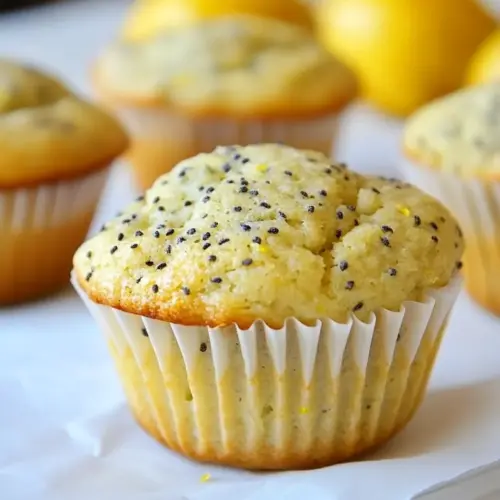
Grain Free Lemon Poppy Seed Muffins
Grain Free Lemon Poppy Seed Muffins are bright, tender, and irresistibly moist with fresh lemon, nutty almond flour, and tiny crunchy poppy seeds. These easy grain free muffins blend into a smooth batter for reliable, bakery style results, perfect for breakfast or a crowd pleasing brunch. Make them when you want a light, flavorful treat that travels well and disappears fast.
Equipment
- Blender
- 12 hole muffin tray
- Muffin liners
- Instant read thermometer
Ingredients
- 2 cups almond flour Provide a tender, moist base and rich, slightly sweet nutty flavor while also supplying structure and healthy fats to the muffins; substitute carefully for similar-textured nut flours if needed due to its coarse, absorbent nature.
- 1/2 cup tapioca flour Add lightness and chew, helping to mimic the texture of starches found in grain-based flours while improving dough cohesion; balance quantities to avoid gumminess because it absorbs and releases moisture differently.
- 3 tablespoons coconut flour Absorb extra moisture and add a bit of density, improving crumb structure and helping batter thicken without gluten; use sparingly because it is highly absorbent and can make baked goods dry if overused.
- 1/2 teaspoon baking soda React with acidic components to produce lift and a tender crumb by releasing carbon dioxide when activated; measure precisely because too much can create a soapy or metallic taste.
- 1 teaspoon baking powder Provide reliable leavening power to create rise and a light texture by producing carbon dioxide when combined with moisture and heat; use in concert with baking soda for optimal elevation and balance of acidity.
- 1 tsp sea salt Enhance and balance flavors while supporting overall seasoning, preventing the muffins from tasting flat by rounding out sweetness and acidity; sprinkle or mix evenly to avoid concentrated salty pockets.
- 1/2 cup unsweetened almond milk Contribute moisture and a subtle creamy base while helping to hydrate the flours and bind ingredients together; choose unsweetened varieties to control sweetness and maintain recipe balance.
- 1 tbsp lemon zest Deliver intense citrus aroma and concentrated lemon oils that brighten flavor and enhance overall fragrance; finely grate to avoid bitter pith and distribute zest evenly through the batter.
- 1/3 cup fresh squeezed lemon juice Supply bright acidity and tang that activates baking soda for lift while imparting classic lemon flavor; strain fresh juice to remove seeds and adjust to taste for desired tartness.
- 3 large eggs Provide rich structure, emulsification, and natural leavening through trapped air when beaten, contributing to a tender, cohesive crumb; use room-temperature eggs for best incorporation and volume.
- 1/2 cup pure maple syrup Offer natural sweetness and moistness while contributing depth of flavor and a softer texture compared to granulated sugar; measure carefully as liquid sweeteners affect batter hydration.
- 2 tablespoons avocado oil Add healthy monounsaturated fats that help keep muffins moist and tender while aiding in even heat transfer and texture; choose neutral-flavored oil to avoid altering the lemon profile.
- 1 teaspoon pure vanilla extract Improve aroma and depth of flavor by rounding out sweet and acidic notes with warm vanilla complexity; use pure extract for a cleaner, more natural taste than imitation flavoring.
- 2 tablespoons poppy seeds Provide a nutty crunch and subtle floral note, dispersing small bursts of texture throughout the muffin while offering visual appeal; stir in gently to avoid concentrating seeds in any one area.
Instructions
- Preheat the oven to 350 degrees F and line a 12-hole muffin tray with muffin liners (or lightly spray the holes with cooking oil spray).: The air in your oven should smell clean and start to feel warm within a few minutes as it approaches 350 degrees F . You want the oven evenly heated so the muffins rise uniformly and brown gently on top. I can tell it is ready when the racks feel warm and a quick hand test near the door registers consistent heat. A common mistake is placing the tray too low or too high; aim for the center rack so heat circulates evenly. If liners stick, it is usually because the muffin is removed too soon or the batter was overly wet, so allow proper cooling later.
- Add all of the ingredients for the muffins to a blender and blend until smooth. Stir in the lemon poppy seeds.: When you blend everything, you will hear a steady whirr that becomes a quieter hum as the batter turns silky. The aroma of maple syrup and lemon zest will rise up first, and the batter should look homogeneous without visible lumps. This smoothness matters because it ensures even distribution of leaveners and prevents pockets of dry almond flour , which would create grainy bites. Avoid overblending to the point the mixture warms too much, as that can loosen the structure; pulse until combined. A frequent error is leaving unincorporated dry streaks, which you can spot as flour clumps, so scrape the blender and pulse again if needed.
- Pour muffin batter into the muffin holes, filling them 3/4 of the way up.: As you fold in the poppy seeds , you will see tiny black flecks scatter through the pale batter, giving it a charming freckled appearance. The seeds add a light crunch that contrasts with the tender crumb, and gently stirring prevents crushing them. The sound is subtle a soft plop as they sink into the batter, and visually you should have even distribution. Do not overmix at this stage because excessive stirring can deflate some of the air you created and make the muffins denser. A common pitfall is clustering seeds at the bottom of the bowl, so mix just enough to evenly distribute them.
- Bake on the center rack of the oven for 23 to 25 minutes, or until muffins are golden-brown on top. Baked goods are fully cooked once they have reached an internal temperature of 190 degrees Fahrenheit. You can verify the doneness of the muffins by inserting an instant read thermometer into one of them.: Pouring should be steady and controlled, and the batter will flow like a thick cream, slightly glossy on top. Fill each cup about three quarters full so there is room for the muffins to rise without spilling. You want a little dome to form, which will brown attractively. If cups are overfilled, the muffins can bake over and stick together, creating messy tops. Use a scoop for uniform sizes so they bake at the same rate, as inconsistent sizing is a frequent cause of uneven bake.
- Allow muffins to cool to room temperature before peeling off the muffin liner and devouring (Note: if you don’t allow muffins to cool, they will stick to the muffin liner).: As the muffins bake, your kitchen will fill with a warm citrus and almond scent, and you may hear quiet crackling from the tops as they set. The surface should take on a golden hue and feel springy to the touch. If you have an instant read thermometer, the center should reach about 190 degrees Fahrenheit when fully baked; this ensures they are set but not dry. A common error is removing them too early, leaving a gummy interior, so check visually and by temperature. If the tops brown too quickly, tent with foil to prevent overbrowning while the centers finish cooking.
- Allow muffins to cool to room temperature before peeling off the muffin liner and devouring (Note: if you don’t allow muffins to cool, they will stick to the muffin liner) : Cooling is when the crumb finishes setting, and you will notice steam ease away and the aroma mellow into a gentle citrus perfume. As they cool, the muffins firm slightly so the liners slip off cleanly without tearing the sides. If you rush this, bits will cling to the paper and the texture can feel gummy. I usually let them rest on a rack for at least ten to fifteen minutes, which also tempers the heat so they are pleasant to bite into. Don’t stack them while warm, because trapped steam can make bottoms soggy.
Notes
- Swap non dairy milk: If you prefer a different non dairy milk, regular cow's milk, oat milk, or any non dairy milk you like works here, and will only slightly shift the texture. Thicker milks can make the batter denser, so adjust by a tablespoon or two if needed.
- Oil alternatives: Use olive oil or melted coconut oil instead of avocado oil if you'd like; expect a subtle change in flavor and mouthfeel. Coconut oil can add a hint of coconut aroma, while olive oil can add a savory undertone that pairs surprisingly well with lemon.
- Adjust sweetness: You can reduce the maple syrup by up to 25 percent for a less sweet muffin, but the moisture contribution may require a splash more milk to maintain crumb moisture.
- Boost lemon intensity: Increase lemon zest by another teaspoon for extra brightness, but avoid adding more lemon juice without balancing with additional binder, as excess acid can alter the rise from the baking soda.
- Make mini muffins: Use a mini muffin tray and reduce baking time, keeping a close eye for doneness because smaller muffins cook faster and can dry out if left too long.