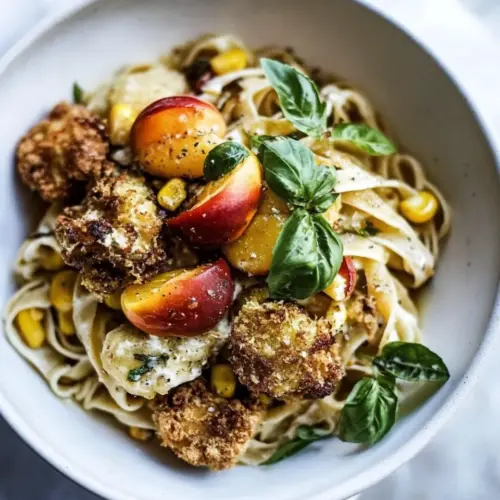
Goat Milk Fettuccine with Spicy Corn Fritters and Sweet Nectarine
Goat Milk Fettuccine with Spicy Corn Fritters and Sweet Nectarine is a creamy, tangy pasta with crispy, spicy corn fritters and juicy fruit accents. This easy weeknight dinner combines silky goat milk sauce and melty cheeses with crunchy fritters for texture contrast, making it a memorable summer plate. Try it for a satisfying meal that feels special but is simple to pull together.
Equipment
- Large Pot
- Large skillet with high sides
- Large saucepan
- Wire Rack
- Slotted Spoon
Ingredients
- 1 jalapeno seeded + minced Add heat and bright vegetal aroma by seeding and mincing finely so it disperses evenly throughout the batter and fritters, providing a fresh, spicy kick that complements the sweet corn.
- 3/4 cup flour Bind the fritter batter with all-purpose flour to provide structure and crispness when fried; whisk smoothly to avoid lumps and adjust slightly if batter feels too wet.
- 1/2 teaspoon baking powder Lighten the fritter texture and introduce a gentle lift by incorporating baking powder; ensure it is evenly mixed to create a tender interior with a delicate crumb.
- 1/2 teaspoon chili powder Introduce warm, earthy chili flavor and subtle smokiness to the fritters and batter for depth; use measured amounts to balance heat without overpowering other components.
- 1/4 teaspoons salt + pepper Season the batter and various components with a controlled measure of salt plus freshly ground pepper to enhance overall flavor; adjust to taste during cooking and plating.
- 1/2 cup milk any % you prefer Moisten the batter and add tenderness by using your preferred milk percentage, which will influence richness; combine until smooth for a cohesive mixture.
- 1 1/4 cups sweet yellow corn about 2 ears Provide sweet, juicy kernels that form the fritter base and add texture; remove from cobs if using fresh ears and fold into the batter to distribute sweetness evenly.
- 1/3 cup fresh basil chopped Contribute a fresh, herbaceous note by chopping basil finely so it disperses through the fritters and sauce, adding bright flavor and aroma to both components.
- canola oil for frying Create a hot frying medium using canola oil, chosen for its high smoke point and neutral flavor; maintain proper temperature to achieve golden, non-greasy fritters.
- 1 pound fettuccine Serve as the pasta base that carries the creamy sauce and fritters; cook fettuccine al dente to retain tooth and hold sauces effectively.
- 4 tablespoons butter Add richness and silky mouthfeel to the pasta sauce by melting butter gently with cheeses and milk, contributing to a smooth, glossy emulsion that coats the pasta.
- 4 ounces cream cheese softened Deliver tangy creaminess and help thicken the sauce when softened and incorporated; whisk until fully blended to avoid lumps and to enhance body.
- 4 ounces goat's cheese Bring concentrated tang and creamy density that deepens the sauce's flavor; crumble or soften goat's cheese into the warm mixture for pronounced acidity and character.
- 2 -3 cups whole goat's milk may also sub whole milk or cream in a pinch Provide a rich, lactic base for the sauce with whole goat's milk, adding distinctive goat milk flavor and creaminess, or substitute whole milk or cream to adjust richness as needed.
- 1 cup manchego cheese shredded Add a nutty, savory finish and melty texture when shredded into the sauce; manchego contributes depth and a slightly piquant profile that harmonizes with goat cheeses.
- salt and pepper to taste Season the final dish to taste, allowing adjustments for salt and pepper at the end to balance the sauce, pasta, and fritters without over-salting early.
- pinch of nutmeg Introduce warm, aromatic complexity with just a pinch of nutmeg that elevates creamy sauces by complementing dairy and enhancing the overall flavor profile subtly.
- pinch of crushed red pepper Provide an optional spark of heat and layered spice with crushed red pepper, used sparingly to give the sauce and fritters an extra kick without overwhelming other flavors.
- 1/4 cup fresh basil chopped Enhance fresh herb aroma and visual appeal by adding chopped basil as a garnish or finishing herb, reinforcing the basil used in the fritter batter for continuity.
- 2 ripe nectarines sliced thin, for topping (optional) Offer sweet, juicy slices as an optional topping that add bright, refreshing contrast to the rich, savory pasta and crispy fritters while contributing color and texture.
- fresh cherry tomatoes basil and parsley, for serving Garnish and finish the plate with fresh cherry tomatoes, basil, and parsley to add acidity, herbaceous brightness, and visual appeal that tie all components together.
Instructions
- To make the corn fritters, add the flour, baking powder, chili powder, salt, pepper and milk to a bowl. Stir until combined. Fold in the corn and jalapeno. It should be the consistency of a very thick pancake batter; if needed add a tablespoon more of milk. Preheat the oven to 300 degrees F.: Warm, slightly sweet scents will not appear yet, but you should sense a batter that feels thick and slightly lumpy because of the kernels. Work quickly when stirring so the flour hydrates evenly, and scrape the bowl sides with a spatula to incorporate any dry pockets. If the batter smells flour heavy, let it rest five minutes to hydrate; this improves texture. A common mistake is overmixing which toughens the fritters, so stir until combined and stop. Your goal here is a batter that holds kernels suspended, not a pourable pancake mix.
- Add oil to a large saucepan and heat over medium high heat. When the oil is hot add about 1-2 teaspoons of batter to the pot. Fry for 1-2 minutes or until golden brown. Remove with a slotted spoon and drain on a paper towel, then repeat with remaining batter. Keep the fritters warm in the oven until the pasta is ready.: As you fold in the bright yellow corn and minced jalapeno , notice the contrast between starchy batter and juicy kernels. Folding gently preserves corn texture, and the pepper aroma will become noticeable as oils release. If you crush the kernels while mixing, you will lose the burst of sweetness; be gentle. Taste a tiny bit of raw pepper to check heat, and adjust the amount kept in for a milder or bolder fritter.
- To make the fettuccine, bring a large pot of salted water to a boil. Add the pasta and prepare according to directions. Drain and set aside. Heat a large skillet with high sides over medium-high heat, add the butter, goat's milk, cream cheese and goat's cheese. Bring to a boil and simmer until smooth and creamy, about 5 minutes. Add the manchego cheese, basil, crushed red pepper, pepper, salt and nutmeg, whisking until the cheese has melted. Simmer the sauce 3-5 minutes until the sauce is smooth and creamy. Add the pasta to the sauce and toss well, cook another 1-2 minutes to warm through. Remove from the heat. The sauce will thicken and coat the pasta a bit easier as it cools. Serve warm with corn fritters, slices of nectarines, tomatoes, basil and more cheese! Dig in!: Check consistency by scooping a spoon and seeing if the batter holds its shape. A tactile check is useful, the batter should be cohesive yet lumpy from corn. Adding a tablespoon of milk at a time prevents over thinning. A too thin batter will flatten and absorb excess oil during frying, causing greasy fritters.
- Preheat the oven to 300 degrees F: Even before frying, preheat an oven so you can hold fritters warm. The low heat will keep them crisp without drying them out. If you skip this, fritters will cool and soften quickly. Use a rack on a baking sheet to maintain crisp bottoms while holding.
- Add oil to a large saucepan and heat over medium high heat: When the canola oil shimmers but before it smokes, you are at the right temperature. The oil should sizzle when a drop of batter hits it. Use a thermometer if you have one, aiming for a steady heat so fritters brown evenly. Too cool and they absorb oil, too hot and they burn outside while staying raw inside.
- When the oil is hot add about 1 to 2 teaspoons of batter to the pot: You will hear a satisfying sizzle immediately; that sound indicates a crisp exterior forming. Use a small spoon so fritters are uniform and cook evenly. Crowding the pan drops oil temperature, so fry in batches. A common error is using large dollops which lead to undercooked centers.
- Fry for 1 to 2 minutes or until golden brown: Watch the edges closely, they will change color first. The aroma will shift from raw flour to toasty corn and spice. Turn fritters once during cooking to ensure even browning. If they brown too fast, lower the heat; if they never brown, raise it slightly. A tester fritter is helpful to calibrate time.
- Remove with a slotted spoon and drain on a paper towel then repeat with remaining batter: Drain briefly to avoid sogginess yet do not leave fritters to steam on a flat surface. Layering paper towels can trap excess oil, but transfer quickly to a wire rack to maintain crispness. Avoid stacking fritters, which can make them soggy on contact.
- Keep the fritters warm in the oven until the pasta is ready: This step preserves the contrast between hot crunch and warm creamy pasta. Keep them on a rack in the oven so air circulates, preventing a limp crust. If you hold too long they will dry, and if too brief they cool before service.
- To make the fettuccine bring a large pot of salted water to a boil: The pot should be large enough so fettuccine moves freely, which prevents sticking. Salt the water generously, it seasons the pasta from within. Listen for a rolling boil before adding pasta. Undersalting is a frequent oversight that results in flat tasting noodles.
- Add the pasta and prepare according to directions: Stir after adding to keep strands separate. Cook until al dente, with a slight give in the center. Reserve a cup of pasta water before draining, which is useful to adjust sauce consistency. Overcooking will result in limp strands that won’t hold sauce properly.
- Drain and set aside: Drain quickly and avoid rinsing, you want the starches to remain on the surface to help the sauce cling. Place the pasta where you can add it into the sauce within minutes so it stays warm. Letting it sit too long can cause it to stick together.
- Heat a large skillet with high sides over medium high heat add the butter goat's milk cream cheese and goat's cheese: As these ingredients meet heat, you will smell buttery richness and tangy dairy. Use medium high so the mixture warms steadily, allowing cream cheese to soften and incorporate. Avoid boiling aggressively as it can separate the sauce; a gentle simmer encourages a glossy emulsion.
- Bring to a boil and simmer until smooth and creamy about 5 minutes: The sauce will transform from curdled looking to silky as cheeses melt. Stir frequently to prevent sticking and to maintain even heat distribution. If the texture looks grainy, reduce heat and whisk vigorously; overheating can break the emulsion.
- Add the manchego cheese basil crushed red pepper pepper salt and nutmeg whisking until the cheese has melted: The manchego integrates and deepens flavor while chopped basil brightens. Whisking encourages a unified sauce and helps dissolve any lumps. If the sauce feels too thick add a splash of reserved pasta water. A common misstep is adding cold cheese straight from the fridge which causes clumping, so bring cheeses closer to room temperature first.
- Simmer the sauce 3 to 5 minutes until the sauce is smooth and creamy: During this brief simmer flavors meld and the aroma becomes rich and nutty. Watch the thickness; it will coat the back of a spoon. Over simmering can reduce too much and make the sauce gluey, so remove at the right glossy stage.
- Add the pasta to the sauce and toss well cook another 1 to 2 minutes to warm through: Tossing encourages the sauce to cling to each fettuccine strand, distributing bits of herb and spice. The residual heat will finish melting any remaining cheese. If the sauce feels tight, add reserved pasta water a tablespoon at a time until the texture is silky. Avoid tossing too vigorously which can break delicate strands.
- Remove from the heat: Take the skillet off the flame before serving to prevent the sauce from over reducing. The sauce will thicken as it cools slightly, so factor that into your final seasoning check. Leaving it on heat risks separation or overthickening.
- Serve warm with corn fritters slices of nectarines tomatoes basil and more cheese: Arrange hot frittters atop or beside the glossy pasta, garnish with thin nectarine slices and fresh tomatoes for contrast. The fruit cools the palate between rich bites and brightens the plate visually. Serve immediately; waiting will dull textures and flavors.
- Dig in: Expect a variety of textures and temperatures, each bite combining creamy, crunchy, and juicy notes. Encourage guests to take a bit of fritter with their pasta to experience the full interplay of elements. Leftovers will lose crispness, so enjoy fresh when possible.
Notes
- Temperature matters: Keep oil at a steady medium high so fritters brown quickly without absorbing oil, and use a rolling boil for pasta water to prevent sticking.
- Prep ahead: Shuck corn, mince jalapeno, and shred manchego before starting so the finish is quick and relaxed.
- Cheese readiness: Soften cream cheese and bring goat's cheese closer to room temperature so they blend into a glossy sauce without lumps.
- Use pasta water: A few tablespoons of reserved water will loosen the sauce and help it cling to fettuccine, creating a silky finish.
- Hold properly: Keep finished fritters on a wire rack in a 300 degrees F oven to maintain crisp edges without drying the interior.
- Balance flavors: Add finishing salt and a pinch of nutmeg or crushed red pepper to brighten and harmonize the dairy and sweet fruit.