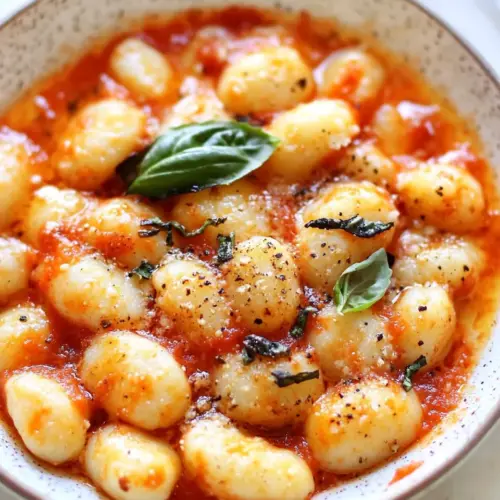
Gnocchi With Pomodoro Sauce
Gnocchi With Pomodoro Sauce combines pillowy gnocchi with a bright, simmered San Marzano style tomato sauce, fragrant herb infused olive oil, and pockets of melted mozzarella. This creamy yet light dish is an easy weeknight dinner that still feels special, offering comforting textures and bold tomato flavor. Make it for a simple, impressive meal that comes together quickly and pleases a crowd.
Equipment
- 10-inch high sided sauté pan
- Saucepan
- Saucepan for boiling gnocchi
- Colander
- Broiler or oven with broiler setting
Ingredients
- 1/4 cup DeLallo extra virgin olive oil, plus 1 tablespoon Enhance flavor and prevent sticking by using extra virgin olive oil; add the smaller tablespoon later to finish and gloss the sauce and gnocchi. Use high-quality oil to impart fruity, peppery notes that complement the tomatoes and herbs. Heat gently to release aromas without burning for a balanced base.
- 4 stems fresh Italian flat leaf parsley Provide fresh, bright herbal notes by chopping flat leaf parsley and stirring it into the sauce near the end; reserve some for garnish if desired. Parsley lifts heavy tomato flavors and adds a clean, slightly peppery finish. Add delicate leaves last to preserve color and freshness.
- 4 stems fresh oregano Offer a warm, slightly citrusy herbal aroma when finely chopped and cooked briefly with the onions and garlic. Oregano contributes depth and Mediterranean character to the pomodoro, harmonizing with tomatoes and olive oil. Use fresh stems stripped of leaves for the most vibrant flavor.
- 2 stems fresh rosemary Introduce a piney, resinous aroma by bruising or finely mincing rosemary and adding it early to infuse the oil. Rosemary can withstand longer cooking and lends savory complexity that pairs well with the gnocchi's potato base. Use sparingly to avoid overpowering the sauce.
- 2 stems fresh basil, plus 2 more stems for serving Deliver sweet, aromatic basil flavor when torn or chiffonaded and stirred into the finished sauce; reserve additional stems for serving to maximize fragrance. Basil adds classic Italian character and balances acidity of the tomatoes with its sweet, clove-like notes. Add fresh near the end to keep volatile oils intact.
- 1/2 yellow onion, diced Build the savory foundation by gently sautéing diced yellow onion until translucent and slightly caramelized for natural sweetness. Onions provide texture and a mellow backbone that supports tomatoes and herbs. Cook slowly to develop flavor without harshness.
- 3 cloves garlic, pressed or minced Amplify savory depth by pressing or mincing garlic and cooking briefly to release its aroma without browning. Garlic gives a pungent, aromatic quality that melds with olive oil and tomatoes to create a classic pomodoro profile. Add at the right moment to avoid bitterness from burning.
- 1 28 ounce can DeLallo San Marzano tomatoes Form the tomato base with whole San Marzano tomatoes, crushing them to create a rich, slightly sweet, and less acidic sauce. Use the canned tomatoes and their juices to ensure consistent flavor and body; simmer to concentrate flavors and meld with herbs. San Marzano is prized for its balanced sweetness and texture.
- Kosher salt and freshly ground black pepper Season the sauce judiciously with kosher salt and freshly ground black pepper to enhance and balance flavors throughout cooking. Salt brightens tomato sweetness and brings out herb aromatics, while freshly ground pepper adds subtle heat and complexity. Taste and adjust gradually to avoid oversalting.
- Pinch of red pepper flakes Introduce a touch of heat and complexity with a pinch of red pepper flakes to lift the sauce without dominating it. Red pepper flakes add background warmth that complements the sweet tomatoes and creamy elements. Start with a small pinch and increase cautiously to taste.
- 1/4 cup heavy cream, optional Optionally enrich the sauce by stirring in heavy cream for a silkier texture and mellowed acidity; add near the end of cooking. Cream softens sharp tomato flavors and creates a luxurious mouthfeel that coats the gnocchi nicely. Use sparingly to maintain the pomodoro character.
- 1 16-ounce package DeLallo potato gnocchi Provide tender, pillowy texture by boiling DeLallo potato gnocchi according to package instructions until they float and are just cooked through. Gnocchi absorb the sauce and act as the vehicle for flavors, offering a soft, comforting contrast to the bright pomodoro. Drain carefully and toss with sauce to avoid crushing.
- 8 ounces cherry size mozzarella balls, cut in half Add melty, milky richness by halving cherry-size mozzarella balls and tucking them into the hot gnocchi and sauce to soften. Mozzarella creates creamy pockets that contrast with the acidic tomato base and enhance overall indulgence. Use fresh mozzarella for best texture and gentle melting.
- 1/2 cup freshly grated Parmesan cheese Finish with savory umami and a salty, nutty accent by grating Parmesan over the assembled dish just before serving. Parmesan adds a crystalline complexity and helps bind sauce to gnocchi while contributing a sharp, aged flavor. Sprinkle to taste for balanced seasoning.
Instructions
- Add 1/4 cup olive oil to a 10-inch high sided sauté pan or a saucepan over medium heat. Add the parsley, oregano, rosemary and 2 stems of basil and cook for about 5 minutes or until the herbs become crisp.: You will notice the oil shimmer as it warms, releasing a gentle fruity aroma that signals readiness. This temperature allows the herbs to infuse without burning, which is important because overheated oil will taste bitter. A high sided pan helps contain any splatter when you add herbs and later tomatoes. Avoid turning the heat too high, a common mistake is rushing and creating hot spots that scorch delicate flavors.
- Remove the herbs and discard then add the onion and garlic to the oil, lowering the heat if needed so the onions cook gently and don't brown. Cook until the onions are transparent, about 5-7 minutes, then crush the tomatoes with your hand and add to the pan with juice.: As the herbs fry you will hear quiet sizzles and smell a concentrated herbal perfume, almost resinous from the rosemary . This step releases essential oils and flavors into the oil, creating an aromatic platform for the sauce. The crisping indicates the herbs have given up their volatile oils, so remove them promptly to avoid an overly bitter note. If you leave them too long, they can darken and bitter the oil.
- Season with kosher salt, freshly ground black pepper and red pepper flakes and simmer for 30-40 minutes or until the sauce reduces and thickens, stirring occasionally. Stir in the heavy cream and remove from the heat.: The translucent onion will soften and the oil will carry a mellow sweetness, while the garlic adds a warm, savory aroma. Gentle cooking ensures the onion's sugars caramelize subtly rather than charring, which keeps the sauce balanced. Stir occasionally to prevent sticking, and be careful not to let the garlic brown as that produces a sharp, bitter flavor.
- Meanwhile, bring a saucepan of water to a boil and add the gnocchi. Season generously with kosher salt and cook until the gnocchi float to the top of the boiling water.: When the onion is glassy, it has released its sugars and melds seamlessly into the sauce. Crushing the canned tomatoes by hand gives you control over chunk size and releases bright tomato juices, creating a rustic texture. Pouring the juices into the pan adds an immediate fragrant steam. A common oversight is adding tomatoes to a pan that is too hot, which can create a splatter and uneven cooking.
- Drain and then place the gnocchi into the cooked sauce. Top with the halved mozzarella balls and sprinkle with Parmesan cheese then drizzle the tops of the gnocchi with the remaining olive oil.: As the sauce simmers you will see it slowly deepen in color and thicken, releasing a sweet tomato aroma that becomes concentrated and complex. Gentle simmering allows water to evaporate and flavors to concentrate, improving texture and mouthfeel. Stirring prevents sticking and ensures an even reduction, but avoid constant agitation which can break down tomato chunks too much. Over reducing will make the sauce too pasty, so watch for a saucy consistency that coats the back of a spoon.
- Broil for 5-8 minutes or until the cheese melts and the tops become crispy. Garnish with additional basil leaves and serve immediately.: If using heavy cream , folding it in off heat preserves a silky texture and prevents curdling. The cream softens acidity and rounds the sauce, giving it a velvety finish. You should smell a gentle richness after adding cream, and the sauce should appear glossy. Adding cream to boiling sauce can separate it, so temper by mixing slowly and using residual heat.
- Meanwhile, bring a saucepan of water to a boil and add the gnocchi: The bubbling water will sound lively as it reaches a rolling boil, and salting it creates seasoning that the gnocchi will absorb. Boiling also gives an immediate visual cue when gnocchi float, indicating they are cooked through. Do not overcrowd the pot, overcrowding causes the water temperature to drop and the dumplings to cook unevenly.
- Season generously with kosher salt and cook until the gnocchi float to the top of the boiling water: Floating is the classic sensory sign of doneness for gnocchi , they will look plump and may bob like pillows. Taste one to confirm a tender center. Overcooking will make them mushy and prone to breaking apart, so remove them promptly once they float and are tender to the bite.
- Drain and then place the gnocchi into the cooked sauce: The gnocchi should sizzle softly as they meet the warm sauce, and the sauce will cling to their surfaces, coating each piece. Toss gently so they absorb flavor without breaking. A common mistake is draining completely dry, losing the starchy water that helps sauce adhere; drain but leave them slightly moist for better integration.
- Top with the halved mozzarella balls and sprinkle with Parmesan cheese then drizzle the tops of the gnocchi with the remaining olive oil: The added mozzarella and Parmesan cheese will create pockets of molten creaminess and a savory finish when broiled. Drizzling the extra olive oil enhances gloss and adds a final fruity note. Arrange pieces evenly so the cheese melts uniformly; clustering can lead to uneven browning.
- Broil for 5-8 minutes or until the cheese melts and the tops become crispy: Under the broiler you will see cheese bubble and brown, offering a toasty aroma and a textural contrast between creamy interior and crisped top. Keep the dish a few inches from the heat source so the tops brown without burning, and watch closely to avoid crossing from golden brown to char. Leaving it unattended is the most common mistake here.
- Garnish with additional basil leaves and serve immediately: Fresh basil adds a bright, herbaceous lift against the warm, cheesy surface and releases a fresh scent as you plate. Serving immediately preserves the textural contrast of warm sauce and melted cheese. If left to sit too long, the gnocchi will absorb more sauce and lose that ideal balance.
Notes
- Herb infusion technique Try frying whole herb stems briefly then discarding them for a cleaner, aromatic oil that avoids stray leaves in the sauce.
- Tomato texture Crush the canned tomatoes more or less depending on whether you prefer a chunkier or silkier sauce, adjusting the simmering time accordingly for the desired body.
- Cream option Add the heavy cream at the end for a silkier mouthfeel, but skip it if you prefer a brighter, more acidic profile from the tomatoes.
- Mozzarella placement Nest the halved mozzarella between gnocchi rather than on top for more even melting and pockets of cheese throughout the dish.
- Olive oil finish Use the reserved tablespoon of olive oil as a finishing drizzle to bring a fresh fruity fragrance and glossy look to the plated gnocchi.
- Herb garnish Tear fresh basil leaves with your fingers rather than chopping to preserve volatile oils and present a more rustic finish.