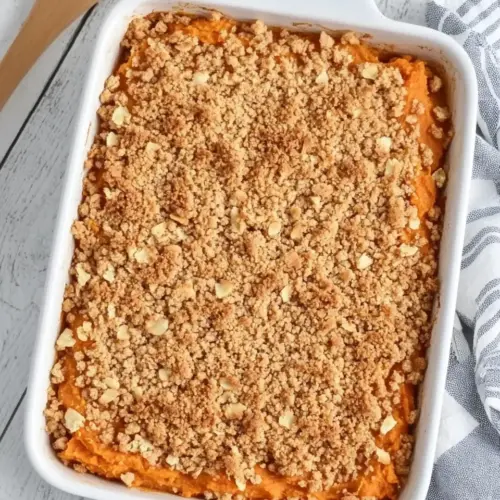
Gluten Free Sweet Potato Casserole
Gluten Free Sweet Potato Casserole delivers creamy, spiced sweet potatoes topped with a crunchy oat and nut crumble. This cozy side is naturally gluten free, with warm notes of maple syrup, cinnamon, and fresh nutmeg. Perfect for an easy weeknight dinner or a holiday table, it’s a comforting crowd pleaser that’s simple to prepare and hard to resist.
Equipment
- Food Processor
Ingredients
- 3 large sweet potatoes, for a total of 3 cups of sweet potato puree Provide natural sweetness and a creamy base when cooked and mashed, supplying fiber, vitamins, and a smooth texture that defines the casserole’s body; puree consistency helps bind other wet ingredients and balances the topping.
- 1/3 cup apple juice concentrate, thawed Add concentrated fruity sweetness and moisture while contributing depth of flavor; thawed juice concentrate dissolves easily into the puree and enhances caramelized notes without extra liquid.
- 1/4 cup pure maple syrup Supply pure, unrefined sweetness with a hint of maple complexity that complements the sweet potatoes; helps sweeten and slightly thin the puree for a cohesive filling.
- 2 teaspoons ground cinnamon Impart warm, aromatic spice that enhances the sweet-potato flavor and adds comforting autumnal notes; cinnamon blends into the puree to provide background warmth and aroma.
- 1/2 teaspoon grated nutmeg, (whole bulb grated with a Microplane) Contribute warm, slightly sharp nutty spice when freshly grated, elevating the overall flavor complexity; small amount brightens the filling with fragrant nuance.
- 1 tablespoon vanilla extract Provide floral, sweet vanilla aroma that rounds the flavors and enhances perceived sweetness; vanilla integrates into the puree to create a well-balanced taste profile.
- dash of salt Enhance and round flavors by balancing sweetness and amplifying aromatic spices; a small dash brings out natural flavors and keeps the dish from tasting flat.
- 1/2 cup rolled oats Add chewy texture and gentle whole-grain nuttiness to the topping while helping bind crumbs together; rolled oats toast during baking to provide a hearty contrast to the smooth filling.
- 1 cup chopped nuts, walnuts or pecans Introduce crunchy texture and rich buttery flavor to the topping while supplying healthy fats and a toasty aroma; chopped nuts create contrast and structural interest in each bite.
- 1/4 cup coconut oil or vegan butter, not melted Provide solid fat that binds and coats the topping ingredients while contributing a subtle coconut or buttery flavor; when chilled, it helps create crumbly clumps that crisp during baking.
- 1/4 cup maple syrup Contribute additional natural sweetness and reinforce maple flavor in the topping; helps caramelize the nuts and oats for a glossy, flavorful finish.
- 1 teaspoon ground cinnamon Add a warm, aromatic spice to the topping, mirroring the filling’s flavors to create continuity; cinnamon in the crumble ties the dish together with complementary spice.
- 1/4 teaspoon grated nutmeg, (whole bulb grated with a Microplane) Bring a delicate, freshly grated warm spice note to the topping to elevate complexity; tiny amounts of nutmeg brighten the overall aroma without overpowering.
Instructions
- Wash, dry, and prick the sweet potatoes several times with a fork. Roast at 400℉ (200℃) for 45 minutes until fork-tender. Alternatively, pressure cook on a trivet above 1 1/2 cups of cold tap water for 22 minutes, following my recipe for Instant Pot Sweet Potatoes.: As the oven heats, you will smell a faint caramelizing sweetness from the skins, and as they roast the surface will darken slightly and become supple to the touch. When piercing with a fork you want little resistance, and the potato should yield with a soft, almost melting give. This step builds concentrated flavor through caramelization, which is essential because it deepens the natural sugars in the sweet potatoes ; if you skip adequate roasting the puree can taste flat. Common mistakes are under roasting, leaving the skin unpricked so the potato bursts, or over roasting until the flesh dries out. If using a pressure cooker, listen for a gentle release and check that the flesh is uniformly tender before proceeding.
- Cool the sweet potatoes until just cool enough to handle. Remove and discard the skin of the sweet potatoes. Measure out 3 cups of the flesh of the sweet potatoes to use for the casserole. (Should be fairly close to what you have made.): The cooling phase allows the hot steam to subside so you can easily scoop the flesh; you should still feel warmth but not burning heat. As you remove the skins, the interior will appear moist and smoothly textured; aim for about 3 cups of flesh, which creates the proper density for the base. This matters because too little potato produces a thin layer, and too much makes the casserole dense and heavy. A frequent oversight is skipping the cooling and getting burned, or failing to measure the flesh which throws off your ratios.
- Preheat the oven to 350℉ (175℃). Lightly grease a 2-quart baking dish with coconut oil or vegan butter.: Preheating ensures the casserole bakes evenly once assembled, and greasing the dish prevents sticking while promoting even browning at the edges. As the oven comes to temperature you may notice a slight warmth and the faint hum of circulation if you have a convection setting. Not preheating can lead to uneven baking, where the topping browns before the center warms, so wait until it registers its full temperature.
- In a food processor fitted with an s-blade, place 3 cups of the flesh of the sweet potatoes. Add 1/3 cup apple juice concentrate, 1/4 cup maple syrup, 2 teaspoons cinnamon, 1/2 teaspoon grated nutmeg, 1 tablespoon vanilla extract, and a pinch of salt. Process until the mixture is well combined and the sweet potatoes are creamy and smooth. Transfer the sweet potato puree to the prepared baking dish.: When you pulse and process the mixture it should become glossy and velvety, with the warm scent of cinnamon and nutmeg filling the kitchen. The reason processing matters is that a smooth puree creates a luxurious mouthfeel and helps the casserole set uniformly. If it seems too dense, the apple juice concentrate helps loosen the texture, and if it’s too thin, short pulses will thicken it without overworking. Avoid overprocessing which can heat the mixture and alter texture, and watch out for underprocessing which leaves fibrous pieces.
- Wipe out the food processor and return to the base. Add the 1/2 cup oats, 1 cup nuts, 1/4 cup coconut oil (or vegan butter), 1/4 cup maple syrup, 1 teaspoon cinnamon, and 1/4 teaspoon nutmeg to the food processor fitted with an s-blade. Pulse a few times until the mixture is just combined and crumbly. Don't overprocess, you want the topping to have a bit of texture.: As you pulse the topping ingredients they should start to clump lightly and smell fragrantly toasted from the maple syrup and nuts . The coconut oil or vegan butter should remain in small pockets, which melt during baking and create a crunchy, layered texture. This technique is important because it prevents the topping from becoming paste like; a common error is overprocessing until everything is powdery. Aim for a mix that holds its shape when pinched between fingers but still flakes apart when scattered on top of the puree.
- Sprinkle the crumble evenly over the sweet potato mixture.: When you scatter the topping across the warm, pale orange surface it should sit proudly on top, with visible bits of chopped nuts and oats. Distribute it evenly so each portion gets a balanced ratio of base to topping; uneven spreading leads to some areas browning too much while others remain underdone. If the puree is very warm, the topping may begin to soften, so work quickly and press lightly to create an even layer without compacting the crumbs.
- Bake for 45 minutes or until the topping is golden brown and the casserole is warmed through.: While baking you will hear a slight crackle from the topping as moisture escapes, and the aroma of toasted nuts and maple will intensify. Look for a deep golden brown color on the crumble and for gentle bubbling at the edges where the base meets the dish, which indicates the interior is warm. This step develops the final texture and melds flavors, and underbaking can result in a cold center, while overbaking risks drying out the base. A common misstep is setting the oven too hot which accelerates browning and leaves the center cool, so follow the temperature guidelines closely.
Notes
- Swap the nuts: Use pecans for a sweeter, more buttery topping or walnuts for an earthier, slightly bitter contrast that balances the maple notes.
- Adjust the sweetener: If you prefer a milder sweetness in the base reduce the maple syrup by a tablespoon or use a less concentrated apple juice to maintain brightness without extra sugar.
- Make it oil free: Substitute mashed ripe banana or applesauce in the crumble for a lower fat option, though note the topping will be softer and less crisp.
- Toasting adds depth: Lightly toast the rolled oats and nuts before pulsing to amplify the crunch and introduce a deeper, nutty aroma to the crumble.
- Prep ahead: Prepare both base and crumble up to 48 hours in advance and store separately, then assemble and bake when ready to serve for easier holiday timing.