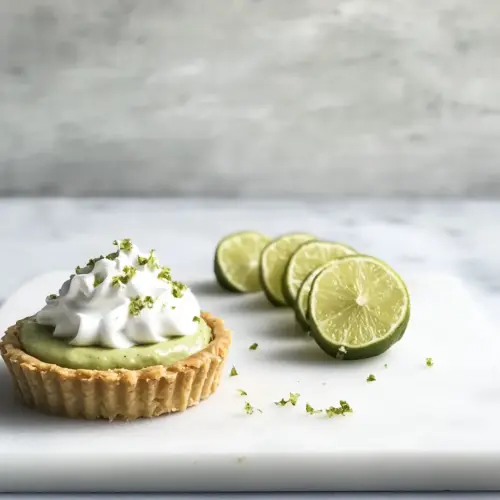
Gluten Free Key Lime Tart with Avocado Custard and Skyr Whip
Gluten Free Key Lime Tart with Avocado Custard and Skyr Whip is a creamy, bright dessert that combines silky avocado custard, zesty lime, and a crunchy almond crust. Naturally gluten free and easy to assemble, it s an elegant choice for spring gatherings or weeknight treats. Make it ahead for best results and enjoy a refreshing, balanced finish that guests will ask for again.
Equipment
- Oven
- 9 inch tart pan
- Food Processor
- Blender
- Parchment Paper
Ingredients
- 2 cups blanched almond flour Provide a tender, slightly nutty base for the crust that binds well and adds gluten-free structure; measure precisely to ensure proper texture and prevent a soggy tart shell.
- 1/2 teaspoons ea salt Enhance overall flavor balance and strengthen dough structure by controlling yeast-free reactions; dissolve evenly to avoid salty pockets in the crust.
- 2 tablespoons melted coconut oil, plus more for greasing Moisten and help bind the almond flour crust while contributing a subtle tropical flavor; melt before mixing so it incorporates smoothly and helps create a crisp edge when baked.
- 1 large egg Bind the crust ingredients together and add lift and richness to the pastry; beat lightly before folding to distribute evenly and improve cohesion.
- 2 avocados, pitted and skins removed Create a silky, creamy custard texture when pureed, adding healthy fats and a smooth mouthfeel that mimics dairy; select ripe avocados for optimal consistency and flavor.
- 1 teaspoon lime zest Brighten the custard with concentrated citrus oils that intensify lime flavor without additional liquid; finely grate to avoid bitter white pith and distribute aroma.
- Juice from 2 limes, (about 1/4 cup) Provide fresh acidic brightness and essential liquid for the custard to set properly; strain if desired to remove pulp and measure about 1/4 cup for consistent tang.
- 3 tablespoons maple syrup Sweeten the custard naturally while contributing a subtle caramel note that complements lime; adjust to taste and ensure it dissolves fully when blended with the avocado.
- 1/3 cup melted coconut oil Add additional fat to loosen the custard for silky pourability and to help it set into a smooth filling; melt gently and incorporate gradually so the mixture emulsifies.
- One 5.3 ounce cup Skyr or unsweetened greek yogurt Lighten and add a tangy, creamy finish when whipped into a topping or dolloped on each slice; choose unsweetened skyr or Greek yogurt for thick texture and high protein content.
Instructions
- Preheat the oven to 350 degrees. Line the bottom of a 9-inch tart pan (or three 5-inch tart pans) with parchment paper. Grease the sides with oil.: The kitchen will smell faintly warm and inviting as the oven comes up to temperature. That initial heat primes the oven for even browning of the crust, which is important for texture contrast. Listen for the quiet hum of the oven settling at temperature, and when it s stable the crust will bake more predictably. A common mistake is rushing to bake in a cool oven, which yields an underbaked, pale crust, so wait until the dial reaches 350 degrees. If your parchment shifts, press it gently into the pan so the dough won t pool in low spots.
- In a small food processor, pulse the almond flour and the salt until combined. Add the coconut oil and egg and pulse a few more times until a dough forms. Warning: it will be very sticky.: it will be very sticky : As you pulse, you ll see the blanched almond flour absorb the coconut oil and the texture will change from powdery to clumping. The smell will be nutty and slightly sweet, and the salt helps open that aroma. The egg brings cohesion, and you should expect a tacky, slightly glossy dough. A common pitfall is over processing, which can make the dough too dense, so pulse just until it holds together. If it seems too dry, a teaspoon of extra melted coconut oil can help, but add sparingly.
- Transfer the dough to the center of the tart pan(s). Using a sheet of plastic wrap or greased palms, press the dough out into an even crust, about 1/4 inch thick. Bake in the oven for 8 to 10 minutes, until firm an beginning to brown. Remove and let cool.: When you press the dough, you should feel it compress under gentle pressure and spread smoothly across the pan. The surface will look slightly dimpled from your fingers or the plastic wrap, and that is fine because it bakes into a rustic, tender crust. In the oven you ll notice edges firming and the aroma turning toasted. Watch closely between 8 and 10 minutes, because almond flour browns quickly. A common error is leaving it too long which causes dryness and an overly intense nutty flavor, so pull it as soon as it looks set and just starting to brown. Let it cool fully to avoid a runny filling.
- Meanwhile, make the filling: in a blender or food processor, puree the avocado, lime juice and zest, maple syrup and coconut oil until smooth.: in a blender or food processor, puree the avocado, lime juice and zest, maple syrup and coconut oil until smooth : As the blades whirl you ll hear a steady motor sound and see the pale green mix turn silky and uniform. The bright scent of lime zest will become more pronounced, while the maple syrup adds a mellow sweetness to the aroma. Texture is key here; stop blending and scrape down the sides to ensure no pockets of avocado remain. The goal is a mousse like consistency that spreads easily. A typical slip up is under blending which leaves small lumps, so process until no graininess remains. If the mixture seems too loose, a short chill will help it firm before filling the shell.
- Pour the avocado mousse into the cooled tart shell(s) and smooth into an even layer. Transfer to the refrigerator to set, at least 1 hour, or overnight.: As you spoon the custard in, you ll feel the cool, silky weight of the filling settling into the crisp shell. Use a small offset spatula or the back of a spoon to create a smooth, even surface; the light sheen of the melted coconut oil will give the top a glossy finish. Chilling allows the filling to firm and the flavors to marry, producing a clean slice and concentrated lime scent. The common mistake is trying to slice when it s still warm, which causes a sloppy cut, so be patient and refrigerate until set. Overnight chilling deepens flavor and improves texture dramatically.
- To serve, spoon the vanilla skyr on top and garnish with a slice of lime.: The final act is about contrast and presentation. A spoonful of cool Skyr over the top will create a creamy cap that contrasts with the tang of the filling and the crisp crust. The fresh lime slice adds a bright visual cue and a pop of acidity when eaten together. Serve chilled for best texture and mouthfeel. Avoid leaving slices out at room temperature for extended periods since the custard will soften, so return leftovers to the refrigerator promptly.
Notes
- Choose ripe avocados for the smoothest custard. They should give slightly to gentle pressure but not feel mushy. Firm but ripe fruit blends into a silky texture without bitterness.
- Warm the coconut oil until just melted, not hot. Hot oil can change the filling s texture and make it grainy, so let it cool slightly before blending with the avocado.
- Line and grease the pan carefully so the tart releases cleanly. I always press parchment to the base and oil the sides to avoid any sticking when unmolding.
- Chill adequately before slicing. A fully chilled tart yields clean slices and the filling firms to the right mousse like consistency, making it easier to plate for guests.
- Use fresh lime zest rather than dried. The volatile oils in fresh zest give a brighter aroma and a more convincing key lime character than dried substitutes.