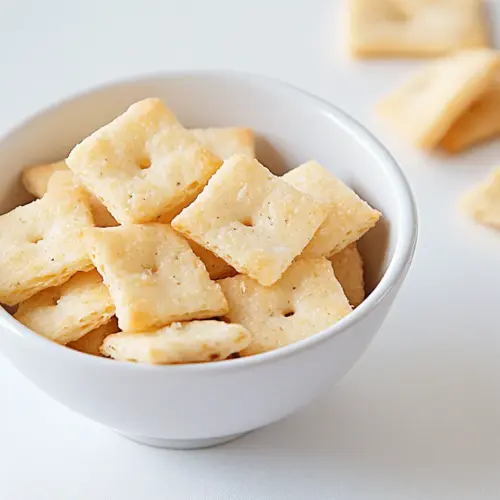
Gluten Free Cheese Crackers
Gluten Free Cheese Crackers are crispy, savory, and surprisingly easy to make, with a delicate crunch and golden finish. Made with pantry flours and sharp cheddar, they deliver punchy flavor and portable texture perfect for snack time or a light gathering, making them a great choice for an easy weeknight nibble or lunchbox treat.
Equipment
- Sheet Pan
- Mixing Bowls
- Kids Lunch Box
Ingredients
- 1/2 cup brown rice flour Provide a nutty, slightly sweet base that contributes structure and a tender crumb to the crackers; brown rice flour helps absorb moisture and supports gluten-free texture. Use as measured to maintain proper dough consistency and prevent excessive crumbliness during baking.
- 1/2 cup tapioca flour Add a light, chewy texture and fine crispness to the crackers while helping to bind the dough; tapioca flour increases elasticity and yields a golden, crisp edge. Balance with other flours to avoid gummy results and ensure easy rolling.
- 3/4 teaspoons salt Enhance overall flavor by bringing out savory notes and balancing the richness of cheese; salt also tightens dough proteins and controls fermentation if used with leaveners. Measure accurately to avoid oversalting, which can overwhelm the delicate gluten-free base.
- 1/4 teaspoon garlic powder Impart a subtle savory depth and aromatic lift that complements cheese without overpowering it; garlic powder distributes evenly through the dough for consistent flavor. Use sparingly to maintain balance with salt and cheddar.
- cup finely grated sharp cheddar cheese Provide concentrated savory, salty, and creamy flavor that defines the crackers and contributes fat and melt for richness; finely grated sharp cheddar also helps bind the dough and brown during baking. Pack and measure the cheese to ensure even distribution and avoid clumping.
- 2 tablespoons butter, melted or 1 teaspoon vegetable oil Contribute fat for tenderness and flavor while aiding in dough cohesion; melted butter adds richness and a buttery finish, while vegetable oil offers a dairy-free alternative. Mix thoroughly so fat coats the flours, promoting flakiness and preventing dryness.
- 3 -5 tablespoons water Adjust dough moisture to achieve pliable but not sticky consistency so it can be rolled and cut thinly; water hydrates the flours and helps bind ingredients. Add gradually to reach the optimal texture, using toward the lower end for drier climates and slightly more in humid conditions.
Instructions
- Preheat the oven to 350 F.: The moment you preheat you start the transformation of moisture to crispness, and you can already smell the faint warm, toasty note from the empty oven as it climbs. A properly preheated oven ensures the crackers begin setting on contact with heat, which helps create an even golden color, rather than slowly drying and becoming tough. A common mistake is placing the crackers into an oven that is not hot enough, which can lead to a limp or dense texture, so always wait until the temperature reaches 350 F. If your oven runs cool, allow a few extra minutes, and consider using an oven thermometer to confirm temperature.
- In a large bowl, combine the flours, salt, garlic powder, and cheese.: As you mix these dry ingredients, notice the change in aroma when the cheddar cheese meets the flours, giving off a nutty, slightly tangy scent. The tactile contrast between the slightly gritty brown rice flour and the silky tapioca flour is important because it influences how the dough will hydrate. Mixing the seasoning now ensures even distribution so every cracker is seasoned equally. Avoid over mixing to prevent the cheese from clumping; if the cheese lumps form, break them apart with your fingers so they are dispersed.
- Add the melted butter and water 1 tablespoon at a time mixing to combine after each addition.: Introducing melted butter and water gradually lets you control the dough consistency, so you can stop as soon as the mixture holds together without becoming sticky. The butter adds a rich mouthfeel and helps with browning, and the water activates the flours so they knit into a cohesive dough. One pitfall is adding all the water at once, which can make the dough too wet and tough to roll, so add one tablespoon and mix, then decide if more is needed.
- Once a dough forms, knead it into a ball.: The knead should be gentle and brief, just enough to bring the dough into a smooth ball, and you will notice the dough becoming more uniform and slightly tacky. Kneading aligns the little bits of cheddar cheese and helps even hydration, which matters for an even bake. If you knead too vigorously, especially with tapioca present, the dough can become gummy, so stop once the surface looks coherent.
- Place the dough on parchment paper or a nonstick rolling mat. Roll out into a rectangular shape until the dough is about ?-inch thick.: Rolling will spread the dough into an even layer, and when it is the right thickness you can hear a faint papery sound as the rolling pin glides. The suggested thickness produces crackers that crisp up in the oven while still holding shape. Uneven rolling causes thin edges to brown faster than the center, so check the thickness visually and by touch. A typical issue is making the dough too thin near the edges, so roll from the center outwards to keep it even.
- Slice into crackers with a knife, pizza slicer, or cookie cutters (you can re-roll scraps and rough edges to make more.): Cutting reveals the true texture of the rolled dough, and using a sharp pizza cutter or knife gives clean edges that bake evenly. Re rolling scraps is economical, but be mindful that repeated rolling can toughen the dough, so combine scraps sparingly. If your crackers crumble when cutting, the dough may be too dry, so lightly press the pieces back together before recutting.
- Transfer the parchment paper with the crackers to a baking sheet. For a more golden look, lightly spray or brush the tops of the crackers with melted butter or oil. Sprinkle extra sea salt and cheese over the top, if desired.: Brushing with a little butter encourages browning and gives the surface a subtle sheen, which enhances both look and flavor as it heats. The extra sprinkle of cheese and sea salt crisps and toasts, delivering a pleasing crunch and visual appeal. Avoid drenching the tops with too much fat, which can make the crackers greasy instead of crisp; a light brush is all it needs.
- Bake for about 12 minutes, until starting to turn golden. Turn the oven off, but leave the crackers in the oven for 5 minutes. Remove from the oven and let cool completely. Store in an airtight container.: As they bake you will see the edges take on a warm, golden hue and a roasted, cheesy aroma will fill the kitchen. Turning the oven off and leaving the crackers inside lets residual heat continue crisping without over browning, producing a more reliable texture. A typical error is removing the crackers as soon as the timer dings; if they look slightly pale, the residual heat step will finish them. Cool completely to avoid steam softening them before storage.
Notes
- Grate the cheese finely — Finely grated cheddar cheese blends more uniformly into the dough and prevents pockets of greasy melt which can make some crackers soggy.
- Measure flours by spooning and leveling — Because both brown rice flour and tapioca flour can be compacted, spooning them into a cup and leveling gives a more accurate measure than scooping directly from the bag.
- Start with less water — Add the water one tablespoon at a time to reach a dough that holds together without stickiness, this avoids a gummy dough that is hard to roll.
- Use parchment for easy transfer — Rolling on parchment paper or a nonstick mat lets you lift the whole sheet to the baking tray, reducing handling that could break delicate crackers.
- Brush lightly for browning — A thin brush of melted butter or oil before baking enhances browning and flavor, but too much will yield greasy, heavy crackers.
- Cool fully before storing — Letting crackers cool completely ensures they remain crisp in an airtight container, storing while warm invites steam and softness.