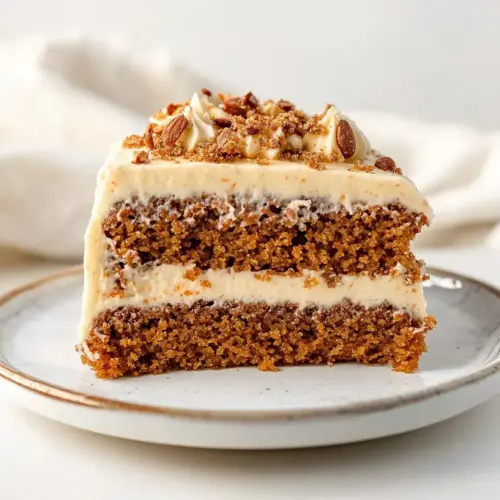
Gluten Free Carrot Cake
Gluten Free Carrot Cake is a moist, warmly spiced dessert with creamy frosting and crunchy pecans. This easy, crowd friendly cake delivers tender crumb and bright carrot flavor, making it ideal for brunch, holidays, or an easy weeknight treat. Try it for a dependable gluten free option that still feels indulgent and worth making for guests.
Equipment
- 7 inch springform pan
- Parchment Paper
- Mixing Bowls
- Whisk
- Spatula
- Wire Rack
- Electric Mixer
Ingredients
- 1 3/4 cups gluten free all-purpose flour Provide structure and body to the cake batter, contributing gluten-free crumb and absorbing liquids; ensure the all-purpose gluten-free flour is well-sifted to prevent lumps and promote even texture. Use the specified amount to maintain the cake's density and tenderness while avoiding dryness or excessive collapse. Combine gently with wet ingredients to retain some aeration for a moist final crumb.
- 1 tsp baking powder Leaven the cake by producing carbon dioxide when combined with moisture and heat, helping the batter rise and become light. Measure accurately to avoid an overly domed or bitter-tasting cake. Distribute evenly through the dry mix to ensure consistent lift throughout the batter.
- 3 large eggs, room temperature Bind the ingredients together while providing richness and stability, helping trap air for a tender crumb; use room-temperature eggs for better emulsification with fats and liquids. Beat lightly to incorporate some air, which aids in leavening and contributes to a fine, moist texture. Add eggs one at a time to ensure even incorporation and smooth batter.
- 1 cup oil, neutral flavor Moisten the batter and impart tenderness and richness while carrying flavor; choose a neutral oil to avoid overpowering spices and carrots. Measure precisely to maintain proper batter consistency and prevent greasiness. Combine thoroughly with sugar and eggs for smooth emulsion and enhanced moistness in the finished cake.
- 1 cup grated carrot Contribute natural sweetness, moisture, and texture while delivering fresh carrot flavor and visual appeal; finely grate to distribute moisture evenly through the batter. Use the specified amount to balance sweetness and moisture without making the cake soggy. Fold in gently near the end of mixing to preserve carrot pieces and even distribution.
- 1 tsp ground cinnamon Provide warm, aromatic flavor that complements carrots and sugar while enhancing overall cake aroma; use measured ground cinnamon to avoid overwhelming other spices. Mix with the dry ingredients for even spice distribution and consistent taste in every bite. Cinnamon also deepens the cake's color and pairs well with nuts and cream cheese frosting.
- 1/2 tsp ground nutmeg Add warm, slightly sweet and nutmeg-like undertones that enhance the spice profile and complexity of the cake. Use the small measured quantity to subtly support cinnamon and ginger without dominating the palate. Combine with other ground spices to create a balanced, traditional carrot cake spice mix.
- 1/2 tsp ground ginger Impart bright, slightly peppery warmth that lifts the spice blend and complements the sweet elements and carrots. Use sparingly as indicated to avoid sharpness; balance with cinnamon and nutmeg for a harmonious spice character. Incorporate with the dry ingredients to ensure even flavor distribution.
- 1 tsp vanilla extract Enhance overall aroma and add a sweet, floral vanilla note that deepens flavor complexity when mixed into the batter. Use pure vanilla extract for the best, most natural flavor and add at the recommended time to preserve fragrance. Blend with wet ingredients to distribute evenly and enrich the cake's taste.
- 3/4 cup brown sugar Sweeten the batter and contribute molasses-like depth and moisture, softening the crumb and enhancing caramel notes; pack lightly when measuring to ensure accurate quantity. Brown sugar helps keep the cake moist and pairs well with the warm spices and carrots. Cream together with oil and eggs to dissolve fully for an even texture.
- 1/2 cup pecan nuts, chopped Provide crunchy texture and toasty, buttery flavor that complements the spices and adds contrast to the soft cake crumb; chop to uniform size for even distribution. Toast briefly if desired to intensify nutty flavor before folding into the batter. Fold in near the end of mixing to avoid pulverizing the nuts and to maintain bite.
- 8 ounces cream cheese, room temperature Create a rich, tangy, and creamy element essential for a classic cream cheese frosting, adding smoothness and slight acidity to balance sweetness. Use at room temperature and beat until completely smooth to avoid lumps; combine with butter and powdered sugar for a silky frosting. Taste and adjust sweetness for balanced frosting flavor.
- 1/2 cup butter, room temperature Contribute creamy richness and help stabilize and aerate the frosting while adding buttery flavor; use at room temperature to ensure smooth incorporation. Beat with cream cheese until light and fluffy to create a stable base for powdered sugar. Measure carefully to achieve the desired frosting consistency and spreadability.
- 1 1/2 cup powdered sugar/ icing sugar Provide bulk sweetness and structure to the frosting while dissolving into a silky, smooth consistency when sifted and beaten into fats. Use to sweeten and thicken the cream cheese-butter mixture to pipeable consistency; adjust slightly if a stiffer or softer frosting is desired. Sift before use to prevent lumps and ensure a polished finish.
- 1/2 tsp vanilla extract Add a touch of warm, floral sweetness that enhances the frosting's flavor and rounds out the cream cheese tang; use the listed quantity to subtly boost aroma. Incorporate when creaming butter and cream cheese to evenly distribute the vanilla. Choose pure extract for best flavor clarity and less bitterness.
Instructions
- Pre-heat oven to 350*F. Prepare a 7” springform pan, line with parchment paper; set aside.: You will notice a warm, slightly sweet scent the moment the oven reaches temperature, which helps set the cake's crust as it bakes; ensuring the pan is lined prevents sticking and preserves the cake bottom. A common mistake is skipping parchment, which makes unmolding risky, so take the extra minute to line and grease if necessary. For best results, center the oven rack so heat circulates evenly around the pan.
- In a medium bowl, add gluten-free all-purpose flour, baking powder, ground cinnamon, ground nutmeg, and ground ginger and mix roughly using a whisk.: As you whisk, the aroma of the spices becomes more pronounced, signaling the flavor base of the cake; whisking also distributes the leavening evenly so the crumb rises uniformly. If you skip whisking, you may end up with pockets of baking powder, causing uneven texture. A light sift or vigorous whisk will ensure the dry mix feels homogeneous and light to the touch.
- In a large bowl, beat together eggs, oil, brown sugar, and vanilla extract until well combined.: Beating these ingredients releases a glossy sheen as the sugar dissolves into the oil and eggs , producing a smooth, slightly thickened batter foundation; the mixture should smell sweet and rounded from the vanilla. Overbeating will trap too much air and could lead to a domed crack, so aim for smooth incorporation rather than aeration. If the brown sugar seems clumpy, rub it between your fingers into the wet mix to dissolve it.
- Sift the dry ingredients into the wet ingredients and fold until just combined. Finally, add grated carrots and chopped pecans (reserve a few pecans for topping) and fold to mix.: Folding ensures you retain tender structure while merging flour and liquids; you will see streaks of flour disappear and a cohesive batter forming, with a slightly dense, glossy look. Overmixing activates the starches and can make the cake gummy, so stop folding once no dry pockets remain. Use a rubber spatula to scrape the bowl edges so the batter is homogenous and smooth, not overworked.
- Pour the cake batter into the prepared 7” springform cake pan. Bake for 60 minutes or until a toothpick comes out clean.: The batter will shimmer slightly and take on flecks of orange and nutty pieces, promising moistness from the carrot and crunch from the pecan nuts ; folding distributes them without crushing. If you add too much carrot or overfold, the batter can become heavy and weight down the rise, so measure and fold gently. Reserve nuts for the top so the finished cake has a decorative and textural accent.
- Once the cake is done, allow to cool completely on a wire rack, then slice the cake into two discs.: The batter should pour smoothly and settle with a glossy surface; tapping the pan on the counter evens the top and releases any trapped air bubbles. Avoid overfilling which can cause batter to spill or bake unevenly; a 7 inch pan gives a tall, bakery style cake. If the batter seems unusually thin or thick compared to expectations, recheck measurements rather than guessing adjustments.
- Meanwhile, prepare the cream cheese frosting. Beat the cream cheese and butter together until fluffy.: During baking the kitchen will fill with a warm, spiced aroma and the top will turn lightly golden around the edges; a toothpick inserted into the center should emerge clean or with a few moist crumbs. Opening the oven repeatedly to test can cause the cake to sink, so check toward the end of the time window. If the top browns too quickly, tent with foil to prevent overcoloring while the center finishes baking.
- Add powdered sugar a little at a time along with vanilla extract and beat until the frosting is light and creamy.: Cooling lets internal steam release so the cake firms slightly, making clean slicing and layering possible; as it cools you will feel the cake contract a touch and the aroma will mellow. Cutting too soon risks a collapsed and crumbly center, so be patient until it is room temperature. Use a serrated knife and gentle sawing motions to split the cake evenly for neat layers.
- Place cake on a turntable or cake stand and layer with frosting using a spatula, then place another disc of cake and cover with frosting evenly. Top with remaining pecans, slice, and serve.: As you beat, the mixture will lighten in color and feel pillowy, with a faint tang from the cream cheese ; this base creates the silky mouthfeel that contrasts the cake. If the ingredients are too cold, lumps will persist, so ensure both are room temperature for a smooth whip. Scrape the bowl periodically so everything aerates evenly and no pockets of butter or cheese remain.
- Add powdered sugar a little at a time along with vanilla extract and beat until the frosting is light and creamy: Gradually adding powdered sugar prevents a gritty texture and lets you control sweetness and thickness, resulting in a spreadable, velvety frosting; you will hear the mixer change tone as it thickens and see the frosting hold soft peaks. Adding sugar too fast can create a dry, overly sweet frosting, so add slowly and taste as you go. If the frosting becomes too stiff, a splash of milk or a touch more butter will loosen it gently.
- Place cake on a turntable or cake stand and layer with frosting using a spatula, then place another disc of cake and cover with frosting evenly: When layering, the contrast between cool, tangy frosting and warm-spiced cake makes each bite balanced; the frosting should spread smoothly, creating clean edges and an even top. Heavy handed spreading can tear the crumb, so apply with gentle pressure and use a crumb coat if needed to trap loose crumbs. Take your time to make small adjustments so the final presentation feels intentional and inviting.
- Top with remaining pecans, slice, and serve: The final touch of reserved pecan nuts adds visual appeal and a toasty crunch, while the first slice will release a fragrant meld of spice and tang; serving at room temperature reveals the best texture and flavor. Cutting very large slices can collapse the layers, so aim for moderate portions to keep slices neat. Store leftovers wrapped in the refrigerator to preserve the frosting and slice cleanly the next day.
Notes
- Swap nuts sparingly Replace the pecan nuts with walnuts for a slightly more robust, earthy crunch, but toast them lightly first to bring forward their oils and deepen flavor.
- Adjust sweetness If you prefer a less sweet cake, reduce the brown sugar by up to one quarter cup and taste the batter; the cream cheese frosting will still provide a bright finish.
- Brighten with citrus Stir a teaspoon of orange zest into the batter to lift the spice notes and pair wonderfully with the tang in the cream cheese frosting without overpowering the carrot.
- Make it smaller or larger For a flatter cake, bake in a 9 inch pan and reduce time by ten to fifteen minutes; monitor doneness with a toothpick to avoid drying out.
- Frosting texture choices For a spreadable but firmer frosting, chill it briefly before applying; if you want a creamier spread, add a tablespoon of milk and beat until smooth.