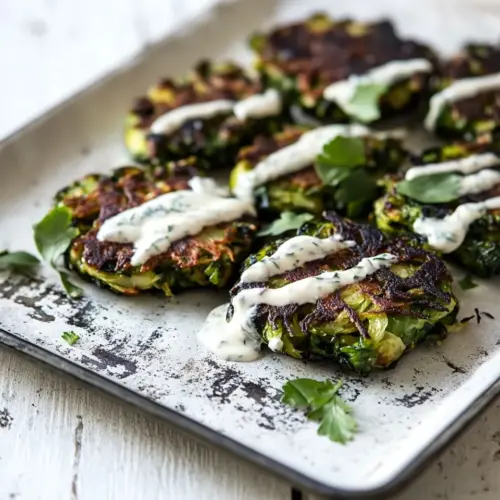
Gluten Free Brussels Sprout Latkes
Gluten Free Brussels Sprout Latkes are crispy, bright, and savory with a punchy anchovy aioli. These easy latkes deliver a crunchy exterior and tender interior, perfect for an easy weeknight dinner or a party appetizer. They showcase roasted like depth from Brussels sprouts and citrus notes from lemon, making them an irresistible reason to cook tonight.
Equipment
- Large Skillet
- Food Processor
- Flat metal spatula
- Box grater
Ingredients
- 4 cups shredded Brussels sprouts from about 1 pound Provide a crunchy, earthy base when shredded and cooked; supplies volume and nutty flavor while forming the latke structure when moisture is reduced, contributing to texture and nutrition.
- 1 medium leek white and light green parts only, thinly sliced Add a mild, onion-like sweetness when thinly sliced; softens during cooking and blends with sprouts to enhance savory depth and aromatic complexity.
- 3 extra-large eggs beaten Bind the mixture together after beating; provide moisture, richness, and structure so the patties hold their shape while adding a tender crumb.
- 1/2 cup brown rice or chickpea flour Absorb excess moisture and create a gluten-free binder; helps achieve a crisp exterior and cohesive interior while contributing subtle whole-grain flavor.
- Zest of 1 lemon Offer bright citrus aroma and a hint of bitterness when zested; elevates overall freshness and balances the savory components in the batter.
- 2 tablespoons lemon juice Impart bright, acidic tang to brighten flavors; helps balance richness and enhances the overall brightness of the latkes and accompanying sauces.
- 1/2 teaspoons ea salt Season the batter to enhance overall flavor; brings out natural sweetness and savory notes while ensuring balanced taste throughout the latkes.
- Coconut oil for frying Provide a high-smoke-point fat for frying; yields golden, crisp edges and rich flavor while allowing even browning without burning quickly.
- 4 anchovy fillets Introduce concentrated umami and salty depth when finely chopped or mashed; enhances savory complexity and pairs well with the creamy sauce.
- 1/2 cup mayonnaise Contribute a creamy, rich base for a dipping sauce; binds with other flavorings and mellows the salty, acidic elements for a balanced condiment.
- 2 tablespoons lemon juice Add additional bright acidity for the sauce or batter; cuts through richness and lifts flavors when mixed into mayonnaise or dressing.
- Sea salt Finish the dish with crisp mineral seasoning; used to taste to elevate and contrast flavors, enhancing both the latkes and the sauce.
Instructions
- In a large mixing bowl, combine the Brussels sprouts, leeks, eggs, flour, lemon zest and juice, and salt. Stir until the flour is fully incorporated.: The moment you fold these ingredients together you will notice the texture shift, the shredded Brussels sprouts becoming evenly coated and glossy from the eggs and lemon juice . Smell the fresh citrus and mild onion like aroma from the leek , which signals the mixture is well balanced. A common mistake is overmixing until the sprouts lose their structure, which makes the batter paste like and heavy, so stop once everything is evenly moistened. If the mixture seems too watery, let it sit for a few minutes so the flour can absorb moisture, or squeeze out a touch of excess liquid with a towel. This step matters because uniform coating ensures even browning and helps the latkes hold together while frying.
- Heat a thin layer of coconut oil in a large skillet over high heat. Prep a plate or baking sheet with paper towels.: You will hear the oil whisper at first and then begin to shimmer, a visual cue that it is ready for frying. Using high heat gives a fast sear which creates that coveted crisp exterior without overcooking the interior. A frequent error is using too little oil or too low a temperature, which leads to greasy, limp latkes rather than crackly ones. Keep the oil depth shallow, just enough to crisp the edges, and have paper towels ready to absorb excess oil as you transfer each batch. Proper temperature control is essential to prevent the latkes from absorbing too much oil and to achieve an even golden color.
- Arrange a layer of Brussels sprout latkes in the hot oil, 1-tablespoon of batter per. Gently flatten the scoops with a flat metal spatula. (You just want to make sure the top is flat for when you flip.) Cook until browned and very crispy on the first side, about 1 to 2 minutes. Carefully flip and repeat on the second side, adding more oil as necessary. Remove to the paper towels to drain. Continue cooking the latkes in batches until the batter is all gone.: When the batter hits the pan you should hear an immediate, soft sizzle, and the edges will begin to brown within seconds. Pressing gently with a spatula creates a uniform surface so the latke cooks evenly, and you will see steam escaping as moisture releases. Avoid overflattening to the point they become paper thin, which causes rapid burning, or underflattening which can prevent a proper flip. The right amount of pressure gives a compact disk that browns consistently, creating a satisfying crunch when ready.
- Meanwhile, make combine the ingredients for the aioli in a small food processor and puree until smooth. Transfer to a serving bowl.: Watch for a deep golden hue along the exposed edges and a fragrant, toasty aroma from the pan. The sound will shift from high pitched sizzle to a lower, steady crackle as moisture reduces. Flipping too early risks tearing the latke, while waiting too long can cause sticking or burning, so look for that golden edge and slight release from the skillet. Proper timing here ensures a crunchy exterior and a tender inside that is still moist rather than dry.
- Season the latkes with salt and a squeeze of lemon. Serve alongside the anchovy aioli, tahini yogurt, or your sauce of choice.: The flip will reveal whether you achieved an even sear, and you want the second side to mirror the first in color and texture. When you add oil, do so sparingly and let it reheat to shimmering before adding more latkes, otherwise the temperature drop will make the next batch soggy. A common mistake is crowding the pan which reduces the oil temperature and prevents crisping, so cook in batches if needed. The second side usually needs slightly less time, and watching the aroma and color will tell you when to remove them.
- Remove to the paper towels to drain. Continue cooking the latkes in batches until the batter is all gone.: Transferring to paper towels mops up excess oil and helps the latkes remain crisp rather than softening on the plate. They will give off a faint steam as they rest, and a brief pause on a cooling rack set over towels can preserve the texture better than stacking. Resist piling them too closely which traps steam and softens the crust. This step helps maintain the ideal texture so each bite stays crunchy until served.
- Meanwhile, make combine the ingredients for the aioli in a small food processor and puree until smooth. Transfer to a serving bowl.: When you puree the anchovy fillets with mayonnaise and lemon juice , you will smell a heady, savory note that mellows into a silky sauce. The blending creates a smooth emulsion and releases the anchovy umami, which gives the aioli depth without tasting fishy. A common pitfall is underprocessing which leaves small anchovy fibers; keep blending until fully smooth. The finished aioli should be creamy and glossy, ready to cut through the richness of the fried latkes.
- Season the latkes with salt and a squeeze of lemon. Serve alongside the anchovy aioli, tahini yogurt, or your sauce of choice.: The final squeeze of lemon and sprinkle of sea salt brightens and sharpens the flavor, and you will notice the citrus bringing out the savory and vegetal notes. Serving them hot ensures that the contrast between the crisp exterior and silky aioli is most pronounced. Avoid seasoning too far in advance which can draw moisture out and soften the crust; finish just before serving for the best texture. This finishing touch is what transforms them from good to memorable.
Notes
- Swap the flour: Try brown rice flour for a neutral, slightly nutty crust or chickpea flour for extra savory depth and better browning; both keep the recipe gluten free while subtly changing flavor and texture.
- Adjust the oil: Use a neutral oil with a high smoke point if you prefer to avoid coconut notes, this maintains crisping while altering the background flavor.
- Add aromatics sparingly: Fold in small amounts of finely minced green onion or chives for a fresh herbal lift without overpowering the Brussels sprouts.
- Make ahead: Prepare the batter and store it chilled for up to a day, then fry just before serving to keep the latkes at peak crispness.
- Change the sauce: If anchovies are not desired, serve with a simple lemon herbed yogurt or tahini yogurt to provide creaminess and acidity that complements the fried latkes.
- Batch frying tips: Keep the finished latkes warm on a rack in a low oven while you finish frying so they stay crisp and don’t steam on a plate.