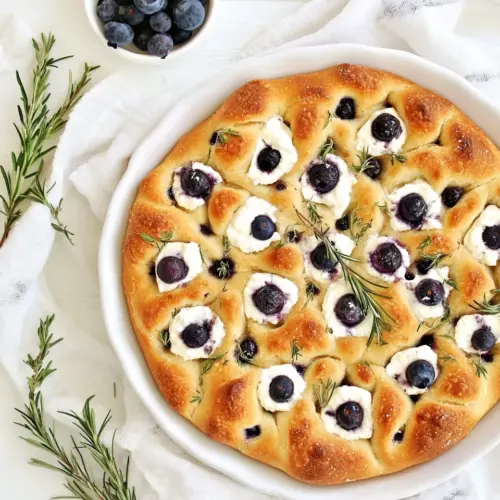
Gluten Free Blueberry Goat Cheese Focaccia
Gluten Free Blueberry Goat Cheese Focaccia is a creamy and lightly crisp loaf that marries tart blueberries with tangy goat cheese, finished with aromatic thyme. This easy to follow, gluten free focaccia delivers a bakery style crumb without complicated techniques, making it an excellent choice for a relaxed brunch or an easy weeknight dinner. Try it warm for the best experience.
Equipment
- 9 inch cake pan
- Large Mixing Bowl
- Spoon or paddle
- Oven
Ingredients
- 1 yeast packet (included in bread mix) Activate and leaven the dough by dissolving the yeast in warm water to create gas bubbles that help the bread rise; bloom until foamy for best results. Provide lightness and structure in this gluten-free focaccia when combined with the bread mix.
- 1 teaspoon sugar Sweeten and feed the yeast briefly to encourage fermentation and a proper rise; dissolve fully into the warm water for even distribution. Balance the savory flavors and support browning of the crust during baking.
- 1 -3/4 cup warm water Warm and hydrate the dry mix while activating the yeast; maintain a temperature that feels warm to the touch but not hot to preserve yeast activity. Determine dough consistency and overall moisture, influencing crumb texture and final rise.
- 1 (19 ounce) bag Pamela's Gluten-Free Bread Mix Provide the gluten-free base and structure for the focaccia, supplying flours, starches, and binding agents tailored for non-gluten baking. Combine with liquids, yeast, oil, and flavorings to form the dough and produce the characteristic focaccia crumb.
- 1/4 cup olive oil Tenderize the dough and enhance mouthfeel by coating and enriching the batter; drizzle or fold in to promote a soft, moist interior and a slightly crisp exterior. Contribute a fruity, savory note that complements blueberries and goat cheese.
- 1/3 cup fresh blueberries Add bursts of fresh, sweet-tart flavor and moist pockets throughout the focaccia; gently fold in to avoid crushing and utilitize whole berries for visual appeal. Provide seasonal brightness that contrasts with rich cheese.
- 1/3 cup crumbled goat cheese Introduce creamy tang and savory richness in small crumbled bits that melt slightly into the warm bread; scatter on top or fold lightly for balanced distribution. Contribute a tangy counterpoint to the sweet blueberries and herbaceous thyme.
- 2 teaspoon s fresh thyme leaves Impart aromatic, earthy, and slightly minty notes when sprinkled over the dough before baking; gently press leaves into the surface to release oils and fragrance. Complement the fruit and cheese while enhancing overall flavor complexity.
Instructions
- Spray a 9 inch cake pan with non-stick spray, set aside.: The faint scent of oil on the pan helps the dough glide during spreading, and a slick surface prevents sticking as the focaccia bakes. Lightly coating the pan ensures the underside develops even warmth and a golden crust. A common mistake is over spraying, which can pool oil and create greasy spots, so use a light, even mist and set the pan near your workspace so it is ready when the dough arrives.
- In a large mixing bowl add yeast packet, sugar, and 1/4 cup warm water. Let sit for 5 minutes until you see foam on the top of the water.: Within minutes you will notice tiny bubbles and an aromatic, slightly yeasty scent that signals active fermentation. This foam is the most important visual cue, it shows the yeast is alive and ready to leaven the dough, and it should be frothy rather than flat. If nothing happens, the yeast may be old or water too hot, which will prevent rising. Avoid stirring aggressively during this rest, gentle stillness helps the foam form uninterrupted.
- Add olive oil, remaining 1-1/2 cups warm water, and Pamela's Gluten-Free Bread Mix. Mix for three minutes.: As you combine the ingredients the bowl will fill with a slightly wet, tacky batter that smells faintly of olive oil. Mixing for the full three minutes helps hydrate the mix and encourages a uniform texture, which leads to a better crumb after baking. Use a sturdy spoon or paddle and watch for a homogeneous appearance, no dry pockets. Over mixing can introduce excess heat, so stop once evenly combined.
- Sprinkle top of dough with olive oil to help spread it in the pan. Cover the dough and let rise in a warm area for 1 hour.: The glossy surface of oil makes the dough more cooperative when you spread it into the pan, and covering traps gentle warmth so the dough can expand. After about an hour you will see visible puffiness and a softer, springy feel when pressed lightly. If the room is cool, place the bowl near a warm oven or in a slightly warm spot to encourage activity. A common error is rushing the rise, which yields denser bread; patience pays off here.
- Once the dough has risen preheat the oven to 400 degrees.: Preheating builds consistent oven heat so the focaccia begins baking immediately and forms structure before the interior collapses. You will hear the oven click as it reaches temperature and smell a faint warming scent. Make sure the rack is centered for even browning. Opening the oven repeatedly while preheating causes temperature drops, so avoid peeking until it is ready.
- Top the dough with blueberries, goat cheese and thyme. Gently press them into the dough.: As you scatter blueberries and crumbled goat cheese , you will see color and texture contrast take shape, and the fragrant, earthy scent of thyme will lift the aroma. Gently pressing each piece anchors them so they stay visible after rising in the oven, and the berry juices will lightly stain the dough creating beautiful spots of color. Press too hard and you will flatten the air pockets, so ease them in just to the surface.
- Bake for about 40 minutes until the dough is fully cooked. If the top starts browning too much cover with foil until the bread is fully cooked.: During baking you will notice a deepening golden color and a rich, warm aroma of olive oil and bread; the surface may develop small, toasted spots where cheeses and berries caramelize. A toothpick or thin skewer inserted into the center should come out clean of wet batter though it may carry berry stains. If the top browns faster than the interior cooks, tent with foil to prevent burning while allowing the center to finish. Avoid opening the oven in the first 25 minutes to maintain steady heat.
Notes
- Check your yeast date: Always verify the packet is fresh, because active yeast is the foundation of rise and texture.
- Warm water temperature matters: Use comfortably warm water, not hot, to wake the yeast without killing it.
- Even berry distribution: Space blueberries evenly to avoid soggy zones and to ensure each slice has fruit.
- Moderate cheese use: Scatter crumbled goat cheese in small clusters so each oven pocket gets a creamy note, without overwhelming the dough.
- Cover if browning too fast: Tent with foil to let the interior finish cooking while protecting the top from burning.
- Let it rest briefly: Allow the focaccia to cool five to ten minutes before slicing so the crumb sets and the cheese firms slightly.