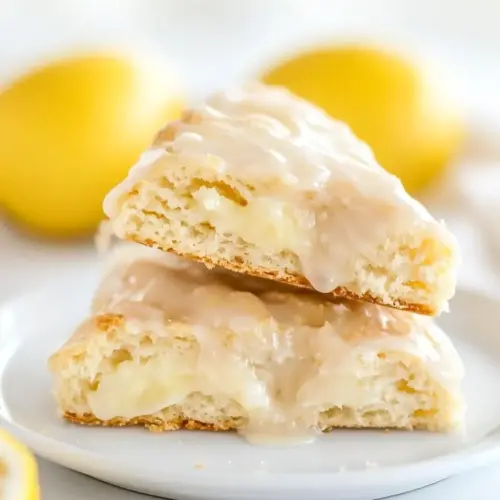
Glazed Lemon Scones
Glazed Lemon Scones are tender and flaky with a bright citrus punch from fresh lemon zest and juice, finished with a glossy lemon glaze. These easy bakery style scones balance buttery texture and zesty flavor, perfect for a quick breakfast or casual brunch. Make them when you want a simple, impressive treat that tastes fresh and homemade.
Equipment
- Box grater
- Nordic Ware Aluminum Half Sheet Pans
- Pre-Cut Parchment Paper Baking Sheets
Ingredients
- 1/3 cup granulated sugar Sweeten the dough and create light caramelization on the scone exterior; helps balance lemon tartness and enhances browning during baking. Measure precisely to maintain proper texture and prevent overly sweet scones.
- zest of 3 medium lemons Provide intense citrus oils and bright aroma when finely grated; zest contributes concentrated lemon flavor without adding extra acidity. Use only the colored outer peel and avoid the bitter white pith for best results.
- 2 cups all-purpose flour Form the structural base of the scones, giving body and crumb when mixed with leaveners and fats. Sift or whisk to remove lumps and ensure even distribution with other dry ingredients.
- 1 teaspoon baking powder Leaven the dough by producing gas when heated, helping scones rise and become tender; often used with baking soda for balanced lift. Ensure it is fresh for reliable rising and even texture.
- 1/4 teaspoon baking soda React with acidic components to produce additional lift and tenderize the crumb; balances baking powder so the scones rise properly. Use the exact small amount to avoid metallic or soapy flavors.
- 1/2 teaspoon salt Enhance overall flavor by rounding and balancing sweetness and acidity while slightly strengthening gluten structure. Keep measurements modest to avoid altering dough consistency.
- 8 tablespoons unsalted butter frozen Contribute cold fat that creates flaky layers and tender pockets when grated or cut into the flour; frozen state helps maintain separation of fat and flour. Work quickly to keep butter cold until baking for optimal flakiness.
- 1/2 cup sour cream Add moisture and a subtle tang that tenderizes the scone crumb and reacts with leaveners for lift; contributes richness without overpowering lemon flavor. Fold gently to preserve air and prevent overworking the dough.
- 2 tablespoons freshly squeezed lemon juice Provide fresh acidity that brightens flavor and activates baking soda for additional leavening; supplies true lemon character beyond zest. Use freshly squeezed juice for the best aromatic and acidic qualities.
- 1 large egg Bind ingredients together, add richness and contribute to structure and tenderness through coagulation during baking. Beat gently before incorporating to distribute evenly without overmixing.
- 1 teaspoon pure vanilla extract Impart warm, sweet aromatic notes that deepen overall flavor and complement lemon; a small amount enhances perception of sweetness. Stir in with wet ingredients for uniform distribution.
- 3 tablespoons unsalted butter melted Add moisture and a glossy finish when brushed or incorporated; melted butter enriches texture and flavor of the scone surface or glaze. Use warm melted butter to combine smoothly with other glaze components.
- 1 cup powdered sugar Sweeten and create a smooth, opaque glaze that hardens slightly when cooled; dissolves easily into liquids to form a pourable icing. Sift if necessary to remove lumps for a silky finish on scones.
- 1/2 teaspoon pure vanilla extract Provide a subtle warm aromatic accent in the glaze that rounds out the lemon brightness and enhances perceived sweetness. Use pure vanilla for the cleanest flavor profile in icings and glazes.
- 2 tablespoons freshly squeezed lemon juice Deliver concentrated tartness and fresh lemon flavor to the glaze, balancing powdered sugar and adding a glossy, zesty finish. Adjust amount to achieve the desired glaze consistency and tang.
Instructions
- Adjust oven rack to lower-middle position and preheat oven to 400°F. Line a baking sheet with parchment paper.: You will notice the oven warming and a steady hum as it comes up to 400°F , that steady heat creates even browning on the bottoms and edges. Placing the rack in the lower middle position encourages a gentle rise while avoiding overly dark tops, and the parchment paper prevents sticking and promotes an easy release. A common mistake is skipping the preheat, which yields uneven bake and dense centers, so always wait until the oven reaches temperature before sliding the tray in.
- In a medium bowl, combine sugar and lemon zest; mix with your fingertips until the sugar is moistened and fragrant. Add in the flour, baking powder, baking soda and salt and mix until combined.: As you rub the zest of 3 medium lemons into the granulated sugar , inhale the citrus oils that release, a bright aroma that tells you the flavor is developing. When you fold in the flour , baking powder , baking soda , and salt , the dry mixture should look uniform and slightly grainy. This even distribution ensures consistent rise and flavor in each scone. Avoid overworking at this stage, since overmixing can activate gluten and make the final scones tough.
- Grate butter into flour mixture on the large holes of a box grater; use your fingers to work in the butter until the mixture resembles coarse crumbs.: Grating the frozen unsalted butter creates tiny, cold pieces that remain distinct in the dough, and when baked they steam and form flaky layers. As you rub the butter into the dry mix, aim for pea sized bits and a crumbly texture that still has some visible butter. If the butter warms too much and becomes greasy, the dough will lose lift, so work briskly and keep your hands cool. A frequent error is using softened butter, which yields dense, greasy scones rather than flaky ones.
- In a small bowl, whisk the sour cream, lemon juice, egg and vanilla until smooth.: Whisking the sour cream , lemon juice , egg , and vanilla extract creates a glossy, slightly thick batter that will hydrate the dry ingredients. The mixture should look homogeneous, and you may see tiny air bubbles form from whisking, which help lightness. This wet mix balances richness and acidity, aiding tender crumb formation. If the wet ingredients are too cold or too warm it can affect integration, so aim for a cool room temperature blend to combine smoothly.
- Using a fork, stir sour cream mixture into flour mixture until large dough clumps form. Use your hands to press the dough against the bowl into a ball. The dough will be sticky first, but as you press, the dough will come together.: At this phase you will feel a change from loose crumbs to cohesive, tacky dough. Start with a fork to gently bring things together, then switch to your hands to press and gather into a ball. The tactile feedback is key, you should feel stickiness that resolves as the sour cream hydrates the flour . If the dough feels dry, you may have mismeasured the flour ; resist adding extra liquid, instead press firmly to unify. Overworking the dough here can toughen it, so be deliberate and gentle when forming the ball.
- Place on a lightly floured surface and pat into a 7-inch circle about 3/4-inch thick. Use a sharp knife to cut into 8 triangles. Place on prepared baking sheet, about 1 inch apart. Bake until golden, about 15 to 16 minutes. Cool for 10 minutes and prepare the glaze.: Patting the dough into a 7 inch circle gives uniform pieces that bake consistently, and the 3/4 inch thickness ensures a tender center without underbaking. As you cut the triangles, you may feel slight resistance where the butter pockets are, and the surface will have a faint dusting from the flour . Arrange them roughly 1 inch apart so edges brown but do not fuse. During baking you will notice a warm, citrus aroma and edges turning golden; this visual cue indicates they are ready. A frequent misstep is making the circle too thin, which yields dry scones, so keep that 3/4 inch thickness for best results.
- In a medium bowl, prepare the glaze by mixing together the melted butter, powdered sugar, vanilla and lemon juice. Whisk until smooth. Dip the top of the scones into the glaze and allow the glaze to harden.: As you whisk the melted unsalted butter with powdered sugar , vanilla , and additional lemon juice , you will see a glossy emulsion form that thins to a dippable consistency. Dip the warm but not piping hot scones into the glaze so it adheres and sets with a delicate sheen. The glaze should harden to a slight snap, creating a pleasant contrast to the tender crumb. Avoid making the glaze too thin or dipping when the scones are steaming hot, or the glaze may slide off; let them cool about 10 minutes first.
Notes
- Swap citrus accents by incorporating orange zest instead of some of the lemon zest for a warmer citrus profile.
- Add mix ins like a handful of chopped nuts or dried fruit folded into the dough for texture, but add sparingly to avoid weighing down the scones.
- Adjust glaze thickness by adding more powdered sugar for a thicker coat or more lemon juice to thin it for a translucent finish.
- Serve warm versus room temperature to change the eating experience, warm scones highlight buttery notes while cooled ones present a firmer glaze snap.
- Double zest for intensity if you prefer a punchier citrus flavor, but balance with glaze sweetness so it does not become too tart.