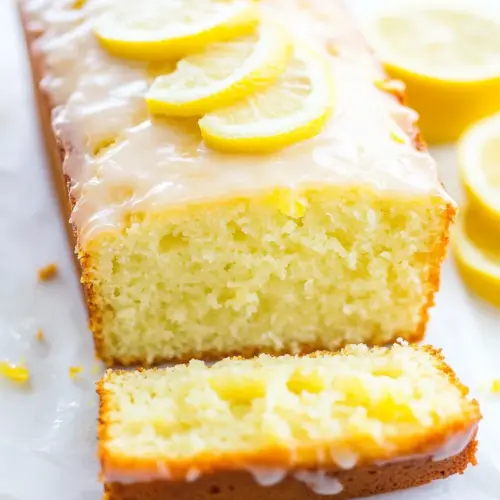
Glazed Lemon Bread
Glazed Lemon Bread is a bright, moist loaf with a tender crumb and a glossy citrus glaze. The fresh lemon juice and zest give lively acidity while butter and sour cream keep the texture silky and rich, making it an easy weekend bake or a lovely offering for brunch. Try it for a simple showstopper that is approachable and irresistibly lemony.
Equipment
- Loaf pan 9 x 5 x 3 inch
- Mixer or hand mixer
- Mixing Bowls
- Spatula
- Parchment Paper
Ingredients
- 1 1/2 cups all-purpose flour Sifted to ensure a light, uniform crumb and to remove any lumps; provides the primary structure and bulk for the lemon bread batter.
- 1/4 teaspoon baking soda Leavening contributor that helps tenderize the crumb slightly and balances acidity; used sparingly to avoid over-rising and coarse texture.
- 1/2 teaspoon baking powder Leavening agent supplying gentle lift and a fine crumb; balances with baking soda to create even rising and delicate texture.
- 1/4 teaspoons salt Seasoning element added in small amount to enhance overall flavor balance and strengthen gluten slightly for proper structure.
- 1/2 cups softened unsalted butter Creamed with sugar to incorporate air, contributing richness, moisture, and a tender crumb; unsalted butter allows precise salt control.
- 1 cup granulated sugar Primary sweetener that helps with browning, texture, and moisture retention; creamed with butter to create a light, aerated batter.
- 3 eggs Binding and leavening contributors that provide moisture, richness, and structure; eggs help emulsify and stabilize the batter for even rise.
- 1 teaspoon vanilla extract Flavor enhancer that adds depth and warm aromatics; helps round out sweetness and complements the bright lemon notes.
- 3 tablespoons fresh lemon juice about 1 lemon Acidic liquid providing bright citrus flavor and freshness; reacts with leavening agents and balances sweetness in both batter and overall taste.
- 1 tablespoon lemon zest about 1 lemon Finely grated zest delivering concentrated lemon oils for pronounced citrus aroma and flavor without additional acidity.
- 1/3 cups sour cream Dairy addition that adds tang, moisture, and tenderness; contributes to a soft, rich crumb and helps keep the loaf moist.
- 1 cup powdered sugar Finely ground sweetener used to create a smooth, pourable glaze that adds sweetness and a delicate finish when drizzled over the cooled loaf.
- 1 tablespoon fresh lemon juice Additional citrus juice used to flavor and thin the glaze for balance between tartness and sweetness in the finishing glaze.
- 1 -3 tablespoons milk Adjustable liquid used to achieve the desired glaze consistency; adds moisture to the powdered sugar mixture until it reaches a pourable texture.
Instructions
- Preheat the oven to 350 degrees Fahrenheit. Spray a 9 x 5 x 3-inch loaf pan with nonstick cooking spray and line with parchment paper, leaving a 1-inch overhang on both sides.: As you set the oven to 350 degrees Fahrenheit , notice the dry, warming smell that signals the air in the oven is changing; this stabilized heat is essential so the loaf begins rising immediately on entering, producing an even dome. Preparing the pan with nonstick spray and a parchment sling makes removal effortless, and that one-inch overhang gives you a handle to lift the loaf without crumbling the sides. If you skip lining the pan you risk the crust sticking and tearing, so take the extra minute to line it well. A common mistake is under preheating, which can lead to a dense loaf, so ensure the oven fully reaches temperature before baking.
- Sift together 1 1/2 cups all-purpose flour, 1/4 teaspoon baking soda, 1/2 teaspoon baking powder, and 1/4 teaspoon salt in a medium bowl.: Sifting the dry flour and leaveners introduces air and breaks up clumps, leaving a light, even mixture; you should see a soft, pale cloud as the fine particles settle. This step helps the batter incorporate uniformly, avoiding pockets of baking powder or soda that can create uneven rise or metallic taste. The aroma here is faint and neutral, but the texture is important to notice, a fine and even powder that promises a smooth batter. Avoid skipping sifting if your flour is lumpy, and do not overwhisk after adding liquids, as that can activate gluten and make the crumb tough.
- Add 1/2 cup softened unsalted butter and 1 cup granulated sugar to a large bowl and beat with a hand mixer or stand mixer fitted with the whisk attachment until light and creamy, about 2-3 minutes.: When you cream butter with sugar , you are trapping tiny air bubbles that expand in the oven to give lift; watch as the mix transforms from dense and pale yellow to lighter, with a ribbon-like texture as the beaters lift through it. The sound is rhythmic, a gentle whir, and the scent turns slightly sweet and buttery. This step is about texture, not speed, so stop when the mixture looks visibly lighter; overbeating can heat the butter and collapse the air pockets. A typical issue is using butter that is too cold, which will not combine smoothly, so ensure it is softened to room temperature.
- Add 3 eggs, 1 teaspoon vanilla extract, 3 tablespoons fresh lemon juice, 1 tablespoon lemon zest, and 1/3 cup sour cream to the sugar mixture and mix until combined. Add the flour mixture and mix until incorporated.: As you add the eggs , the batter will become silkier and slightly thinner, with a glossy sheen from the emulsified fats and proteins; the sound changes to a quieter, steady mixing. The bright aroma of the lemon zest and juice blooms here, cutting through the buttery notes. Mixing in the sour cream adds creaminess and a subtle tang that improves crumb and moisture; it also reacts with leavening to create fine lift. When you fold in the dry mixture, aim for even incorporation without overmixing, stopping as soon as streaks disappear. Overworking at this stage will develop gluten and yield a tougher loaf, so use gentle strokes or a low mixer speed.
- Spread the batter evenly into the prepared loaf pan. Bake for 45-50 minutes or until golden brown and a toothpick inserted into the center comes out clean. Remove the pan from the oven and let it cool completely.: As you spread the batter into the pan, notice the thick, glossy texture and the way it smooths under a spatula; an even surface encourages uniform baking. In the oven the loaf will first rise, then set, and you will see the top shift from pale to a warm, golden brown, releasing a fragrant citrus and baked sugar aroma. A toothpick in the center should come out clean or with a few moist crumbs when done; if it shows wet batter, give it a few more minutes and check again. Once out of the oven the loaf will settle and the crumb will finish setting as it cools; removing it too soon risks a gummy center. Common trouble is opening the oven door too often, which causes temperature drops and uneven rise, so resist peeking frequently.
- Add 1 cup powdered sugar, 1 tablespoon fresh lemon juice to a small bowl, then add the 1-3 tablespoons milk 1 tablespoon at a time until it reaches your desired consistency. Spread evenly on top of the cooled bread.: The glaze comes together quickly, transforming from a powdery mound to a glossy ribbon as you whisk in lemon juice and then milk , releasing a sweet citrus perfume. Aim for a pourable but not runny texture so it sits gently on the loaf and sets into a delicate sheen; too thin and it will run off, too thick and it will clump and look dull. Spread the glaze with a small spatula or spoon, letting it drip lazily down the sides for an attractive finish. A typical error is glazing warm bread, which causes the glaze to melt away, so always wait until the loaf is completely cool before glazing.
Notes
- Adjusting Sweetness If you prefer less sweetness, reduce the granulated sugar by up to one quarter cup, tasting the batter is not possible, so rely on measurements. Reducing sugar will slightly affect browning and moisture, so watch the crust color and reduce baking time by a few minutes if needed.
- Making It More Tangy Increase lemon juice to 4 tablespoons and add a half teaspoon extra zest for more acidity and aroma. Excess acid can interact with leaveners, so keep the baking soda amount unchanged to maintain rise.
- Glaze Thickness For a firmer glaze, use 1 tablespoon milk and let the glaze set at room temperature for several hours; for a thinner glaze, use 3 tablespoons milk. Avoid glazing hot bread to prevent the glaze from melting away.
- Texture Preferences For a slightly denser loaf, fold the flour a bit more and avoid over-foaming the butter and sugar; for lighter crumb, be thorough creaming the butter and sugar and avoid overmixing once eggs are added.
- Substituting Dairy Use a non dairy milk to thin the glaze if you need a lighter option, and swap sour cream with the same amount of plain yogurt for a similar tang and moisture. Note that yogurt may be slightly thinner, so adjust consistency expectations.