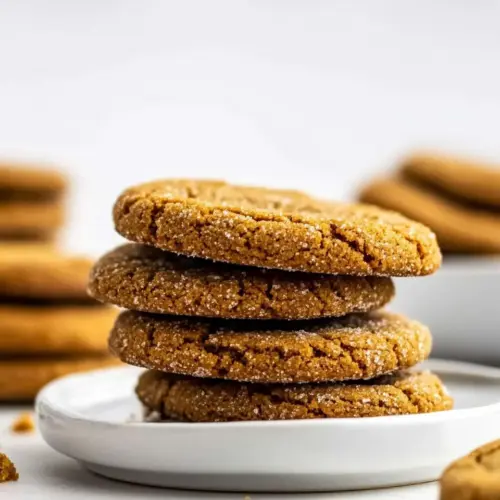
Gingersnap Cookies
Gingersnap Cookies are crisp edged and chewy centered, filled with warm ginger, cinnamon, and cloves, and enriched by deep molasses notes. This easy, crowd pleasing cookie is perfect for cozy afternoons or big gatherings, delivering rich aroma and satisfying texture. Make a batch for a festive cookie swap or a simple sweet treat that invites second helpings.
Equipment
- Mixer
- Mixing Bowls
- Measuring Cups
- Parchment Paper
- Cookie Scoop
- Cooling rack
Ingredients
- 3/4 cup butter room temperature Creamy and softened to room temperature to ensure even creaming with sugar, contributing to tender texture and rich flavor in the cookie dough. Works as the primary fat to trap air during creaming, helping cookies spread and become soft yet crisp at the edges. Adds richness and mouthfeel while carrying spice flavors throughout the dough.
- 1 1/2 cup granulated sugar divided Granulated and divided so part can be creamed with butter to incorporate air while the remainder is used for rolling, adding surface crunch and sweetness to the cookies. Provides bulk sweetness and contributes to texture differences between interior chewiness and exterior crispness. Also aids in browning reaction for a deeper color and caramel notes.
- 1 large egg room temperature Beaten lightly at room temperature to promote better emulsification and consistent texture in the dough, helping bind dry ingredients and contribute to structure. Adds moisture and proteins that set during baking, giving cookies a tender yet stable crumb. Helps leavening agents react and supports overall chewiness.
- 1/4 cup molasses Rich and viscous molasses added for deep, complex sweetness and characteristic gingersnap flavor, providing subtle acidity that enhances chemical leavening. Contributes moisture and chewiness while intensifying color to a darker brown and boosting spice notes. Balances sweetness with a slightly bitter, robust undertone typical of traditional gingersnaps.
- 2 1/4 cups all-purpose flour Sifted or measured accurately to provide the cookie’s structure by supplying gluten and bulk, making the dough hold together and shape during baking. Works with leaveners to determine texture, while its protein content influences chewiness versus tenderness. Blends with spices and sugar to create uniform distribution throughout the dough.
- 1 1/2 teaspoons baking soda Measured precisely to provide strong leavening power, reacting with acids (including molasses) to produce carbon dioxide and give cookies lift. Helps cookies spread appropriately and creates a lighter crumb when combined with proper creaming. Also contributes to slight browning and a gentle rise during baking.
- 1/2 teaspoon baking powder Used in a small amount to provide balanced leavening alongside baking soda, controlling rise and preventing excessive spreading for a tender cookie. Adds a touch of acidity when activated, which refines texture and ensures consistent lift. Works with other leaveners to create the desired density.
- 1 1/2 teaspoons ground ginger Ground ginger used to deliver the primary warm, pungent spice note characteristic of gingersnaps, defining the cookie’s signature flavor profile. Intensifies aromatic complexity and pairs with molasses and other spices for a layered taste. Distributes evenly in the dough to provide consistent spiciness in every bite.
- 3/4 teaspoon ground cinnamon Warm and sweet ground cinnamon added to complement ginger and deepen the spice blend, enhancing aromatic warmth and overall flavor complexity. Provides subtle sweetness and a rounded profile that balances sharper notes from ginger and cloves. Blends with molasses to create a classic holiday cookie spice character.
- 1/4 teaspoon ground cloves Aromatic and potent ground cloves included in small quantity to add depth and a slightly smoky, floral warmth to the spice mix. Enhances the overall complexity without overpowering, acting as a background accent that makes the ginger and cinnamon more interesting. Helps achieve a traditional, well-rounded gingersnap spice balance.
- 1/2 teaspoon salt Fine salt used to enhance and balance sweetness while strengthening gluten slightly for structure, improving overall flavor clarity. Suppresses bitterness and brightens the spices and molasses, making other ingredients taste more pronounced. Essential for rounding flavors and ensuring the cookie isn’t flat or overly sweet.
Instructions
- In a large bowl, cream together the butter and 1 cup of sugar until light and fluffy, about 4-6 minutes. Add in the egg and molasses and mix until combined.: As you cream the butter and granulated sugar , listen for a gentle change in texture, from dense and sticky to lighter and airier, and watch the color become paler; this indicates that air has been incorporated which will help the cookies rise. The smell will turn slightly sweet and creamy, and the mixture should form soft peaks when the beater is lifted slowly. This stage is important because those trapped air pockets give a tender interior, so do not rush it by using too high a mixer speed or under creaming which yields a dense result. A common mistake is using melted butter , which prevents trapping air and causes excessive spread, so ensure the butter is room temperature and pressable but not oily.
- In a medium bowl, whisk together the flour, baking soda, baking powder, spices and salt. Slowly add the dry ingredients to the creamed wet ingredients until combined.: After the egg and molasses go in, notice the batter loosen and become glossy, with a richer, deeper aroma as the molasses releases its dark, almost smoky notes. The sound of the mixer becomes smoother as the ingredients emulsify. This step matters because the molasses provides chewiness and complexity, while the egg stabilizes the structure; failing to blend fully can leave streaks of unmixed molasses and an uneven texture. Avoid adding cold egg straight from the fridge, which can cause the butter to seize and the batter to look curdled, making it harder to combine evenly.
- Cover the bowl and chill for 2 hours. When the hour is almost over, preheat the oven to 350℉ and line two baking sheets with parchment paper. Set aside.: As you whisk the all purpose flour , baking soda , baking powder , ground ginger , ground cinnamon , ground cloves , and salt , inhale the warming spice blend and observe the powder lighten where the citrus colored spices mix. This preblending ensures even distribution of leavening and flavor, preventing pockets of bitter baking soda or intensely spiced bites. The tactile feel of the dry mix should be uniform and powdery. A typical error here is mixing the dry and wet without sifting or whisking, leading to uneven rise or concentrated spice bursts; take a moment to whisk thoroughly.
- Using a medium cookie scoop, scoop the dough and roll into even balls. Roll the balls of dough in the remaining 1/2 cup of sugar.: When adding the dry mix, do it gradually and fold with a paddle or spatula until you reach a uniform dough, watching for the point where the dough pulls away from the bowl edges and becomes cohesive; this visual cue tells you gluten has developed just enough. The aroma will deepen as flour hydrates and the spices meld with the molasses . This technique matters because overmixing will activate too much gluten, resulting in tougher cookies, while undermixing leaves streaks of flour. A common problem is adding all the dry at once and then vigorously mixing, which can overwork the dough, so add in batches and stop as soon as incorporated.
- Place the dough balls on the prepared baking sheets, leaving 2 inches of space between each cookie. Bake for 15-17 minutes, until lightly browned and the top has that distinct cracked texture of a gingersnap.: During the chilling period the dough firms up, the molasses and spices settle, and the flavors meld, producing a more concentrated taste and easier handling. You will feel the dough become less sticky and notice the scent deepen when you open the bowl after chilling, a good sign that the flavors have matured. Chilling also prevents excessive spread in the oven, preserving thickness and chew. A mistake is skipping the chill for speed, which often yields flat, overspread cookies, so resist the urge and give it the full time unless you understand the trade offs.
- Let cookies cool for about 2 minutes on the baking sheet before transferring to a cooling rack to finish cooling.: As the oven approaches 350℉ you will sense a warm, dry heat that readies the pans; preheating ensures the cookies begin setting immediately, creating the characteristic crackled tops. Lining with parchment paper prevents sticking and promotes even browning. If the oven is not fully heated, cookies can spread too thin before setting, resulting in dense centers. A common slip up is crowding the baking sheets, which prevents proper air circulation and causes uneven baking, so keep adequate spacing.
- Using a medium cookie scoop, scoop the dough and roll into even balls: As you portion with a medium scoop, aim for uniform sizes so they bake evenly, and roll each portion between your palms to smooth the tops; the dough should feel pliable but not overly soft. The sound is quiet and the dough should hold its shape; if it feels too sticky, return it to the fridge briefly. Consistent sizing ensures predictable bake times and texture across the batch. A frequent error is uneven scooping, producing cookies that finish baking at different times and creating a mix of underdone and overbaked pieces.
- Roll the balls of dough in the remaining 1/2 cup of sugar: Coating each ball in granulated sugar gives a sweet, crisp crust that sparkles after baking and caramelizes slightly for extra depth. You will see the sugar cling and glint on the surface, providing an attractive finish and extra crunch with every bite. This step is important for the contrast between crisp exterior and tender interior. Avoid pressing the sugar into the dough too hard, which can compress the cookie and alter the texture.
- Place the dough balls on the prepared baking sheets, leaving 2 inches of space between each cookie: Arrange the sugared dough balls with about 2 inches of clearance to allow for spreading; during the first minutes in the oven the cookies will relax and widen, creating the classic craggy tops. Visual spacing helps you predict the final size and ensures even browning. If you pack them too close, edges will merge and you will lose the individual cookie texture, so keep that breathing room.
- Bake for 15-17 minutes, until lightly browned and the top has that distinct cracked texture of a gingersnap: You will notice the aroma intensify as the spices bloom and the edges turn a warm brown; the tops should show small cracks and feel set while the centers remain slightly soft to the touch, which is the cue for chewy insides. The sound is subtle, but you may hear a faint sizzling as sugars caramelize. This timing matters for getting a crisp edge with a chewy center. A common mistake is overbaking until fully hard, which removes chew, so pull them when centers are just set.
- Let cookies cool for about 2 minutes on the baking sheet before transferring to a cooling rack to finish cooling: Allowing a short rest on the sheet lets the cookies firm up and finish setting while still warm, which helps them hold shape during transfer; you will feel them stabilize when you lift them gently. Moving them too soon risks breaking the tender tops, while leaving them too long on the hot pan can continue baking and dry them out. A typical misstep is trying to stack cookies while they are still warm, which causes sticking and potential breakage, so use a rack and allow adequate cooling.
Notes
- Room Temperature Ingredients: Always bring the butter and egg to room temperature before starting, which helps them blend smoothly and creates a uniform dough.
- Proper Flour Measurement: Spoon the all purpose flour into your measuring cup and level it off with a knife to avoid over measuring that leads to dry, crumbly cookies.
- Chill for Flavor and Structure: The 2 hour chill firms the dough for easy scooping and deepens the spice notes, so don’t skip it unless you accept more spread.
- Even Scoops for Even Baking: Use a medium cookie scoop to create uniformly sized cookies, which ensures all pieces bake evenly and finish at the same time.
- Watch the Last Minutes: Begin checking at 14 minutes because ovens run hot; remove when centers are just set to keep chewy interiors and crisp edges.
- Parchment Paper Helps: Baking on parchment prevents sticking and promotes even browning, making cleanup easier and results more consistent.