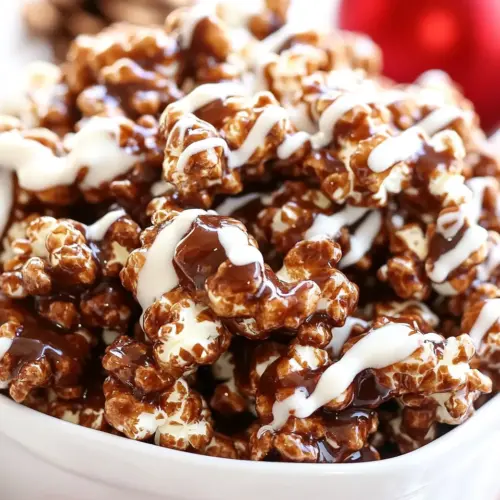
Gingerbread Caramel Popcorn
Gingerbread Caramel Popcorn brings together warm spices, buttery caramel, and airy crunch in a festive snack. This easy, crispy treat offers spicy ginger, sweet molasses, and a glossy caramel coating that sets into crunchy clusters, perfect for gifting or movie night. Make a batch for holiday exchanges because it stores well and tastes even better the next day.
Equipment
- Large heavy saucepan
- 13 x 9 baking pans
- Wooden Spoon
- Oven
Ingredients
- 15 cups popped popcorn Provide a light, airy base for the snack that delivers volume and crunchy texture; helps carry the caramel and spices evenly across each bite. Can be homemade or store-bought popped, and should be free of unpopped kernels for best results.
- 1/2 teaspoons salt Enhance overall flavor balance by adding a slight savory counterpoint to the sweet caramel and spices; helps heighten the other flavors. Use fine granulated salt so it distributes uniformly over the popcorn.
- 1 cup butter Contribute a rich, creamy fat that melts into the sugar to form the caramel coating while adding buttery flavor and mouthfeel. Use unsalted or salted butter according to taste, and melt gently to prevent browning too early.
- 2 cups light brown sugar, packed Sweeten and deepen the caramel with molasses-heavy notes while providing moisture for a glossy, chewy texture when cooked with butter and syrup. Pack firmly when measuring to ensure consistent sweetness and caramel set.
- 1/4 cup light corn syrup Stabilize the caramel by preventing crystallization and contributing chewiness and shine, which helps produce a glossy, smooth coating on the popcorn. Light corn syrup also aids in achieving the proper chew without adding off-flavors.
- 1/4 cup molasses Introduce deep, robust, slightly bitter-sweet flavor that evokes classic gingerbread; helps round out the caramel with complex molasses notes. Use true molasses for authenticity rather than substitutes to maintain intended flavor intensity.
- 1 scant tablespoon ground ginger Impart warm, sharp spice character that defines the gingerbread profile and cuts through the sweetness; contributes aromatic warmth to the coating. Measure carefully because ground ginger is potent and too much can overwhelm the mix.
- 1 teaspoon cinnamon Add fragrant, sweet-spicy warmth that complements ginger and molasses while supporting the overall holiday spice profile of the popcorn. Use ground cinnamon for even dispersion and to avoid gritty texture.
- 1 teaspoon baking soda Lighten and aerate the caramel by creating tiny bubbles when added and stirred, improving texture and making the coating less dense; also slightly neutralizes acidity. Stir in quickly and evenly to ensure the chemical reaction distributes through the mixture.
- 4 ounces almond bark Provide a smooth, sweet confection coating that sets quickly into a firm, glossy finish and helps bind spiced caramel to the popcorn; melts easily for dipping or drizzling. Chop or melt as directed for even coverage and to avoid lumps.
Instructions
- Preheat oven to 250 degrees.: You will notice a steady, low warmth filling your oven, which prepares it to dry the caramel coating gently without browning it. This low temperature is crucial because it dehydrates the caramel slowly, letting it set to a crisp finish instead of burning. A common mistake is using a hotter oven to speed things up, which causes the sugar to scorch; resist the urge and trust the slow approach.
- Divide popped popcorn equally between 2 lightly greased 13 x 9 baking pans or bigger pans.: When you spread the fluffy popcorn into pans, you should see an even, single layer with air pockets intact, not compressed clumps. Greasing the pans keeps the popcorn from sticking, and dividing into two pans ensures even coating and heat circulation while baking. Avoid piling the popcorn too deep, because dense areas will not crisp properly and will stay chewy.
- Combine salt, butter, brown sugar, corn syrup, molasses, ginger and cinnamon in a large heavy saucepan or pot. Bring heat up to medium high until it comes to a full boil (foamy). I used a pot/pan with high sides because the mixture will boil up and you don't want it to spill.: As the mixture heats, smell shifts from dairy to caramelized sweetness, then to spicy molasses aromatics. The foam signals boiling sugar, and the high sided pot prevents sticky overflow. Use stable heat so the mixture transitions evenly; moving it to high heat too quickly can create hot spots and localized burning.
- Boil for 3 minutes after mixture comes to a full boil then remove from heat.: During this short boil the sugar dissolves fully and the syrup thickens, creating a glossy sheen, and the scent deepens to a rich caramel. Timing matters here because underboiled syrup will not set, while overboiled syrup can become brittle or bitter. A common misstep is misreading a roiling boil; set a timer for accuracy.
- Stir in baking soda. Mixture will foam up.: The moment you mix in baking soda you will see dramatic foaming, almost like volcanic bubbles, and the color lightens. This reaction aerates the caramel, producing a delicate texture on the popcorn once it sets. Don not skip stirring thoroughly, because uneven distribution yields pockets of dense caramel. Be prepared for the foam, and stir gently to avoid splatter.
- Pour over popcorn in prepared pans and toss to coat. You will continue to stir and coat as it bakes so don't worry if it's not completely covered. Make sure popcorn is in a single layer as much as you can.: When poured, the sauce should cascade in ribbons and smell luxuriously spiced. Use a sturdy spatula or wooden spoon to fold, ensuring that every crevice gets touched by the caramel. It is okay if coverage looks patchy at first, because baking and intermittent stirring will distribute the coating. Avoid overmixing which can crush the popcorn .
- Bake for 45-60 minutes, stirring every 15 minutes. Don't over bake or the mixture can burn. The popcorn will still appear soft while hot but will turn crisp as it cools.: In the oven you will hear a soft crackle as moisture leaves the caramel, and the aroma will intensify to a roasted caramel and spice blend. Stirring every 15 minutes exposes all surfaces to dry out evenly, preventing burnt edges and ensuring uniform crispness. A typical error is skipping the stirs which leads to uneven texture, with some parts chewy and others overdone.
- Cool completely. Melt almond bark according to package directions. Drizzle over cooled popcorn. You can put it in a ziploc bag and snip the corner off for more controlled drizzling or just do it with a fork. Wait for the drizzle to set or you can speed this up by popping it in the fridge for a couple of minutes. Break into pieces and enjoy. You can place it in clear plastic cones, wrap with a ribbon, and give away!: As the popcorn cools, the caramel snaps audibly and the scent calms into a warm, spiced sweetness. Melting almond bark gives you a smooth white ribbon to decorate, and the chilled drizzle sets with a clean snap. Use a bag or fork to control pattern, and resist breaking it while slightly warm, because it will deform; letting it set fully ensures neat clusters. A frequent mistake is drizzling while the popcorn is still hot, which causes the almond bark to melt and lose its shape.
Notes
- Adjust the spice level by slightly reducing or increasing the ground ginger and cinnamon to suit your personal preference, tasting the caramel gently as you go so you do not overshoot the balance.
- Make it nut friendly by swapping the drizzle to a simple powdered sugar glaze if you prefer not to use almond bark, maintaining the visual contrast without introducing tree nuts.
- Control the chew by timing the oven toward the lower or higher end of the 45 to 60 minute window; shorter times yield a softer chew, longer times produce a crispier snap.
- Package for gifting by placing cooled clusters into clear cones or jars and tying with a ribbon, which elevates presentation with minimal effort and keeps the popcorn fresh.
- Scale confidently since the recipe multiplies easily; if you double the batch, use larger pans so the popcorn remains in a single layer and bakes evenly.