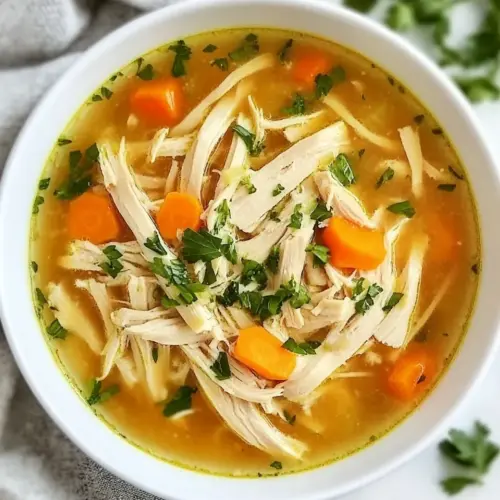
Ginger Chicken Soup
Ginger Chicken Soup is a bright, soothing bowl of savory broth, tender chicken, sweet potatoes and ditalini pasta. Fresh ginger and lemon lift the flavor while soy sauce brings gentle umami, making this an easy weeknight dinner that still feels special. Its comforting, aromatic, and perfect when you want something nourishing and quick to make.
Equipment
- Large Pot
- Cutting Board
- Chef's Knife
- Two forks
- Ladle
Ingredients
- 1 pounds skinless boneless chicken thighs Trimmed and boneless, provides the primary protein and rich, moist texture; simmering releases savory juices that build the soup's body. Chop or leave whole depending on desired bite, and cook until tender to contribute depth to the broth.
- 6 large garlic cloves sliced crosswise into very thin rounds Thinly sliced and aromatic, infuses the broth with pungent, mellowed garlic flavor; gentle cooking mellows sharpness while layering savory complexity. Add early in the simmer to release oils and create a rounded base for the soup.
- 4 ounces fresh ginger peeled and sliced crosswise into thin rounds Peeled and thinly sliced, imparts a warm, spicy, and slightly citrusy backbone to the broth; extensive simmering softens fibrous root texture while extracting bright heat. Adjust amount to control overall pungency and to complement the garlic and chicken.
- 10 cups water Neutral and abundant, provides the cooking medium that extracts flavors from solids and determines final broth concentration; volume affects dilution and simmer time. Start with this amount and reduce if a more concentrated stock is desired.
- 1/2 teaspoon Morton kosher salt Coarse kosher salt, seasons the broth to enhance natural flavors and aids in protein extraction from the chicken during simmering; measure carefully to balance other salty elements. Add gradually and adjust toward the end for precise seasoning.
- 1 pounds small sweet potatoes peeled and sliced crosswise into 1/4" thick rounds Peeled and uniformly sliced, contributes subtle sweetness, creamy texture, and satisfying bite; cooks through in the simmering broth and slightly thickens it as starches release. Choose small sweet potatoes for even cooking and complementary flavor to ginger.
- 6 ounces ditalini pasta Small tubular pasta, adds body and chewiness, absorbing some broth and creating a heartier mouthfeel; cooks relatively quickly and should be added near the end to avoid over-softening. Rinse or stir to prevent sticking and serve promptly for best texture.
- 3 tablespoons freshly squeezed lemon juice Freshly squeezed lemon juice, brightens and balances richness with acidic lift, cutting through fatty or sweet elements while enhancing other flavors. Add toward the end of cooking to preserve fresh acidity and avoid flattening from prolonged heat.
- zest of 1 large lemon Finely grated lemon zest, contributes concentrated citrus oils and aromatic brightness without acidity, reinforcing lemon juice and adding fragrant top notes. Sprinkle in near serving to maximize aroma and vibrant flavor.
- 3 tablespoons soy sauce Umami-rich liquid seasoning, deepens savory profile and provides saltiness with soy-forward character; adjusts overall taste toward a savory, slightly sweet direction. Incorporate to taste, balancing with salt and bouillon for depth.
- 1 to 2 teaspoons or more Better Than Bouillon Roasted Chicken Base, if needed Concentrated chicken base, optionally intensifies chicken flavor and adds savory depth when the broth needs reinforcement; use sparingly to avoid over-salting. Dissolve into hot liquid and taste before adjusting other seasonings.
- 1/2 cup fresh cilantro leaves Fresh cilantro leaves, introduce herbaceous, citrusy freshness and a bright finish when stirred in or used as garnish; adds visual contrast and aromatic lift. Add at the end to preserve delicate texture and vibrant flavor.
- freshly ground black pepper Freshly ground black pepper, provides a warm, mildly spicy background note that complements ginger and garlic; enhances overall seasoning with subtle heat. Grind just before serving for the most pungent, aromatic impact.
Instructions
- In a large pot over high heat, bring chicken thighs, garlic, ginger, and water to a boil.: Warmth will build quickly and you will notice the pot begin to emit strong, invigorating aromas of ginger and garlic as the water heats. Watch for the surface to shift from still to gently bubbling and then to a rolling boil, which signals convection and extraction of flavor. This initial vigorous heat helps draw savory compounds from the chicken into the broth, producing a clearer, more flavorful base. A common mistake is cranking the heat and leaving it unattended, which can lead to boilovers; keep an eye on the pot and reduce heat if needed. The sound will change from quiet simmering to a steady, lively bubbling when it reaches full boil.
- Add salt and reduce heat to medium to medium-low. Simmer, stirring occasionally, until chicken is firm and cooked, about 10-12 minutes. Remove chicken to a cutting board and let cool a few minutes.: After adding kosher salt , the water will taste rounded and the high boil should be tamed to a gentle simmer, where small bubbles rise steadily but the liquid is not violently churning. This moderate heat is crucial because it allows the chicken to cook through evenly while keeping the broth clear, rather than cloudy, which can happen with a hard boil. You should hear a softer, consistent hiss rather than loud splattering. If you simmer too slowly you may not extract enough flavor, and if you simmer too hard you risk toughening the meat and creating a cloudy broth.
- Add sweet potatoes and pasta to the pot, and stir occasionally until sweet potatoes are just softened and pasta is al dente, about 10 minutes or so.: As the chicken poaches you will notice its color change from pink to an opaque, pale tone and the flesh tighten. Use a spoon to lift a piece and check for firmness and clear juices, which indicate doneness. The aroma will deepen and take on a toasty, pure poultry character. Resist the urge to overcook, because prolonged simmering at higher temperatures can dry the meat. One troubleshooting tip is to remove a small piece and cut into it to confirm there is no pink in the center.
- Meanwhile, shred the chicken using two forks. Once sweet potatoes and pasta are done, add shredded chicken to the pot.: Once out of the pot, the chicken will continue to cook a touch from residual heat, and letting it rest for a few minutes makes shredding far easier and cleaner. You will notice steam and a warm, concentrated poultry scent as juices redistribute. Resting helps maintain tender texture and prevents stringy, dry meat. Cutting into piping hot meat can be messy and yield less attractive shreds, so give it a short pause to settle.
- Stir in lemon juice, lemon zest, and soy sauce. Taste test. If soup needs more salt, add a bit more kosher salt and/or soy sauce. If you want a more pronounced chicken flavor, stir in some Better Than Bouillon Roasted Chicken Base.: When you introduce the sweet potatoes and ditalini pasta the broth will chill slightly, then return to a gentle simmer. You will see the surface ripple as the starch from the pasta begins to thicken the liquid, and the sweet potatoes will become tender yet hold their shape. Keep the pot at a steady simmer to avoid overcooking the pasta into mush and to ensure even softening of the tuber. A frequent error is leaving the pasta to cook too long; check for a slight resistance to the bite to achieve al dente texture.
- To serve, ladle soup into individual bowls and top with cilantro leaves and freshly ground black pepper.: Shredding produces thin ribbons of chicken that integrate seamlessly into the soup. As you pull the meat apart you will feel its tender fibers separate with little resistance, and the aroma will intensify. Shredded pieces soak up the broth, so aim for uniformity so each mouthful contains similar texture. If you shred while the meat is too hot you risk burning yourself, so let it cool slightly. Overly large chunks will feel heavy in the spoon, whereas very fine shredding can make the soup seem more like a puree, so aim for medium ribbons.
- Once sweet potatoes and pasta are done, add shredded chicken to the pot: Adding the shredded chicken back into the pot melds the proteins with the starch and aromatics, and you will notice the broth takes on a fuller mouthfeel as the strands absorb liquid. Stir gently so the pieces distribute evenly and avoid breaking them down further. This step warms the meat through without cooking it further, preserving tenderness. A common misstep is vigorous stirring which can break down the pasta and cloud the broth.
- Stir in lemon juice, lemon zest, and soy sauce: At this stage the kitchen will brighten as citrus oils wake up the savory base. The lemon juice will add a clean acidity that balances the richness, while the lemon zest contributes concentrated citrus aroma. Soy sauce deepens the umami and enhances the broth s savory backbone. Taste and adjust slowly, because a little acid or salt can dramatically change the profile. Over-acidifying will mask delicate notes, so add incrementally and taste between additions.
- Taste test. If soup needs more salt, add a bit more kosher salt and or soy sauce. If you want a more pronounced chicken flavor, stir in some Better Than Bouillon Roasted Chicken Base: Tasting is crucial here, because final seasoning transforms the soup. As you sip a spoonful, note whether brightness, salt, or chicken depth is lacking and correct with small increments. Better Than Bouillon is concentrated, so use sparingly to avoid over salting. A troubleshooting tip is to rest a tiny portion on a spoon after each adjustment, letting flavors settle before deciding to add more.
- To serve, ladle soup into individual bowls and top with cilantro leaves and freshly ground black pepper: The final presentation should look inviting, with floating ribbons of shredded chicken , rounds of tender sweet potato , and a scattering of vibrant cilantro . Freshly ground black pepper adds a warm finish and aroma right before serving. Serve while steaming hot to enjoy the aromas fully. Avoid adding the cilantro too early, or it will wilt and lose its brightness.
Notes
- Slice the ginger thinly to maximize aromatic extraction, which gives the broth a bright, peppery lift without adding fibrous bits.
- Moderate the heat at simmer so the broth stays clear and the chicken remains tender instead of becoming stringy or tough.
- Add pasta late to preserve al dente texture, since overcooked pasta will make the soup thick and starchy.
- Reserve cilantro for serving to maintain its color and fresh herbal flavor, sprinkling it on top just before ladling bowls.
- Adjust umami slowly with soy sauce and optional Better Than Bouillon, tasting between additions to avoid over salting.