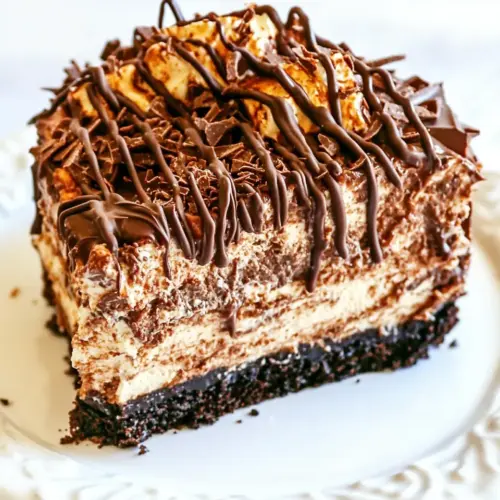
German Chocolate Cheesecake
German Chocolate Cheesecake is a creamy, chocolate forward dessert topped with toasted coconut and pecans, offering crunchy, chewy, and silky textures in every bite. This indulgent, yet approachable recipe is perfect for holidays or an easy weeknight celebration, delivering a richly flavored finish and a confident reason to make it for your next special meal.
Equipment
- Springform Pan
- Roasting Pan
- Jelly Roll Pan
- Electric Mixer
- Microwave-safe Bowl
Ingredients
- Crockpot liner or oven bag optional but recommended Optional and recommended to prevent sticking and make cleanup easier when using a slow cooker or oven; lines the pot or pan to protect surfaces and contain spills. Provides a barrier that helps remove the cheesecake without damaging its crust or sides. Particularly useful for water-bath or long bake methods where a clean lift is helpful.
- 18 ″ wide heavy duty aluminum foil Heavy duty foil used to wrap, shield, or double-line baking vessels for steam control and heat reflection during water-bath or slow-roasting steps. Offers extra protection against leaks and helps create an even and insulated environment around the cheesecake. Can be molded tightly to prevent water infiltration when baking in a roasting pan.
- Parchment paper Nonstick paper used to line pans and prevent the cake from adhering to the pan, ensuring clean release and intact edges. Also protects the bottom crust and makes transferring and slicing easier after cooling. Can be used to separate layers or cover surfaces to reduce cleanup.
- Cooking spray Nonstick aerosol or spray used to coat pans, liners, and foil to ensure easy release of the cheesecake and crust. Reduces the need for excessive greasing with butter or shortening and helps maintain the crust structure during removal. Useful for both springform pans and roasting pans to prevent sticking.
- Roasting pan Large metal pan used to hold hot water for a bain-marie or to catch drips from wrapped pans during baking. Supports the springform or cake pan and helps regulate oven temperature around the cheesecake for gentle, even cooking. Also useful for roasting nuts or holding wrapped pans for long bakes.
- 9 chocolate graham cracker sheets finely ground Finely ground cracker sheets used as the base component for forming the crust, providing structure and chocolate flavor. Crushing to a fine texture ensures the butter binds evenly and creates a compact, cohesive crust. Yields a crisp, flavorful foundation that complements the creamy filling.
- 6 tablespoons unsalted butter softened Softened unsalted butter used to bind the ground crackers into a compact, flavorful crust with a tender texture. Allows for controlled salt level and rich mouthfeel without adding extra sodium. Softening helps it incorporate thoroughly when mixed with crumbs.
- 2 tablespoons sugar Granulated sugar used in the crust mix to add subtle sweetness and help balance chocolate flavors. Also aids in binding and caramelization of the crust during baking. Combined with butter and crumbs to create a cohesive base.
- 1/4 teaspoons salt Fine salt used sparingly in the crust to enhance and balance the sweet and chocolate notes. Brings out depth of flavor in both the cracker crumbs and butter. Small quantity prevents overpowering while improving overall taste.
- 17 oz . pkg. sweetened shredded coconut (about 2 cups) Sweetened shredded coconut used for the German chocolate topping, providing chewy texture and prominent coconut flavor. Toasts during baking to add nutty depth and adds visually appealing strands to the caramel-like topping. Works with pecans and caramel components to create the classic finish.
- 1 1/2 cups pecans Pecans used chopped or toasted in the topping to add crunch, buttery flavor, and traditional German chocolate character. Toasting intensifies their nuttiness and enhances texture contrast with the creamy filling. Also folded into the coconut-caramel mixture for richness.
- 4 egg yolks Egg yolks used in the coconut-pecan topping to help thicken and emulsify the mixture into a glossy, custard-like consistency. Add richness and stabilize the caramel as it cooks, creating a smooth, cohesive sauce. Tempered into the hot mixture to avoid curdling and ensure even texture.
- 12 oz . can evaporated milk Evaporated milk used as the liquid and caramel base for the coconut-pecan topping, creating a creamy, concentrated dairy component. Reducing and cooking with sugars and yolks produces a thick, custardy caramel that binds the coconut and pecans. Contributes to the rich, fudgy finish typical of German chocolate toppings.
- 1 1/4 cups packed light brown sugar Packed light brown sugar used to sweeten and deepen flavor in the coconut-pecan topping with molasses notes. Dissolves into the evaporated milk and thickens as it cooks, helping form the caramel consistency. Adds complexity and a slightly sticky texture to the topping.
- 12 tablespoons unsalted butter softened Unsalted butter used in larger quantity for the topping to create a glossy, rich caramel and to coat the coconut and pecans. Adds mouthfeel and helps carry flavor without adding extra salt. Softened butter blends smoothly during cooking for a velvety finish.
- 1/4 teaspoons salt Fine salt added to the topping to amplify sweetness and balance the caramelized flavors, preventing the topping from tasting flat. Small amount enhances the depth of both chocolate and nut components. Ensures a well-rounded finishing flavor.
- 2 teaspoons vanilla extract Vanilla extract added to the topping for aromatic lift and to round out the caramel and coconut flavors. Provides subtle sweetness perception and enhances complexity without overpowering the core flavors. Stirred in at the end to preserve volatile aromatic compounds.
- 4 oz . Bakers German Chocolate bar chopped Chopped German chocolate bar used to provide intense, traditional chocolate flavor in small pieces within the cake or topping as specified by the recipe. Melts into pockets of chocolate or integrates into the batter for richer cocoa notes. Contributes authentic German chocolate character.
- 4 oz . semi-sweet baking chocolate chopped Chopped semi-sweet baking chocolate used to deepen the chocolate component in the filling or garnish, offering balanced sweetness and cocoa intensity. Melts smoothly when warmed and incorporates into the batter for a uniform chocolaty profile. Its moderate cocoa content helps maintain structure and flavor.
- 38 oz . pkgs. cream cheese (full fat) at room temperature Full-fat cream cheese at room temperature used as the primary base for the cheesecake filling, providing tang, creaminess, and a smooth texture. Softening to room temperature ensures it blends evenly with sugars and eggs, eliminating lumps. Supplies body and richness essential to cheesecake structure.
- 1 cup granulated sugar Granulated sugar used to sweeten the cream cheese filling, balancing tang and cocoa while aiding in a smooth texture. Dissolves into the batter to produce a uniform sweetness and helps with browning at the surface. Quantity calibrated to achieve traditional cheesecake sweetness without cloying.
- 1/4 cup unsweetened cocoa powder Unsweetened cocoa powder used to introduce chocolate flavor and deepen color in the filling without adding extra fat or sweetness. Provides concentrated cocoa intensity and a slightly drier powder that must be fully incorporated to avoid streaks. Balances with sugars and melted chocolate for a layered chocolate profile.
- 1/2 teaspoon ground cinnamon Ground cinnamon added in small amount to the filling to provide subtle warm spice and complexity that complements chocolate and pecan notes. Enhances aromatic depth without becoming dominant when used sparingly. Blended thoroughly to distribute its flavor evenly.
- 1 cup sour cream (full fat) at room temperature Full-fat sour cream at room temperature used to add tang and smoothness to the filling while improving texture and preventing cracks during baking. Provides desirable creaminess and slightly loosens the batter for silkier mouthfeel. Room temperature helps maintain emulsion and even baking.
- 1 1/2 teaspoons vanilla extract Vanilla extract added to the filling to enhance sweetness perception and round out chocolate flavors with aromatic complexity. Stirred in to lift the overall flavor profile and make other components taste more integrated. Adds a familiar, pleasing aroma to the cheesecake.
- 3 large eggs at room temperature Large eggs at room temperature used to bind the filling, provide structure, and contribute to a silky yet set texture when baked. Room temperature eggs incorporate more smoothly for an even, custardy consistency. Eggs also help create the stable matrix that holds the cheesecake together.
- 1 large egg yolk at room temperature Large egg yolk at room temperature added for extra richness and emulsification in the filling, enhancing creaminess and mouthfeel. Helps stabilize the batter and contributes additional fat for a decadent texture. Room temperature prevents curdling and promotes even incorporation.
- 4 oz . semi-sweet baking chocolate Semi-sweet baking chocolate used as an additional chocolate component for melting into the filling or for decorative drizzle, offering balanced sweetness and cocoa flavor. Melts to give a smooth, cohesive chocolate presence and pairs well with cocoa powder and cream cheese. Can be tempered slightly for glossy finishing touches.
- 1/2 teaspoons shortening Shortening used sparingly to coat or grease equipment or to smooth melted chocolate for gloss and ease of spreading, providing stability and shine. Melting a small amount into melted chocolate can prevent seizing and improve texture. Also useful for greasing pan edges to aid release.
Instructions
- PREHEAT oven to 350 degrees F.: The oven temperature gives the crust an initial set and starts the water bath heating, creating an even baking environment; you should hear a gentle hum from the oven when it stabilizes, and the air will carry a faint toasty scent as it warms, avoid placing the pan in until the temperature is reached to ensure even bake; a common mistake is opening the oven constantly while preheating, which delays reaching the correct temperature.
- WATERPROOFING STEP 1 (optional but HIGHLY recommended): Place 9” springform pan in the center bottom of a slow cooker liner or oven bag. Bring the liner bag up to the top of the pan then gather excess to one side and tie it in a knot.: Place 9” springform pan in the center bottom of a slow cooker liner or oven bag. Bring the liner bag up to the top of the pan then gather excess to one side and tie it in a knot. : This step creates a barrier against any leaks when you place the springform in a water bath, and you will notice the liner snugly hugging the pan; make sure the knot is secure but not so tight that it tears the bag, since pinholes will let water in and ruin the cheesecake; avoid skipping this if your springform has any weak seams, it can prevent a watery disaster.
- WATERPROOFING STEP 2 (do this over liner even if you have already done step 1 for double coverage): Place 2 large 18″ x 18″ pieces of aluminum foil on a flat surface underneath the pan in the form of a “+.” Gently fold (to make sure you don’t create any holes) up the sides of the foil around the (lined) pan.: Place 2 large 18" x 18" pieces of aluminum foil on a flat surface underneath the pan in the form of a "+." Gently fold (to make sure you don’t create any holes) up the sides of the foil around the (lined) pan. : The foil forms an extra waterproof envelope, and you should run your fingers along the seams to confirm there are no gaps; the foil will crinkle softly when molded and will reflect heat, helping to keep water out; a typical error is folding too tightly causing tiny tears, so be gentle and inspect carefully.
- GREASE: Line bottom of pan with parchment paper and lightly grease the inside of your entire springform pan with nonstick cooking spray.: Line bottom of pan with parchment paper and lightly grease the inside of your entire springform pan with nonstick cooking spray. : Greasing prevents sticking and lets the cake release cleanly, you’ll notice a subtle sheen from the spray on the sides and the parchment will sit flat on the bottom; make sure the parchment is pressed to the edges so crumbs do not slip underneath; if you skip greasing you risk tearing the crust when removing the ring.
- CRUST: Combine the CRUST ingredients in a medium bowl and stir until well combined. Add to springform pan and firmly press the crumbs down on the bottom of the pan until you have an even layer. (I like to use the bottom of a measuring cup to press down.): Combine the CRUST ingredients in a medium bowl and stir until well combined. Add to springform pan and firmly press the crumbs down on the bottom of the pan until you have an even layer. (I like to use the bottom of a measuring cup to press down.) : The aroma of chocolate from the crumbs will be prominent as you press them into an even layer, and you want a compact, uniform base to support the filling; a compacted crust yields a cleaner slice, whereas a loosely packed crust falls apart when sliced.
- Bake at 350 degrees F for 15 minutes. Remove from oven and cool completely on a wire rack.: Baking the crust sets the fats so the base holds together, you will see a faint change in color and a toasted smell; allow it to cool fully so the filling does not melt the butter in the crust; a common mistake is adding filling to a hot crust which can cause separation and a soggy base.
- TOAST COCONUT AND PECANS: Add coconut to one half of a large jelly roll pan and pecans to the other half. Bake for 12-15 minutes at 350 degrees F (you can bake with your crust), stirring occasionally, until coconut is golden and watching closely towards the end as coconut turns very quickly. Remove from oven and transfer pecans to cutting board. Once cool enough to handle, roughly chop pecans. Set aside.: Add coconut to one half of a large jelly roll pan and pecans to the other half. Bake for 12-15 minutes at 350 degrees F (you can bake with your crust), stirring occasionally, until coconut is golden and watching closely towards the end as coconut turns very quickly. Remove from oven and transfer pecans to cutting board. Once cool enough to handle, roughly chop pecans. Set aside. : Toasting releases oils and deepens flavor, you will smell a rich nutty perfume and see the coconut go from pale to golden, move quickly in the last minutes to avoid burning; chopped pecans should be fragrant and slightly crisp, and overtoasting will make them bitter so watch closely.
- COCONUT PECAN FILLING: Meanwhile, whisk the egg yolks, evaporated milk and brown sugar together in a large saucepan. Add butter and cook over medium high heat until the sugar dissolves and the butter melts, stirring constantly. Bring to a gentle simmer then turn heat down to medium. Continue to cook, stirring constantly, until thick enough to coat the back of a spoon, approximately 8 minutes. Remove from heat and stir in vanilla, salt, chopped pecans and 1 1/2 cups coconut (save remaining 1/2 cup coconut for topping).: Meanwhile, whisk the egg yolks, evaporated milk and brown sugar together in a large saucepan. Add butter and cook over medium high heat until the sugar dissolves and the butter melts, stirring constantly. Bring to a gentle simmer then turn heat down to medium. Continue to cook, stirring constantly, until thick enough to coat the back of a spoon, approximately 8 minutes. Remove from heat and stir in vanilla, salt, chopped pecans and 1 1/2 cups coconut (save remaining 1/2 cup coconut for topping). : The filling will thicken and smell caramel like as the sugar dissolves; stirring constantly prevents curdling and creates a glossy custard that clings to a spoon; if the mixture curdles it usually means the heat was too high, so maintaining a gentle simmer and steady stirring is key.
- WATER BATH: Fill a roasting pan with 1 1/4 inches water to create a water bath for your cheesecake (to prevent cracking). Place roasting pan in the oven to heat while you prepare your cheesecake filling.: Fill a roasting pan with 1 1/4 inches water to create a water bath for your cheesecake (to prevent cracking). Place roasting pan in the oven to heat while you prepare your cheesecake filling. : Heating the water first ensures the cheesecake goes into warm steam rather than cold water which could shock the cake, the steam will circulate and you will hear a soft hiss as the oven humidifies; failing to preheat the water bath can lead to uneven baking and cracks.
- CHEESECAKE FILLING: Add German chocolate and semi-sweet chocolate to a medium bowl and microwave at 50% power at 30 second intervals, until completely melted, stirring after every 30 seconds. Set aside.: Add German chocolate and semi-sweet chocolate to a medium bowl and microwave at 50% power at 30 second intervals, until completely melted, stirring after every 30 seconds. Set aside. : Melting at reduced power prevents seizing and gives a glossy, smooth chocolate, you should stir until the chocolate is silky and warm but not hot; if chocolate overheats it can separate and grainy bits will remain, so go slow and patient.
- Add cream cheese to the bowl of an electric mixer fitted with the paddle attachment and beat on medium speed until light and fluffy, about 4 minutes (no less!). Add sugar and beat 3 additional minutes.: Beating until light incorporates air that creates a silky texture; you will see the cream cheese go from dense to pale and airy, that lightness is essential for a tender outcome; underbeating leads to lumps and a denser cake, so give it the time specified.
- Add cocoa powder and cinnamon and beat until combined. Add the sour cream and vanilla and beat just until blended. Add the eggs, then the egg yolk, 1 at a time, beating as little as possible, just until combined after each addition. Stir in melted chocolate with a spatula just until combined.: The batter will smell richly of chocolate and cinnamon, and folding in eggs gently maintains the aeration you created earlier, overbeating after adding eggs can trap air and cause cracking, so mix only until the streaks disappear and the batter is homogeneous.
- ASSEMBLE: Transfer about half of the cheesecake batter to the cooled crust and smooth into an even layer. Spoon about two-thirds of the Coconut Pecan Filling evenly over cheesecake and smooth. Top with remaining cheesecake and smooth. Drop pan on the counter a few times to get rid of any air bubbles. Refrigerate remaining 1/3 Coconut Pecan Filling for later.: Transfer about half of the cheesecake batter to the cooled crust and smooth into an even layer. Spoon about two-thirds of the Coconut Pecan Filling evenly over cheesecake and smooth. Top with remaining cheesecake and smooth. Drop pan on the counter a few times to get rid of any air bubbles. Refrigerate remaining 1/3 Coconut Pecan Filling for later. : When layered you will notice visual strata and the batter will feel dense yet creamy as you smooth it, dropping the pan releases trapped air which prevents large holes in the final bake; avoid overfilling the pan, leave space at the top for expansion which keeps edges from oozing over.
- BAKE: Add cheesecake to water bath and bake at 350 degrees F for 60-75 minutes OR until edges are firm and the center 2-3 inches of the cheesecake is still wobbly. (DON’T open door before 60 minutes, this can cause cracks.): Add cheesecake to water bath and bake at 350 degrees F for 60 to 75 minutes OR until edges are firm and the center 2 to 3 inches of the cheesecake is still wobbly. (DON’T open door before 60 minutes, this can cause cracks.) : The smell of baking chocolate and caramel will fill your kitchen, and the visual cue is a set outer rim with a gentle tremble in the center, that wobble will set during the cool down into a creamy texture; opening the oven too soon causes temperature shock and cracks so resist the urge to peek.
- COOL: Turn off your oven and crack open the oven door. Allow cheesecake to cool in oven for 60 minutes, then remove to a wire rack and gently run a hot knife along the edges of the cheesecake (to prevent cracking) then continue to cool for 2-3 hours or until cheesecake is completely cooled. Cover the top of the cheesecake with foil, so that it doesn't actually touch the cheesecake. Chill in the refrigerator overnight but best if 24 hours.: Turn off your oven and crack open the oven door. Allow cheesecake to cool in oven for 60 minutes, then remove to a wire rack and gently run a hot knife along the edges of the cheesecake (to prevent cracking) then continue to cool for 2 to 3 hours or until cheesecake is completely cooled. Cover the top of the cheesecake with foil, so that it doesn't actually touch the cheesecake. Chill in the refrigerator overnight but best if 24 hours. : Cooling slowly lets the custard set without contracting harshly, you will notice condensation subside and the texture firm without a hard center, running a hot knife helps separate the cake gently from the pan, and chilling overnight ensures clean slices; rushing the chill can give a loose center and messy slices.
- GARNISH: Remove cheesecake to serving platter. Stir in 1 tablespoon water to Coconut Pecan Filling (now topping) and microwave approximately 30 seconds, or until softened. Spread over cheesecake and top with reserved coconut. The cheesecake can be refrigerated again at this point or served.: Remove cheesecake to serving platter. Stir in 1 tablespoon water to Coconut Pecan Filling (now topping) and microwave approximately 30 seconds, or until softened. Spread over cheesecake and top with reserved coconut. The cheesecake can be refrigerated again at this point or served. : Warming the topping brings it to a spreadable glossy consistency and the aroma of toasted coconut will bloom, spread carefully to keep edges neat; if the topping is too hot it may drip, so heat only until pliable and cool slightly before topping.
- CHOCOLATE DRIZZLE (optional): Just before serving, add chocolate and 1/2 teaspoon shortening to a small microwave safe bowl. Microwave at 30 second intervals, until completely smooth, stirring after every 30 seconds. Add chocolate to a small plastic bag and snip one corner. Drizzle chocolate all over cheesecake.: Just before serving, add chocolate and 1/2 teaspoon shortening to a small microwave safe bowl. Microwave at 30 second intervals, until completely smooth, stirring after every 30 seconds. Add chocolate to a small plastic bag and snip one corner. Drizzle chocolate all over cheesecake. : The drizzle adds visual polish and a final chocolate note, the chocolate should be glossy and fluid as you pipe thin ribbons over the top, let the drizzle set briefly before slicing; if the chocolate thickens too much it will clump, so keep it warm and fluid while you work.
Notes
- Bring ingredients to room temperature: Allow the cream cheese, eggs, and sour cream to sit at room temperature for at least an hour before beginning; this helps everything incorporate smoothly so your batter becomes silky rather than lumpy, which is essential for a tender, even bake.
- Use a water bath and preheat the water: Warm the roasting pan water in the oven before adding the cheesecake to ensure a gentle, even bake; this humidity reduces cracking and gives the center that perfect custardy wobble, so do not skip preheating the water.
- Toast components separately: Toast the coconut and pecans on separate halves of a pan so each browns evenly and you avoid overcooking the coconut while waiting for the nuts; stirring occasionally gives an even color and a fresher toasted aroma.
- Microwave chocolate cautiously: Melt the chocolate at reduced power in short bursts and stir after each interval; this prevents seizing and keeps the chocolate glossy, which is important for both the batter and the final drizzle.
- Run a hot knife between cooling stages: After the initial oven cool down, gently run a hot knife around the springform edge to prevent sticking and reduce the chance of the cheesecake cracking as it shrinks slightly while cooling.
- Chill thoroughly: Allow the cake to chill at least overnight, ideally 24 hours, before slicing; firm chilling makes cleaner slices and allows the flavors to meld so each piece tastes balanced and cohesive.