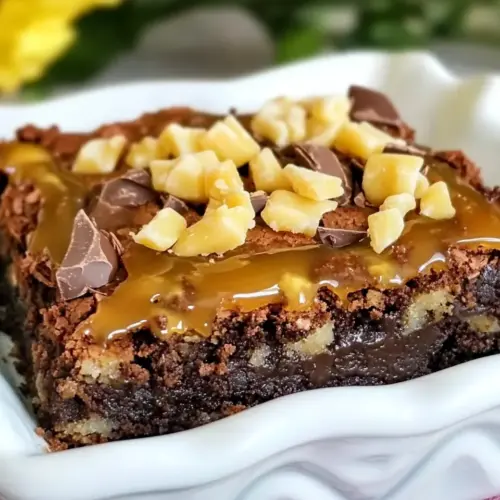
German Chocolate Caramel Brownies
German Chocolate Caramel Brownies are rich, fudgy, and delightfully gooey, with a ribbon of warm caramel and pockets of melty chocolate. This easy dessert delivers a bakery feel using a boxed cake mix and simple pantry ingredients, perfect for gatherings or a cozy night in. Make them when you want a fast, impressive sweet treat that disappears quickly.
Equipment
- Microwave-safe container
- Mixing Bowl
- Spatula
- 9 x 13 inch baking dish
- Parchment Paper
- Measuring Cups
Ingredients
- 20 KRAFT caramel squares Melted and softened to form a rich, chewy caramel base that binds and sweetens the filling; can be chopped or melted for smoother incorporation and provides a classic caramel flavor.
- 1/3 cup evaporated milk Used to thin and loosen the caramel squares into a pourable sauce, adding creaminess and a slightly concentrated milk flavor; helps achieve a glossy, cohesive caramel texture for spreading.
- 15.5 oz German Chocolate cake mix 1 box Added as the structural cake component to provide chocolate cake crumb and bulk; supplies leavening, cocoa flavor, and sweetness that combine with the brownie layers to create a dense, fudgy matrix.
- 3/4 cup melted Challenge butter Melted down to incorporate into batter for richness, moisture, and a tender crumb; provides butterfat that enhances mouthfeel and deepens the baked chocolate flavor.
- 1/3 cup evaporated milk Used a second time to further thin and enrich the caramel mixture, contributing additional creaminess and helping ensure the caramel sets with a smooth consistency.
- 3/4 cup mini chocolate chips Sprinkled into or atop the batter to add pockets of melty chocolate and textural contrast; delivers concentrated chocolate flavor and small, gooey bites throughout the brownies.
- 1 cup chopped nuts I used walnut Chopped and folded into the filling to provide crunchy texture and nutty flavor; adds contrast to the sweet caramel and chocolate elements and enhances overall complexity.
- 1 cup chocolate chips semi-sweet, milk, dark - whatever you have on hand Folded into the batter or scattered across the top to create melty chocolate pockets and added sweetness; can be mixed varieties to balance sweetness and bitterness according to preference.
Instructions
- Preheat oven to 350 F.: Warm air and the subtle scent of dry heat tell you the oven is ready, and preheating ensures even rise and set of the batter. You should hear the faint click as the oven cycles and see the temperature stabilize. If you skip preheating, the brownies may bake unevenly, with edges overcooking before the center sets, so always wait until the oven reaches temperature.
- Spray a 9 x 13 in baking dish with cooking spray and line with parchment paper. Set aside.: The slick surface of the sprayed pan helps the parchment stay in place while the parchment provides a lift out for easy removal. When you press the paper into the corners, it should sit flat without wrinkles. A common error is not trimming excess paper, which can fold into the batter; keep the lining neat for clean edges when you lift the bars out.
- Combine caramels and 1/3 cup evaporated milk in a microwave safe container. Heat on high heat in 30 second intervals, stirring in between, until fully melted. Set aside.: The caramel will go from stiff squares to a molten, glossy sauce, releasing a warm, buttery aroma that fills the kitchen. Stirring reduces hot spots and prevents scorching, which can make the sugar grainy and separate. If you overheat, the caramel may become thick and difficult to drizzle, so heat gradually and stop when the mixture is silky smooth.
- Combine cake mix, melted butter, 1/3 cup evaporated milk, mini chocolate chips, and chopped nuts in a bowl. Stir just until combined.: As you fold these elements, you will notice pockets of melted butter and streaks of chocolate chips; gentle mixing yields a dense, cohesive batter while preserving texture. Stirring too vigorously encourages more air, creating a cakier result, so stop when the ingredients are incorporated. Be mindful of temperature, if your butter is too hot it can soften the chips prematurely.
- Spread half of the cake mixture onto the bottom of the baking dish and bake for 7 minutes.: Press the batter into an even layer, then watch the edges as they begin to darken and pull away slightly from the pan during the brief bake. This partial bake sets a sturdy base so the caramel and chips do not sink too deep. If you underbake here, the bottom layer may not support the toppings and could become soggy, so trust the full seven minutes.
- Remove from the oven and sprinkle on one cup of chocolate chips. Drizzle the caramel sauce on top. (If caramel has cooled to the point that it cannot be drizzled, return to the microwave for 10 seconds and stir.): The contrast of warm chips and molten caramel creates a glossy, inviting layer; you will hear faint plinking as some chips settle. If the caramel has cooled, a quick heat loosens it back to a ribbon like pour. Avoid overheating the caramel at this stage, which can make it very runny and soak too far into the batter.
- Spread the remaining half of the cake mixture over the top of the caramel and chocolate chips. It's okay if you don't get 100% coverage. Bake for 15-18 minutes.: When you press the top layer lightly with a spatula, it should form a patchy blanket that will bake into a thin crust with a soft interior. As it bakes, expect a rich chocolate aroma and small steam puffing from the surface. Overbaking will dry the bars, so start checking at 15 minutes; a toothpick with a few moist crumbs indicates perfect doneness.
- Serve immediately with ice cream or let cool before cutting into bars.: If you serve warm, the caramel and chocolate chips will be molten, creating an oozing, luxurious bite that pairs beautifully with cold creaminess. Cooling gives cleaner slices and a firmer texture. Cutting too soon can lead to messy squares, so use a sharp knife and gentle rocking motion after cooling for neater presentation.
- Store in an airtight container for up to 4 days.: Proper storage locks in moisture and prevents the bars from picking up off flavors from the fridge. The chilled texture will firm the caramel , making the bars chewier. Avoid stacking warm bars in a sealed container, which can trap steam and lead to sogginess; allow them to cool to room temperature first.
Notes
- Measure carefully: Accurate measuring of the cake mix and butter ensures the batter has the right balance of moisture and structure.
- Warm butter gently: Melt the butter until just liquefied, so it mixes smoothly without overheating the chips.
- Short microwave bursts for caramel: Heat the caramel in 30 second intervals and stir, which prevents scorching and grainy texture.
- Use parchment for easy removal: Lining the pan with parchment makes lifting and slicing the brownies much cleaner.
- Check bake time early: Start checking at 15 minutes during the final bake to avoid drying out the center and keep a fudgy interior.