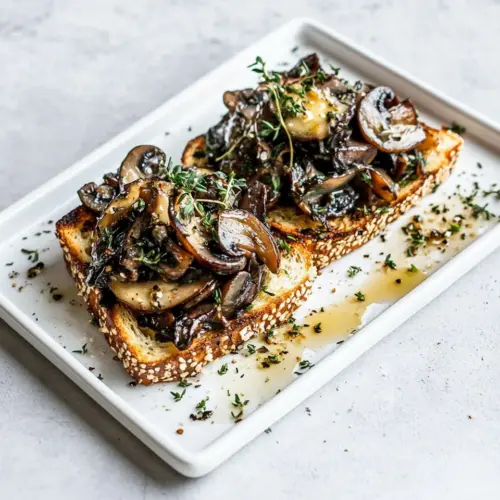
Garlic Wild Mushrooms on Toast
Garlic Wild Mushrooms on Toast is an earthy, creamy, and easy breakfast or light dinner featuring sautéed wild mushrooms, garlic, and thyme on toasted sourdough with a fried egg and grated Parmesan for extra umami. This simple, crispy, and comforting dish makes a perfect easy weeknight dinner or leisurely weekend brunch, offering big flavor with minimal fuss. Try it for a cozy seasonal meal.
Equipment
- 12-inch skillet
- Spatula
- Knife
- Toaster
Ingredients
- 4 tablespoons unsalted butter Melted in the pan to enrich flavor and prevent sticking, unsalted butter creates a silky base for sautéing mushrooms while allowing precise salt control in the dish. It contributes a rich, creamy mouthfeel and helps brown the mushrooms for deeper caramelized notes.
- 1/2 pound wild mushrooms, sliced Sliced into bite-sized pieces to provide the dish's earthy centerpiece, wild mushrooms deliver complex umami and varied textures that make the topping hearty and savory. Sautéing concentrates their flavor and releases liquid that blends with butter and aromatics for a robust mushroom mixture.
- 1 small shallot, minced Minced finely to add a mild, sweet onion-like background, shallot brightens the mushroom mixture without overpowering it and integrates smoothly into the sauté. Gentle cooking softens its sharpness and enhances the overall savory balance of the topping.
- 2 teaspoons fresh thyme leaves Picked and added whole or chopped, fresh thyme leaves lend a subtle, floral-herb aroma that complements the mushrooms and garlic while adding depth to the savory profile. Thyme's restrained earthiness ties together the butter and mushrooms for an herbaceous finish.
- 2 cloves garlic, minced Minced and cooked briefly to release its pungent aroma, garlic infuses the mushrooms with a bright, savory bite that elevates overall flavor and balances richness. Lightly sautéing prevents bitterness while maximizing aromatic oil release to permeate the dish.
- Kosher salt, to taste Measured to taste to season and enhance the natural flavors, kosher salt draws out moisture from the mushrooms and balances the richness of butter and eggs. Proper seasoning is essential for bringing forward umami and ensuring each component is flavorful.
- Black pepper, to taste Ground to taste to add warmth and mild heat, black pepper provides a sharp, aromatic contrast that lifts the dish and complements the earthiness of mushrooms and the richness of butter. A finishing crack of pepper brightens each bite.
- 2 slices sourdough bread, toasted Toasted and used as a sturdy base to add crunch and absorb the mushroom juices, sourdough bread contributes tangy background flavor and structural support for the topping. Toasting enhances texture and prevents sogginess under the warm mushroom mixture and egg.
- 2 large eggs, fried Fried until the whites are set and yolks reach desired doneness to add richness and a velvety element, large eggs create a luxurious, runny sauce when broken over the mushrooms and toast. Eggs also add protein and visual appeal, making the dish more substantial.
- Grated Parmesan cheese, for topping Grated and sprinkled over the finished dish to add salty, nutty umami, Parmesan cheese contributes an extra layer of savory complexity and helps meld the components together. A light dusting enhances flavor and provides a subtle crystalline texture.
Instructions
- In a 12-inch skillet add butter and set over medium-high heat.: As the butter melts it will foam and release a rich, nutty aroma, signaling that it is ready for the next ingredient. You should hear a gentle sizzle as the butter hits the pan, which means the surface is hot enough to brown the mushrooms. Getting the skillet to the right temperature matters because it creates those caramelized edges that concentrate flavor. A common mistake is starting with too low heat, which causes the mushrooms to sweat and become soggy rather than golden. If the butter begins to brown too quickly, lower the heat and let it settle; the goal is a warm, foaming sheen, not a dark scorch.
- When the butter has fully melted add the mushrooms, shallots, and thyme leaves. Saute for about 10 minutes or until the mushrooms are soft and slightly browned.: Right after adding the wild mushrooms , you should hear a louder sizzle as moisture meets the hot fat, and the pan will start to release an earthy steam that smells very savory. The shallot will begin to soften and sweeten, blending with the thyme as it warms. Spread the mushrooms so they are in a single layer as much as possible, because contact with the hot surface encourages browning instead of steaming. Overcrowding is a frequent error that results in limp, gray mushrooms; if your pan is small, cook in batches to achieve deep color and concentrated flavor.
- Add the garlic and stir to combine.: During this stage you will see the mushrooms reduce in size and develop golden to deep brown spots, and a fragrant, savory steam will rise from the skillet. Stir occasionally to promote even cooking, scraping up any fond that forms on the pan because these browned bits add extra flavor. The why here is texture and concentration, because longer cooking removes excess water and intensifies taste. A typical pitfall is leaving them untouched too long and letting them stick, so stir gently if parts start to cling; a splash of heat adjustment helps if they are browning unevenly.
- Taste the mushrooms and season with the desired amount of kosher salt and black pepper.: As you fold in the minced garlic , it will instantly release a bright, pungent aroma that rounds out the mushroom flavor. Keep the skillet over medium heat so the garlic becomes fragrant and melds with the other aromatics without turning bitter. The timing is deliberate because garlic browns faster than mushrooms and can scorch, introducing off flavors. If you notice the garlic darkening too quickly, reduce the heat and stir it into the moister parts of the pan to protect it while still developing its sweetness.
- To serve, place one slice of toast on a plate, top with half the mushrooms, top with a fried egg, and sprinkle with Parmesan cheese.: This tasting moment is where the dish comes together, because you are balancing the earthy mushrooms and rich butter with the bright lift of Kosher salt and the warming bite of black pepper . Give a small taste and add salt in measured amounts, then re-taste, because mushrooms concentrate flavors while cooking. Over-salting is the most common misstep here; it is easier to add more later than to fix an overly salty pan. Adjust little by little until the seasoning feels lively but not aggressive.
- To serve, place one slice of toast on a plate, top with half the mushrooms, top with a fried egg, and sprinkle with Parmesan cheese.: The final assembly is where the textures and flavors meet; you should notice the crisp, toasted sourdough holding up under the warm mushrooms while the fried egg adds a glossy, runny yolk that seeps into the bread. The grated Parmesan cheese melts slightly against the heat, adding savory depth and a gentle saltiness. Assemble on warm plates to keep everything comfortable, and avoid stacking too high which can make the toast soggy. A common serving mistake is letting the mushrooms cool too long before plating, which reduces their aromatics and the pleasure of the contrast between hot topping and crisp toast.
Notes
- Adjust the mushroom mix by choosing firmer or more delicate varieties to change texture, but keep slices even for uniform cooking.
- Play with egg doneness to suit preference, from just set whites and runny yolks to fully set eggs for a firmer bite.
- Finish with fresh herbs like thyme leaves added at the end for brightness, rather than cooking them long, to preserve aroma.
- Grate cheese fresh for a cleaner melt and brighter umami compared with pre-grated options, which can feel dry.
- Control salt carefully by seasoning in stages and tasting, because the concentrated mushroom flavor can make dishes taste saltier than expected.
- Use day old bread if possible, it toasts crisper and holds up better under the mushroom topping than very fresh bread.