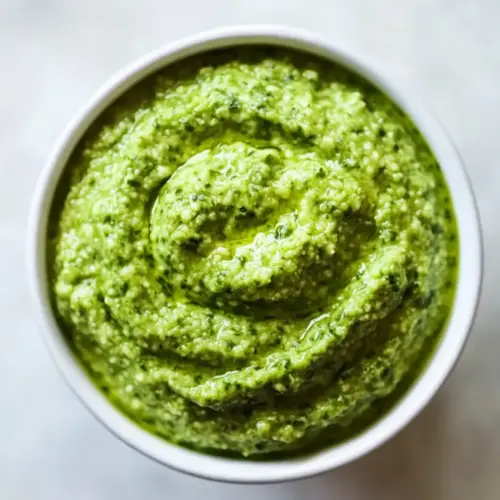
Garlic Scape Pesto
Garlic Scape Pesto is a bright, creamy, and herbaceous sauce that combines tender garlic scapes, fresh basil, toasted pine nuts, and salty Parmigiano Reggiano. It makes an easy weeknight dinner or a versatile spread for sandwiches and toast, offering fresh spring flavor and quick preparation. Make a batch to lift simple meals and keep a jar in the fridge for instant flavor.
Equipment
- Food Processor
- Vitamix Blender
- Pine Nuts
Ingredients
- 18 g garlic scapes, ends trimmed and cut into 2-inch pieces (about 1-1/2 cup) Trimmed and cut into pieces, provide the bright, garlicky foundation and crunchy texture for the pesto; selecting tender scapes ensures a mild, fresh allium flavor that melds well with herbs and nuts.
- 3/4 cup lightly packed fresh basil leaves Lightly packed and fresh, contribute aromatic herbal brightness and green color to balance the garlic scapes; choose vibrant leaves and avoid bruising to preserve essential oils for optimal flavor.
- 1/2 cup toasted pine nuts Toasted to enhance nuttiness and depth, supply rich, buttery notes and body to the pesto; toast gently until golden to bring out aromas without bitterness.
- 1/2 cup Parmigiano-Reggiano cheese, grated Grated finely, adds savory umami, salty complexity, and a smooth creamy mouthfeel that helps bind the pesto; use freshly grated cheese for best melting and flavor distribution.
- 1 lemon, juiced Juiced to provide bright acidity and freshness that cuts through richness, enhancing and balancing the pesto's flavors; strain if seeds are a concern to keep texture smooth.
- 1/2 cup olive oil Used as the emulsifying fat, creates a glossy, spreadable consistency and carries flavor throughout the pesto; choose a good-quality extra-virgin olive oil for pronounced fruitiness.
- 1 lemon, juiced Juiced again to reinforce acidity and brightness, further balancing richness and accentuating herbaceous and nutty notes; adjust amount to taste for desired tang.
- Water, desired amount Added as needed to adjust consistency and loosen the pesto to desired spreadable or saucy thickness; use cool water sparingly to avoid diluting flavors too much.
- Kosher salt Measured to taste, provides essential seasoning that enhances and harmonizes all flavors in the pesto; add gradually and taste as you blend to avoid oversalting.
- Fresh cracked pepper Freshly cracked for finishing, contributes subtle heat and aromatic lift that brightens the overall flavor profile; add a few grinds at a time and taste for balance.
Instructions
- Combine chopped garlic scapes, basil leaves, and toasted pine nuts into a Vitamix, regular blender, or food processor.: The moment you add these ingredients together you notice a fresh, green aroma that hints at the final flavor. The sound will be a soft thud as leaves meet nuts and scapes, and that initial texture will be chunky. This combination is crucial because it sets the structural base, both for flavor layering and for how the blades will break things down. One common mistake is overpacking the bowl which causes uneven processing, so leave a bit of headspace to allow movement.
- Pulse a few times just to help break up the nuts and garlic scapes.: Pulsing creates intermittent bursts that prevent overheating, preserving bright color and volatile aromatics. You will hear staccato bursts from the machine; stop and open to check the texture, it should look coarsely chopped rather than pureed. Pulsing first avoids a pasty result, and prevents releasing too much oil from the nuts. Avoid the urge to run continuously at this stage, as that can lead to a gummy texture and loss of vibrancy.
- Add in grated cheese and lemon juice.: Once the solids are uniformly cut, add the Parmigiano Reggiano and lemon juice to introduce savory depth and bright acid. The smell will become richer and slightly tangy, giving balance to the herb and nut flavors. The cheese helps emulsify while the lemon cuts through the fat of the nuts and oil. A frequent error here is using too much lemon at once, so add partially, then taste and adjust to avoid overpowering the pesto with acidity.
- Turn on your Vitamix/blender/food processor and while it's running drizzle in the olive oil and blend until combined.: As you drizzle olive oil in, watch the mixture take on a glossy sheen and smoother texture. The steady sound becomes a higher pitch hum as it homogenizes, and visually you will see the color deepen into a unified green. This step matters because emulsifying the oil properly yields silkiness and helps the pesto cling to foods. A common pitfall is pouring oil too fast which prevents proper emulsification and can separate the mixture.
- At this point take off the lid and scrape down the sides. Put the lid back on and drizzle in some water while the Vitamix/blender/food processor is running until you have reached your desired consistency.: After the main emulsion forms, scraping ensures no pockets of unincorporated cheese or nuts remain. When you drizzle in small amounts of water you can transform the pesto from thick spread to a pourable sauce. The sound will soften and the color will even out further. This technique matters because a controlled addition of water prevents over watering while giving you precise control over texture. Avoid adding large amounts at once, because it can make the pesto watery and dilute its flavor.
- Season with the desired amount of kosher salt and black pepper.: Finishing with kosher salt and fresh cracked pepper brings all the flavors into focus. Taste for balance and add seasoning incrementally; you will notice how salt heightens the nuttiness and the pepper adds a faint warmth that lingers. Seasoning at the end matters because other ingredients like Parmigiano Reggiano already contain salt, so adjust carefully. A common mistake is over-salting early, which is hard to correct without diluting the pesto.
Notes
- Use a high speed blender when you want a very smooth, almost pourable pesto, because the sustained power breaks down fibers and emulsifies oils thoroughly.
- Toast nuts lightly to avoid bitter notes; watch them closely and remove as soon as they smell fragrant and turn golden brown.
- Add acid gradually so the lemon brightens without stealing the show; start with half the juice, then adjust after tasting.
- Keep extra oil on hand for when the pesto clings too tightly, a teaspoon at a time loosens the texture without changing flavor balance drastically.
- Freeze in small portions to preserve freshness, using ice cube trays or small jars so you can defrost just what you need.
- Brighten up after chilling by stirring and adding a splash of water or oil, since refrigerated pesto can thicken and settle.