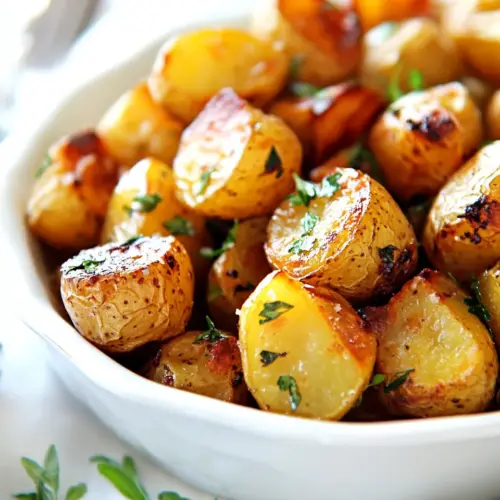
Garlic Roasted Potatoes
Garlic Roasted Potatoes combine crispy golden edges and creamy centers with mellow roasted garlic and fresh parsley. This easy weeknight side is savory, aromatic, and perfect for family dinners or casual gatherings. With simple pantry ingredients and straightforward steps, it’s a reliable crowd pleaser and a go to side to elevate any meal.
Equipment
- Baking Sheet
- Tongs
- Knife
- Cutting Board
Ingredients
- 2 pounds Russian banana fingerling potatoes or other red, Yukon, or white potatoes Provide a creamy, waxy texture and hold shape well when roasted; contributes a subtly sweet, earthy flavor and golden-brown exterior after caramelization. Cut into uniform pieces to ensure even roasting and tender interior while maintaining a firm bite.
- 2 tbsp olive oil Coat potatoes evenly to promote browning and crispness; carries and melds flavors while preventing sticking during roasting. Use enough to lightly glaze pieces for a glossy finish and enhanced mouthfeel.
- 1 tsp kosher salt Season generously to enhance and balance flavors; helps draw out moisture for better texture and heightens overall savory notes. Dissolve into oil to distribute evenly across potato surfaces for consistent seasoning.
- 1/2 tsp fresh ground black pepper Add a bright, warm pungency and subtle heat to contrast richness; helps amplify other seasonings and creates a rounded flavor profile. Grind freshly for best aroma and sprinkle to taste before roasting for balanced bite.
- 2 to 3 cloves of garlic minced Impart a sharp, aromatic pungency that mellows and sweetens when roasted; provides savory depth and aromatic lift to the dish. Mince finely so the garlic distributes uniformly and infuses the potatoes during cooking.
- 2 tbsp fresh parsley minced Introduce a fresh, herbaceous brightness and mild grassy flavor to finish the dish; cuts through richness and adds color. Mince finely and sprinkle toward the end or after roasting to preserve freshness and aroma.
Instructions
- Preheat the oven to 400 F.: Warm air fills the kitchen and you may notice a faint hum from the oven while it reaches temperature, setting the stage for Maillard browning on the potatoes . Preheating ensures that as soon as the tray goes in, the surfaces begin to crisp instead of slowly steaming. A common mistake is putting the sheet into a cold oven which yields limp, pale pieces. If your oven runs hot or cool, an oven thermometer helps you be precise, because consistent heat gives you uniform golden color.
- Scrub the potatoes clean and pat dry with a towel.: The tactile step of scrubbing removes grit and leaves the skins ready to crisp, and drying them ensures the olive oil adheres rather than water causing steam. You should feel the skins slightly rough when clean, and they will glisten when fully dry. If you skip drying, the initial roast can be uneven as moisture prevents browning. Use a clean, lint free towel and press gently to remove surface water without bruising the potatoes .
- Cut the potatoes in half (or quarters, depending on the size of the potato) and place on a small, rimmed baking sheet.: Cutting exposes more surface area so more edges can brown and crisp, creating contrast against the creamy centers. Arrange pieces so they sit cut side down when possible for extra contact with the hot sheet. A common slip is overcrowding the pan which traps steam and prevents browning, so give each piece breathing room in a single layer. Use a rimmed sheet to contain any oil and allow even air circulation around the pieces.
- Drizzle the olive oil on top of the potatoes, add garlic, and season with salt and pepper. (Hint: Use a garlic press to mince garlic.): The sound of oil hitting warm sheet is subtle, but you can see it bead and coat the potatoes . The garlic will mingle with the oil so it penetrates surfaces during roasting, which is why combining it here matters. Proper coating is key to color and flavor; if the oil pools, use your hands or tongs to distribute it. Avoid adding too much garlic in large chunks that might char and become bitter; finely minced pieces disperse and mellow.
- Toss the potatoes with tongs or your hands until the potatoes are evenly coated. Spread the potatoes into a single layer.: When you toss, feel for even coverage and listen to the faint shuffle as pieces settle into place. A single layer ensures each piece gets direct heat, promoting uniform browning and a crisp exterior. If pieces overlap, those spots will steam and stay soft. A frequent oversight is skipping the spread into one layer, which leads to mixed textures. Use tongs to flip and space them so every surface has a chance to crisp up.
- Roast in the preheated oven for 35 to 45 minutes or until golden brown and crispy. Flip the potatoes every 10 to 15 minutes to ensure all sides of the potatoes get nice and crispy.: During roasting you will notice the aroma deepen and the edges progressing from pale to warm amber to deep gold, with occasional sizzling sounds as pockets of moisture escape. Flipping creates uniform color and avoids overly dark patches. If you skip flips, one side may burn while the other stays underdone. Watch for visual cues like an evenly golden surface and fork tender interior to know they are done; a well roasted piece gives way with little resistance when pierced.
- Remove the potatoes from the oven and toss with fresh parsley. Check for seasoning before serving hot.: The final toss is fragrant and bright, as the warm potatoes release steam and carry the fresh herb aroma. Taste a few pieces to confirm salt and pepper balance, and adjust if needed. Serve right away so the contrast of crisp exterior and tender center is at its peak. A misstep is letting them sit too long on the tray where steam can soften the crispness, so transfer to a warm serving dish if you need to hold them briefly.
Notes
- Swap potato variety thoughtfully Choose fingerlings for shape and presentation, Yukon for a creamier interior, or red potatoes for a firmer bite. The variety changes the texture and how the edges brown, so pick one that matches your goal.
- Adjust oil amount If you want extra crispness, use the full 2 tablespoons of olive oil, but reduce slightly if you prefer lighter roast. Too little oil leads to pale, dry surfaces while too much can prevent crisping.
- Minced garlic timing Add finely minced garlic with the oil for deep roasted flavor, but if you prefer a milder garlic note, stir it in for the last 10 minutes so it softens without fully caramelizing.
- Season at two points Season once before roasting and taste at the end, adding a small pinch more salt if needed. This layered seasoning ensures depth without over salting early on.
- Herb finish Toss with fresh minced parsley immediately after roasting to preserve color and brightness, which contrasts nicely with the warm, savory potatoes.