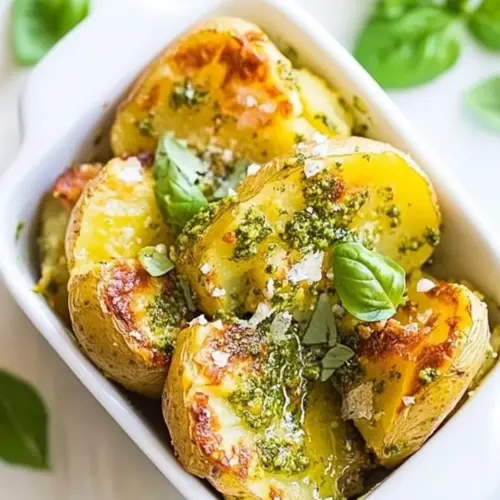
Garlic Pesto Smashed Potatoes
Garlic Pesto Smashed Potatoes are crispy edged and tender centered, topped with bright herbaceous garlic pesto for a flavorful and easy weeknight side. The texture contrast and simple ingredient list make them a crowd pleasing choice for casual dinners or gatherings, with a quick oven finish that adds deep golden color and toasty aroma.
Equipment
- Pot
- Baking Sheet
- Parchment Paper
- Small saucepan (for smashing)
- Brush
Ingredients
- 1 1/2 lb baby yellow potatoes, rinsed Provide creamy, tender texture when smashed after roasting or boiling; contributes a mild, buttery flavor that carries garlic and pesto well. Rinse to remove dirt and ensure even cooking; leave skins on for added fiber and visual appeal.
- garlic pesto Adds concentrated herby, garlicky flavor and oil-rich texture that coats potatoes for savory depth. Use a few spoonfuls to meld with olive oil and seasonings, creating a bright, aromatic finish.
- 3 tablespoons olive oil Coats potatoes for roasting and helps achieve crisp, golden edges while carrying flavors from pesto and garlic. Use measured amounts to prevent greasiness while promoting browning and mouthfeel.
- salt Enhances and balances flavors by amplifying savory and herbal notes from pesto and garlic; use sparingly to avoid overpowering. Dissolve into oil to season evenly and bring out natural potato sweetness.
- ground black pepper Provides subtle heat and aromatic depth that contrasts the herbaceous pesto and creamy potato texture. Grind to taste for fresh flavor and even distribution across the smashed potatoes.
- chopped parsley Brightens and finishes the dish with fresh herbal lift and a pop of color; adds light vegetal notes that cut through richness. Sprinkle just before serving to preserve freshness and visual appeal.
Instructions
- Bring a pot of water to a boil. Add the potatoes and boil for 15 minutes. Drain and let them cool.: The aroma of the kitchen becomes gently warm and mineral as water reaches a rolling boil, signaling it is ready for the potatoes . Boiling ensures even cooking from the outside in, which is crucial so that when you smash the potatoes they hold together without collapsing into a mash. Listen for the steady bubbling and watch for a full boil rather than just steam, that visual cue means the water will cook the potatoes reliably. A common mistake here is adding the potatoes to barely simmering water, which can extend cooking time and lead to uneven tenderness. If your pot is crowded, stir gently once to prevent sticking, and salt the water lightly to season the potatoes as they cook.
- Prepare the garlic pesto.: As the potatoes simmer you will notice their skins becoming taut and a faint starchy scent in the steam, a good sign they are softening. This timed cook helps them reach a fork tender stage where the center yields but the shape remains intact, ideal for smashing. Check doneness with a fork, it should slide in with gentle resistance and not shred the potato . Overcooking will cause them to disintegrate when smashed, while undercooking yields a dense center. If the potatoes vary in size, give the smaller ones a head start or remove larger ones slightly later to keep texture consistent.
- Preheat the oven to 400°F (207°C). Transfer the potatoes to a baking sheet lined with parchment paper. Arrange the potatoes on the baking sheet. Using the bottom of a small saucepan, gently smash the potatoes and flatten them. Brush the olive oil on the potatoes, then sprinkle with salt and pepper.: When you drain the potatoes , their surface will steam and you might feel a faint earthy aroma as the hot water leaves. Cooling briefly allows the steam to dissipate so the skins will crisp rather than steam under the olive oil. I usually let them sit on the colander for a few minutes; this pause also makes them easier to handle when you smash them. Rushing to smash piping hot potatoes can make them too soft and messy, so a short rest is worth the patience. If you are in a hurry, spread them on a tray to speed cooling evenly.
- Bake in the oven until golden brown, about 15-20 minutes. Brush the garlic pesto generously on top of the smashed potatoes, then sprinkle with the chopped parsley. Serve immediately.: The smell of fresh herbs and garlic will brighten your prep area as you ready the garlic pesto . Pesto brings concentrated herb and oil that penetrates the smashed nooks, creating bold flavor pockets. If using store bought, give it a quick stir to reintegrate any separated oil so it spreads smoothly. Watch for overpowering garlic intensity; tasting as you go ensures balance. A frequent misstep is adding raw garlic into pesto without tasting, which can become too sharp after resting, so adjust pungency with olive oil if needed.
- Preheat the oven to 400°F 207°C: The oven warms with a steady, dry heat that promotes Maillard browning on the smashed surfaces. This temperature is high enough to crispen edges without dehydrating the interiors, giving that golden texture we want. Allow the oven to fully reach the set temperature for consistent results, the difference between preheating and not is palpable in final color and crunch. Many people put the tray in too soon and end up with uneven browning; wait for the signal that the oven has reached 400°F 207°C before baking.
- Transfer the potatoes to a baking sheet lined with parchment paper: Moving the potatoes to a parchment lined sheet reduces sticking and makes cleanup easy, while the thin heat transfer from the sheet helps create crisp edges. Arrange space between the pieces so hot air circulates and crisping is even, crowded potatoes steam and will not brown properly. The visual cue you want is exposed surface area on each potato that can turn golden in the oven. Avoid stacking them, which is a common oversight that prevents even roasting.
- Arrange the potatoes on the baking sheet: Spread the potatoes out in a single layer with room between each piece to ensure even circulation of heat and browning. You should see small gaps of parchment between them, this spacing is what yields uniformly crispy edges. If pieces are touching, they will steam instead of roast, leading to soft sides rather than crisp ones. Take a moment to space them properly, this small step influences the final texture more than you might expect.
- Using the bottom of a small saucepan, gently smash the potatoes and flatten them: As you press with the saucepan bottom, you will hear a muted crackle and feel the tender center give way into a rustic flat shape, creating crevices for flavor to settle into. These fissures accept the oil and pesto, so press with steady, even pressure until each potato is flattened to roughly half an inch, but still holding together. If you press too hard the pieces will fall apart, while too light a press will not create enough surface for crisping. Aim for consistent thickness across the tray for even baking.
- Brush the olive oil on the potatoes, then sprinkle with salt and pepper: As you paint the surface with olive oil , the potatoes take on a shiny sheen and the scent of warm oil becomes noticeable, setting the stage for browning. The oil facilitates Maillard reactions, helping the edges turn golden while the sprinkle of salt and ground black pepper seasons each bite. Be even with the oil to avoid greasy puddles, and distribute salt and pepper uniformly so every piece is balanced. A typical mistake is under-oiling, which leaves pale spots, or over-salting before tasting the pesto, which can push the dish too salty.
- Bake in the oven until golden brown, about 15 to 20 minutes: During roasting you will notice the kitchen fill with a toasty, browned aroma as the exposed edges crisp and take on color. Visual cues to watch for are deepening golden tones and slightly blistered edges, that is when the texture is right. Oven times vary, so start checking at the earlier end and rotate the sheet if one side browns faster. Avoid leaving them too long which dries the centers, instead remove when the edges are crisp and the centers remain tender.
- Brush the garlic pesto generously on top of the smashed potatoes, then sprinkle with the chopped parsley: After baking, the residual heat helps the garlic pesto loosen and meld into the crevices, releasing a fragrant burst of herb and garlic. Brushing it on while the potatoes are hot ensures the oil and aromatics soften into the crust, creating glossy, flavorful pockets. Finish with chopped parsley for a lively color contrast and a fresh herbal note. A common error is applying pesto too early before baking, which can burn the herbs; always add it after the oven step for the brightest flavor.
- Serve immediately: The final moment is all about enjoying the contrast of crisp edges and tender interiors with the bright hit of garlic pesto . Serve while hot so the texture and aromas are at their peak, and watch how quickly these disappear from the platter. If you wait too long they will lose some crispness, so timing matters for the best experience.
Notes
- Prep your potatoes evenly, choose baby yellow potatoes of similar size so they cook at the same rate, which prevents some being under or overdone.
- Salt the boiling water, it seasons the potatoes from the inside out and makes a noticeable difference in flavor compared to salting only at the end.
- Don t rush the cooling, letting the potatoes rest after draining reduces steam and helps the skins crisp rather than steam when roasted.
- Be generous with oil, but brush rather than pour to avoid greasy puddles while still achieving the Maillard crisping on the edges.
- Finish with pesto after baking, adding the garlic pesto post oven keeps its fresh herbal notes intact and prevents burning.