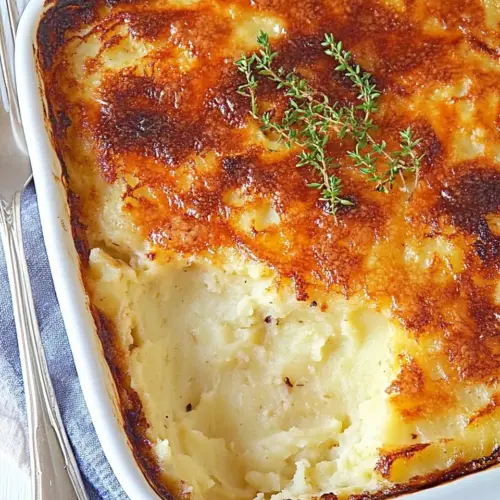
Garlic Parmesan Mashed Potato Casserole
Garlic Parmesan Mashed Potato Casserole is a creamy, cheesy comfort dish that browns to a crisp, golden top. Rich with roasted garlic, warm butter, and nutty parmesan, it makes an easy weeknight dinner or a crowd pleasing side for holidays. The texture contrast between fluffy mash and crisp cheese is irresistible, and it is simple to prep ahead for stress free entertaining.
Equipment
- Large saucepan or Dutch oven
- Hand Mixer
- 9 X 13 baking dish
Ingredients
- 3 lb s.russet potatoes, scrubbed, peeled and diced into 1” cubes Scrubbed, peeled and diced into 1” cubes to ensure even cooking and a fluffy texture; provides the starchy base that gives the casserole body and creaminess when mashed; yields about the right volume for a 3-pound batch suitable for family servings.
- 5 garlic cloves, whole Peeled and left whole to infuse subtle, roasted garlic flavor into the potatoes during boiling; mellows when cooked, imparting depth without overwhelming the dish; can be removed or mashed in for a gentle garlic presence.
- 1 teaspoon kosher salt (to season put in water for the diced potatoes) Added to the cooking water to season the potatoes from within and enhance overall flavor; kosher salt helps balance richness from dairy and cheese; measure carefully to avoid over-salting the finished casserole.
- 4 tablespoons unsalted butter Melted into the potatoes to add richness and silkiness while contributing a smooth mouthfeel; unsalted butter lets you control the dish's overall salt level; helps carry and meld the cheese and garlic flavors.
- 1 cup whole milk Heated with the potatoes and butter to create a creamy consistency and loosen the mash for spreading in the casserole dish; whole milk brings fat for richness and a velvety texture; adjust slightly for thicker or thinner results.
- 1 3/4 cups parmesan cheese, shredded and divided Shredded and divided so some can be mixed into the mash for savory, umami depth while reserving some for a golden baked topping; freshly shredded parmesan melts better and provides nutty, salty character throughout the casserole.
- 1 teaspoon black pepper, freshly ground Freshly ground and added to taste to provide warm, aromatic heat and balance the richness of butter, milk, and cheese; black pepper brightens flavors and enhances the savory profile of the potatoes.
- 1.2 teaspoon kosher salt Measured precisely to season the mashed potatoes after mixing and to balance the parmesan's saltiness; a secondary kosher salt addition ensures the final dish is well-seasoned without relying solely on the initial boiling salt.
Instructions
- Using a sharp knife, chop the scrubbed and peeled potatoes into 1” cubes.: Right away you will notice the tactile satisfaction of even chopping, the clean sound of the knife on the cutting board, and the uniformity ensures each cube softens at the same rate during boiling. This matters because uneven pieces lead to some undercooked centers, which ruin the smooth texture we want. A frequent error is cutting pieces too large, which prolongs boiling and can lead to waterlogged exteriors while the interior stays firm.
- Fill a large saucepan or Dutch oven with water, then add the potatoes to the water. Place the garlic cloves in the water, as well.: As the pot fills, you can see the potatoes submerge and the whole garlic cloves bob among them. Starting in cold water helps the cubes cook through evenly, and the submerged garlic steams gently into sweetness. If you add potatoes to already boiling water, the exterior may overcook before the center softens, causing a mealy texture.
- Season the water with a teaspoon of salt.: You will notice the salt dissolving, and while you cannot taste the water directly, this simple step seasons the potatoes internally. It is the foundation for a well rounded final dish, because otherwise the mash can taste dull even after adding flavorful toppings. Skipping this will leave you chasing salt later, and you might overcompensate with too much on top.
- On the stovetop, heat the water and potatoes over high heat and bring to a boil. Cook until the potatoes are fork tender, about 20 minutes.: The pot will move from quiet to a rolling boil, sending soft swirls of steam and a mild garlic scent. Testing with a fork is crucial, you want the utensil to slide through with little resistance. If you undercook them, the mash will have grainy or hard bits; overcooking risks waterlogged potatoes that absorb excess moisture and dilute flavor.
- Drain the potatoes, and place back in the saucepan.: The drained potatoes will steam briefly in the hot pan, giving you a chance to let excess water evaporate so the mash does not become watery. The residual heat also helps the butter and milk incorporate more smoothly. A common slip is leaving too much water clinging to pieces, which thins the final texture and weakens the cheese binding.
- Measure out the butter, milk and 1 cup of parmesan cheese on top of the potatoes.: Seeing the components together — glossy butter , warm milk , and the first portion of shredded parmesan — prepares you to meld them into the mash. The warmth of the potatoes will melt the butter and cheese quickly, creating a cohesive, creamy base. If the dairy is cold, it can shock the potatoes and make the mixture less smooth.
- Using a hand mixer on a low speed, slowly blend the ingredients together until smooth and creamy.: The gentle hum of the mixer will transform the components into velvety mash while releasing a rich, savory aroma. Low speed prevents overbeating, which can make the starches gummy. This technique matters because aeration at the wrong speed creates a gluey result rather than a light, fluffy texture. Avoid running the mixer on high, or you will risk a pasty mouthfeel.
- Season the potatoes with salt and pepper.: At this point you will taste and notice how the layers of flavor come together, adjusting the balance with the extra kosher salt and freshly ground black pepper . The pepper adds a bright, slightly spicy lift that keeps the richness from becoming cloying. A typical mistake is adding all the salt before tasting the cheese influence, leading to an over salted final casserole.
- Preheat the oven to 350°F. Spray a 9'' x 13'' baking dish with nonstick cooking spray, and set aside.: As heat fills the oven, you will smell the faint dryness of warming metal, and preparing the dish ensures the casserole slides out cleanly after baking. Preheating to the right temperature gives an even bake, so the interior heats through while the top begins to brown properly. Placing the casserole into a cool oven can extend baking time and affect the crust formation.
- Transfer the mashed potatoes into the prepared baking dish. Sprinkle the additional 3/4 cup cheese on top of the casserole.: When you spoon the mash into the dish you will see its creamy surface and then the scattered shower of shredded parmesan that will brown and crisp. Leaving the cheese on top creates that beloved golden crust, and its melting behavior gives flavor concentrated at the surface. Resist pressing the cheese into the mash, because you want it to form an external crust rather than sink and become soggy.
- When the oven is preheated, transfer the casserole to the oven.: As the dish enters the warm oven, you will already sense the comforting expectation of bubbling cheese and toasty notes. This step allows the interior to heat through uniformly and the top to begin setting for the later higher temperature browning. Placing it in before full preheat can produce uneven results and a less crisp top.
- Bake for 25 minutes, then turn up the heat to 425°F. Bake for an additional 15 minutes, or until the cheese has browned.: During the first bake the casserole will steady and heat evenly, and raising the temperature finishes with a dramatic golden color and slight crispness. You will hear soft bubbles at the edge and smell the concentrated nutty aroma of parmesan . Keep an eye on it during the high heat stage because cheeses can go from golden to overly dark quickly; if the top browns too fast, tent with foil briefly.
- Remove from the oven, and let cool slightly.: After removing the casserole you will notice steam rising and the top settling into a glossy, slightly firm crust. Allowing it to rest helps the texture set so slices hold their shape and the internal temperature evens out. Serving immediately is tempting, but cutting too soon can cause the mash to slump and not present well.
- Serve warm, and enjoy!: The final ritual is plating a warm scoop, where the aroma of roasted garlic and melted parmesan greets each bite. Warm servings preserve the contrast between the creamy interior and crisp top, and this temperature highlights the full flavor spectrum. If you serve it cold, the textural charm diminishes and the flavors mute, so aim for warm servings.
Notes
- Make Ahead: Prepare the mashed potatoes up to the point of baking, cover tightly, and refrigerate. On the day you plan to serve, top with the remaining parmesan and bake until warmed and golden. This saves time while keeping the final result fresh.
- Texture Choice: For a chunkier bite, mash by hand with a potato masher instead of using a hand mixer. This leaves small, tender pieces that add rustic appeal while still delivering creaminess.
- Cheese Finish: Use freshly shredded parmesan rather than pre shredded varieties for better melting and a brighter, nuttier finish. Freshly grated cheese browns more evenly and tastes fresher.
- Garlic Approach: If you prefer pronounced garlic pockets, roast the cloves first instead of boiling them with the potatoes. Roasted garlic becomes sweet and concentrated, offering a bolder flavor burst.
- Serving Temperature: Serve the casserole warm to preserve the contrast between the soft interior and the crisp top; letting it cool too long will reduce that appeal and mute the flavors.