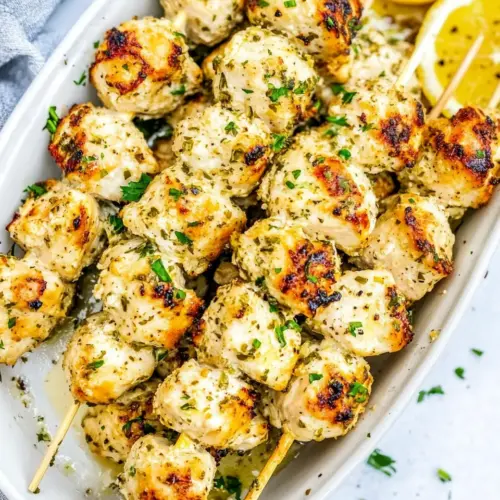
Garlic Parmesan Chicken Skewers
Garlic Parmesan Chicken Skewers are crispy, juicy, and full of bright lemon and savory garlic flavor, finished with a silky Parmesan butter sauce. This easy weeknight dinner is perfect for summer gatherings, offering quick air fryer convenience and crowd pleasing taste. Make it to impress without fuss and enjoy a reliably delicious meal.
Equipment
- COSORI Air Fryer 5.8 Quart
Ingredients
- 2 pounds chicken breasts (boneless and skinless, cut into 1-inch pieces) Provide tender, lean protein cut into bite-sized pieces that form the base of the skewers and absorb marinades for juicy, flavorful chicken.
- 3 tablespoons olive oil Coat and tenderize the chicken while adding a fruity, savory fat that helps prevent sticking during grilling and carries aromatics into the meat.
- 2 tablespoons lemon juice (freshly squeezed) Brighten and balance the marinade with acidic citrus juice that tenderizes proteins and adds a fresh, zesty lift to the overall flavor profile.
- 1 tablespoon lemon pepper seasoning Season the chicken with a zesty blend that combines citrusy pepper and aromatic herbs to deliver a punchy, savory crust when grilled.
- 3 cloves garlic (minced) Infuse pungent, aromatic heat and depth into the marinade and finishing sauce by releasing essential oils when minced and mixed with other ingredients.
- salt (to taste) Enhance and balance flavors by adjusting seasoning levels to personal taste, ensuring the chicken and sauce are properly seasoned before serving.
- 4 tablespoons butter (unsalted) Create a rich, silky finishing sauce when melted, contributing a creamy mouthfeel and carrying the garlic and parmesan flavors over the skewers.
- 2 cloves garlic (minced) Add a fresh, sharp garlic hit to the butter sauce, releasing fragrant oils that meld with butter and parmesan for a cohesive topping.
- 1/2 cup Parmesan cheese (grated) Provide salty, nutty umami that melts into the warm butter sauce, binding flavors together and adding a savory, cheesy finish to the skewers.
- 1 tablespoon fresh parsley (chopped) Garnish with bright, herbaceous color and a mild, fresh flavor that complements the rich parmesan and garlic while adding visual appeal.
Instructions
- In a large bowl, combine the olive oil, lemon juice, lemon pepper seasoning, minced garlic, Parmesan cheese, and salt. Mix well.: The bowl will smell bright and garlicky immediately, the oil and lemon forming a glossy base that carries the seasoning. As you whisk, notice the texture change when the grated Parmesan softens into the liquid, creating tiny creamy clumps that cling to the whisk. This mixture seasons the surface and helps the chicken brown evenly. A common mistake is under mixing, which leaves pockets of seasoning; stir until everything feels cohesive but not soupy.
- Add the chicken pieces to the bowl and toss until they are fully coated in the mixture. Let the chicken marinate in the refrigerator for at least 1 hour, or up to 24 hours for best results. If you're using wooden skewers, now's the time to soak them in water for about 30 minutes before using.: Right after tossing, you should see the marinade clinging to each chicken piece, with the surface glistening and smelling tangy and savory. Marinating allows the flavors to penetrate, making each bite more flavorful and ensuring the exterior caramelizes nicely. For best texture, refrigerate the marinating chicken , and remember to soak wooden skewers to prevent charring. Avoid marinading for too long in heavy acid if pieces are tiny, as they can break down excessively and become mushy.
- Preheat your air fryer to 380°F (190°C). If your air fryer requires preheating.: The air fryer should feel warm and humming before you place the skewers in, which ensures immediate contact heat for quick browning. You may hear a soft fan and smell a faint warm scent from the appliance as it reaches temperature. Preheating helps maintain a crisp exterior while keeping the chicken juicy inside. A typical error is skipping this step, which can lead to uneven browning and a longer cook time, so wait until the unit signals ready.
- Thread the marinated chicken pieces onto the soaked wooden skewers.: As you thread, the tactile feeling of the tender chicken sliding onto the skewer should be firm but gentle, with the pieces snug enough to hold but not cramped. Even spacing allows hot air to circulate and promotes uniform cooking. If pieces are bunched tightly, the interior may steam rather than brown, so leave a little gap between chunks to get those golden edges.
- Arrange the skewers in the air fryer basket, ensuring they don't touch or overlap. Spray them with a bit of cooking spray if you wish, I do because I think it helps make them a bit more golden. You may need to cook in batches depending on the size of your air fryer. Cook the skewers for 12-15 minutes, or until the chicken is cooked through and golden brown, flipping halfway through cooking time.: The first moments in the basket should produce a soft sizzle, and you will notice edges beginning to take on a golden hue within minutes. Flip when the undersides show color, which encourages even caramelization all around. Use a reliable thermometer if you’re unsure, aiming for an internal temperature that ensures safety while preserving juiciness. Crowding the basket is a frequent misstep, leading to patchy browning, so give each skewer breathing room and do batches if necessary.
- While the skewers are cooking, prepare the garlic Parmesan sauce. Melt the butter in a small saucepan over medium heat. Add the minced garlic and sauté for about 1 minute until fragrant. Remove the saucepan from the heat and stir in the Parmesan cheese and chopped parsley until well combined.: The butter should foam gently and take on a warm aroma, then the garlic will release an immediate fragrant burst as you stir it, signaling it is time to remove from heat to avoid bitterness. As you fold in the grated Parmesan , the sauce will thicken into a glossy, clingy coating that smells nutty and savory, with flecks of green from the parsley . Overheating at this stage can cause the cheese to seize, so temper the sauce off heat if it seems grainy, and whisk gently to smooth it out.
- Once the skewers are done, brush them with the garlic Parmesan sauce.: The moment you brush the warm sauce over the hot skewers, you’ll see it melt slightly and cling, forming a shiny, flavorful glaze. The aroma should intensify, with buttery, garlicky notes and a parmesan nuttiness that coats the air. Allow a minute for the sauce to set so it adheres rather than run off; if it slides too much, the sauce was likely too thin and can be returned to low heat to slightly reduce. A common slip is applying cold sauce to hot skewers which cools them down, so use warm sauce for best adhesion.
- Serve the skewers hot, with extra sauce on the side for dipping if desired.: When plated, the skewers should look glossy and inviting, the surface flecked with melted Parmesan and parsley . Serve immediately so the exterior remains crisp and the interior warm and juicy. Leaving them to sit too long allows steam to soften the crust and the texture to degrade, so encourage guests to dig in right away. Keep extra sauce warm and offer it alongside for anyone who wants an extra hit of garlic Parmesan goodness.
Notes
- Marinating: Longer marinating equals deeper flavor, and overnight is ideal when you have the time. Even thirty minutes helps, but avoid excessively long marination with small pieces because the acid can begin to break down proteins and alter texture.
- Skewers: Soak wooden skewers for at least thirty minutes so they do not char in the air fryer and to protect the flavor from any burnt wood aroma. If using metal skewers, handle carefully when hot and consider oiling them lightly.
- Air Fryer Space: Do not crowd the basket, cook in batches if needed for even browning. Crowding causes steaming rather than crisping, which reduces the desirable golden exterior.
- Cheese Tips: Use freshly grated Parmesan because it melts smoother than pre shredded varieties and yields a superior sauce texture. Grate just before using for best aroma and melt.
- Sauce Save: If the sauce clumps, whisk in a splash of warm broth or milk off the heat to smooth it without thinning the flavor too much. Warm liquid reincorporates the fat and cheese more gently than cold.
- Serving Idea: Keep some sauce on the side for dipping because more garlic Parmesan is always welcome; warm it briefly before serving if it has cooled and thickened.
- Storage: Leftovers keep in the fridge for up to four days; reheat gently in the air fryer to revive crispness rather than microwaving, which can make the crust soggy.