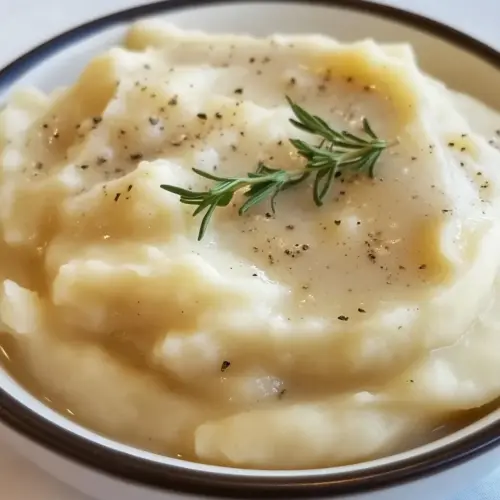
Garlic Mashed Potatoes with Herb Gravy
Garlic Mashed Potatoes with Herb Gravy offers creamy, garlicky mash topped with a savory, herb scented gravy. The roasted garlic adds sweet depth, while the broth and herbs create a glossy, flavorful sauce, perfect for an easy weeknight dinner or a festive holiday side. Make it to enjoy comforting texture and bright herbal notes that keep guests asking for seconds.
Equipment
- Oven
- Baking Sheet
- Blender or food processor
- Large Stockpot
- Saucepot
- Mixing Bowl
Ingredients
- 5 garlic cloves Crush and roast to mellow sharpness and deepen flavor, then blend into mashed potatoes for a fragrant, savory backbone that complements the creamy texture.
- 1 teaspoon olive oil Drizzle and heat briefly to sauté or roast garlic, adding a subtle fruity note while preventing sticking and aiding browning during cooking.
- 1 pound yukon gold potatoes Peel and cube for boiling until tender; choose for its creamy, buttery texture that yields smooth, fluffy mashed potatoes with a rich mouthfeel.
- 1/4 teaspoon kosher salt Season and dissolve into cooking water or the finished mash to enhance overall flavor balance and bring out the natural sweetness of the potatoes.
- 1/4 cup Greek yogurt plain Whisk in cold to add creaminess and slight tang, helping achieve a velvety texture while reducing reliance on heavier dairy like butter or cream.
- 1/4 cups skim milk as needed Add gradually as needed to loosen consistency and create a smooth, scoopable mash without thinning flavor, adjusting to preferred creaminess.
- 2 cups chicken broth or vegetable Simmer and reduce to build a savory, umami-rich base for the herb gravy or to cook aromatics, contributing depth and a cohesive sauce consistency.
- 1 teaspoon ground sage Sprinkle ground into the gravy for warm, slightly peppery, and piney notes that pair well with poultry flavors and enrich the herb profile.
- 1/2 teaspoon thyme Stir in dried to impart subtle floral, lemony, and woodsy tones to the gravy, harmonizing with sage and oregano for an herby finish.
- 1/4 teaspoon dried oregano Incorporate sparingly to introduce a mildly bitter, aromatic element that rounds out the savory herbs and brightens the gravy's complexity.
- 1/4 teaspoon kosher salt Add a second, measured pinch for the gravy or mash to fine-tune seasoning and ensure the dish is well-balanced without oversalting.
- 1 tablespoon cornstarch or flour Mix into a small slurry to thicken the gravy quickly and smoothly, creating a glossy sauce while avoiding lumps when combined with hot liquid.
- 2 tablespoons broth cold Combine with the cornstarch or flour to keep the thickening agent cold and prevent clumping, ensuring an even, smooth gravy texture when added to heat.
Instructions
- Preheat oven to 300 degrees.: You will feel the oven warm and steady, though this temperature is moderate; it gently roasts the garlic without burning. Roasting at a controlled low heat encourages the garlic to caramelize slowly so it becomes tender and sweet. A common error is using too high a temperature which can char the edges, so watch the garlic after 20 minutes for even golden color.
- Lightly toss garlic in olive oil. Place on baking sheet in one layer and roast for 30 minutes until golden brown. While still hot, puree roasted garlic in blender or food processor.: As the garlic roasts you should notice a softening of the cloves and a fragrant, toasty aroma filling the kitchen. The oil helps create even browning and a velvet texture. Puree while warm so the cloves mash into a silky paste that disperses into the potatoes easily. If you let the cloves cool too long, they may not puree smoothly; warm cloves blend into a creamier paste.
- Meanwhile, wash potatoes in cold water. Peel if desired and cut large potatoes into quarters. Place into a large stockpot and cover with water. Bring to a boil, cook until soft. Drain and return to pot. Add pureed garlic, salt, and yogurt. Mash until combined. Gradually add skim milk until desired consistency is reached. Serve with herb gravy.: You will hear a gentle rolling boil and see the water turn cloudy as the starches leach out, a good sign the potatoes are cooking through. When a knife slides in easily, drain promptly to avoid water logged tubers. Returning them to the warm pot lets steam escape so your mash remains fluffy. Mixing in warm garlic paste and Greek yogurt creates a creamy, tangy base; add skim milk a little at a time so the texture stays pillowy rather than runny. Over mixing can make them gluey, so stop when the mash is smooth but still light.
- Combine all ingredients with exception of cornstarch and cold water in a saucepot. Bring to a boil. Combine cornstarch and cold water in a small bowl and mix until smooth. The cornstarch will settle to the bottom of the bowl if the mix sits, so be sure to mix again before using.: As the broth and dried herbs heat, the aroma should shift from salty to herb forward, signaling the flavors are melding. Boiling extracts more flavor from the dried sage , thyme , and oregano , which makes the gravy more robust. Preparing the starch slurry separately prevents lumps; if you skip this you risk ending up with grainy pockets that do not dissolve properly.
- Once boiling, gradually add cornstarch and water mix until gravy is thickened. Repeat the cornstarch process if needed until the desired consistency is reached. Serve over garlic mashed potatoes.: When thickening, add the slurry slowly and whisk constantly; you will see the liquid transform into a glossy, coat worthy gravy. The texture should cling to the back of a spoon, and the scent will be warmly herby. If you add too much at once, the starch can set into thick blobs. If the gravy creeps too thick, thin with a splash of warm broth to reach the ideal pourable consistency before ladling over the mash.
Notes
- Roast the garlic low and slow to coax out sweetness rather than scorch it, which gives the mash depth without sharpness.
- Keep potatoes warm after draining so they dry slightly, making them easier to mash into a light, airy texture rather than a gluey one.
- Warm the broth before thickening because it blends more smoothly with the starch and minimizes shock that can cause separation.
- Whisk the slurry constantly while adding to boiling liquid to create a glossy, lump free gravy that clings to the mash.
- Taste before final seasoning since the combined salt from the potatoes and gravy may require small adjustments for balance.