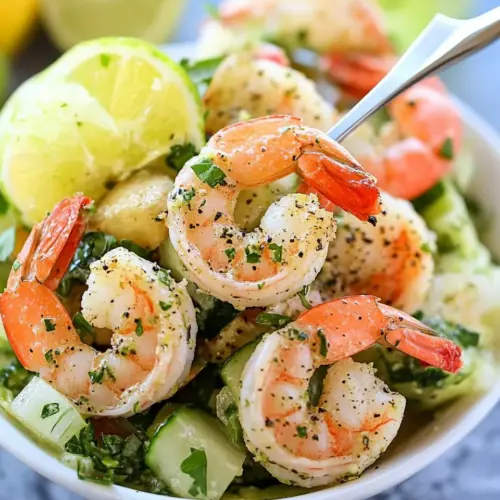
Garlic Lime Roasted Shrimp Salad
Garlic Lime Roasted Shrimp Salad is a bright, creamy and crisp summer salad that combines tender roasted shrimp with creamy avocado and crunchy cucumber. Zesty lime and fresh herbs make this an easy weeknight dinner or elegant potluck dish, delivering fresh flavors and satisfying protein. Make it when you want something light yet indulgent and quick to assemble.
Equipment
- Oven
- Baking Sheet
- Parchment Paper
- Mixing Bowl
- Knife
Ingredients
- 2 pounds raw jumbo shrimp, peeled and deveined Provide juicy protein and the main seafood element for the dish; toss with seasonings and roast quickly to retain tenderness and flavor. Ensure peeled and deveined shrimp are patted dry so they caramelize evenly under high heat and absorb the garlic-lime marinade.
- 2 tablespoons olive oil, divided Coat and help cook the shrimp while adding a fruity, smooth mouthfeel to the salad; reserve a small portion for dressing if desired. Use half for tossing the shrimp and a bit more to dress the greens so the fats carry aromatics and balance acidity.
- 1 large English cucumber, chopped Add cool, crisp texture and mild vegetal flavor that contrasts with the warm shrimp; chop into bite-sized pieces for even distribution. Salt lightly after chopping to draw out excess moisture and keep the salad from becoming watery.
- 1 firm avocado, peeled and chopped Contribute creamy richness and buttery texture that balances the bright citrus and herbs; chop just before serving to prevent browning. Choose a firm, slightly underripe avocado for easy chopping and to maintain shape in the salad.
- 1 lime, juiced Provide bright acidity to brighten flavors and tenderize the shrimp slightly when combined; squeeze fresh for best vibrancy. Use the juice to make a simple dressing with olive oil, garlic, and herbs to coat both shrimp and vegetables evenly.
- 1 clove garlic, minced Deliver pungent aromatic punch and savory depth when minced finely; combine with lime juice and oil for a zesty marinade. Mashing the garlic into the dressing helps release its oils so the flavor infuses the shrimp and salad components.
- 1/4 cup fresh chopped mint leaves Impart cool, slightly sweet herbal notes that refresh the palate and complement cilantro and lime; chop coarsely for texture. Sprinkle over the salad at the end to preserve color and bright menthol-like lift.
- 2 tablespoons fresh chopped cilantro Bring citrusy, slightly peppery herb flavor that ties the salad together and enhances the shrimp; chop finely to distribute flavor. Mix with mint and lime for a bright herb dressing that lifts the overall dish.
- Salt and pepper Season and balance all flavors by enhancing savory notes and controlling brightness; adjust to taste at the end. Grind fresh black pepper for a subtle heat that complements the herbs and citrus without overpowering the shrimp.
Instructions
- Preheat the oven to 450 degrees F. Line a large rimmed baking sheet with parchment paper. Pour the shrimp onto the baking sheet and drizzle with 1 tablespoon olive oil. Toss the shrimp in the oil and spread them out on the baking sheet. Sprinkle generously with salt and pepper.: When you first slide the baking sheet closer to the oven, you may catch a quick citrus scent from the lime if you prepped it already, but the real sensory signal is the visual sheen on the shrimp after the olive oil toss. The oil should coat each piece lightly, making them glint under kitchen light, and spreading them out ensures even heat circulation. You will feel the weight in the bowl as you toss, and you should hear nothing at this point, just the quiet shuffle of parchment. The reason this matters is even spacing keeps the shrimp from steaming, which preserves a roasted texture rather than a rubbery one. A typical mistake is crowding the pan; if the shrimp touch, they release liquid and will steam instead of roast, so give each piece breathing room.
- Roast the shrimp in the oven for 5-7 minutes, until pink. They should still be in the shape of C's. If they shrink to O's, you've overcooked them. Cool the shrimp on the baking sheet.: As the shrimp roast, you will notice an immediate change in aroma, a toasted sweetness as proteins lightly caramelize. Listen for gentle pops or tiny sizzles if there is lingering moisture, and watch for the color shift from translucent gray to an opaque pink. The ideal cue is shape; a C shaped curl means tender doneness. Pull them at the lower end of the time range for larger shrimp to avoid the O shaped overcooked result. Cooling them on the baking sheet is important because transferring them hot into the salad will wilt and mash the avocado and herbs. A frequent error is leaving them in too long because the timer goes off, so check visually at five minutes and then every minute until done.
- Meanwhile, chop the cucumber and avocado in 3/4-inch chunks. Place the cucumber, avocado, minced garlic, chopped mint leaves, and cilantro in a salad bowl. Pour the lime juice and 1 tablespoon olive oil over the salad and toss well to coat. Taste, then salt and pepper as needed.: When you chop the cucumber and avocado , you will feel distinct textures under the knife: the crisp snap of cucumber and the buttery give of avocado. Mixing the minced garlic and herbs with the citrus and the second tablespoon of olive oil creates an aromatic dressing that perfumes the bowl with green, bright notes. Toss gently so the avocado keeps shape, and taste before finishing with seasoning. The 'why' here is texture and balance, the acid from the lime keeps the avocado fresh and the oil gives mouthfeel. A common misstep is over mixing and mashing the avocado , which makes the salad heavy and pasty.
- Once the shrimp have cooled to room temperature, toss them into the salad. Cover and chill until ready to serve.: At this point you will notice a pleasant contrast, the warm mineral aroma of roasted shrimp tempered by the cool, herb scented bowl. Tossing in room temperature shrimp lets the dressing adhere without wilting the herbs or warming the avocado . After combining, covering and chilling melds the flavors while keeping textures mostly intact. The reason chilling helps is it lets the acids and oils marry, creating a cohesive bite. Try to avoid adding piping hot shrimp , which will steam and soften the salad components, losing that crisp contrast everyone loves.
Notes
- Swap herbs sparingly: If you enjoy a different herb profile, replace some or all of the mint and cilantro with flat leaf parsley for a milder, greener note, but keep one of the originals for brightness.
- Adjust lime intensity: Add more or less lime juice to shift the salad toward snappy and tart or gentle and rounded, tasting as you go to preserve balance.
- Texture control: For extra crunch, leave cucumber skins on and slice thicker; for a silkier mouthfeel, halve the cucumber lengthwise and scoop seeds before chopping.
- Make it a meal bowl: Serve over chilled cooked grains like quinoa or bulgur to add bulk and make the salad more filling without changing the core flavors.
- Presentation trick: Serve in chilled shallow bowls so the colors stay vivid and the salad appears composed, elevating a simple weeknight dish into something special.
- Advance prep: Pre chop the cucumber and herbs and store separately, then assemble right before serving to keep textures crisp and herbs aromatic.