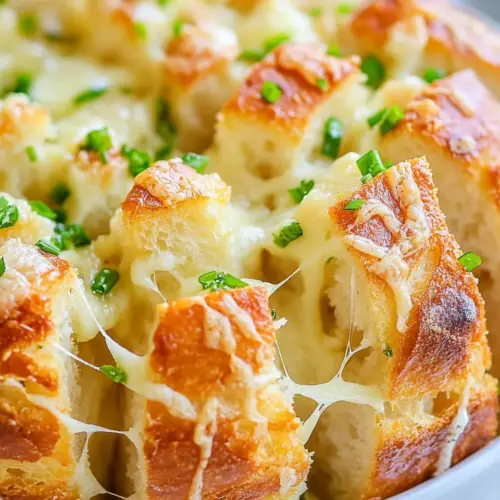
Garlic Cheesy Pull Apart Bread
Garlic Cheesy Pull Apart Bread is a gooey, crispy crowd pleaser with melted mozzarella, garlicky butter, and fresh herbs. This easy appetizer delivers creamy, savory bites that are perfect for parties or cozy nights, offering stretchy cheese and golden crust in every pull. Make it for casual gatherings and enjoy the hands on, shareable fun it creates.
Equipment
- Cutting Board
- Sheet Pan
Ingredients
- 16 ounce (900 g) sourdough loaf or french loaf Provide a sturdy, crusty base that soaks up butter and garlic flavors while giving structure to tear-apart servings; slice loaf in a crosshatch pattern without cutting through to maintain pull-apart texture. Offer mild tang from fermentation that balances the richness of cheese and butter, ensuring each piece holds together when served warm.
- 1 stick (1/2 cup) (113 g) unsalted butter Melt into a flavorful glaze that soaks into the loaf’s crevices, adding richness and a silky mouthfeel; measure and melt gently to avoid browning or separating. Bind herbs and seasonings to the bread while providing a satisfying, buttery finish on every pull-apart piece.
- 1 teaspoon kosher salt Season the butter mixture to enhance overall flavor and create balance between savory and rich elements; dissolve into softened butter for even distribution throughout the bread. Add a subtle saline lift that amplifies the cheese and garlic without overpowering them.
- 2 cloves garlic minced Infuse sharp, aromatic pungency when minced and mixed into the butter, releasing oils that permeate the bread for bold garlicky notes; sauté briefly if a milder flavor is desired. Complement the richness of butter and cheese by contributing bright, savory depth to each bite.
- 1/2 cup green onion sliced Contribute fresh, oniony crunch and mild sharpness when thinly sliced and sprinkled between cuts of the loaf; cook slightly if a softer texture is preferred. Add visual contrast and a light vegetal note that contrasts with the creamy cheese and buttery bread.
- 1/4 cup fresh parsley chopped (divided) Add bright, herbaceous freshness and color when chopped and divided between the butter filling and final garnish; use some inside the bread for aromatic lift and reserve some on top for a vivid finish. Provide a clean, slightly peppery counterpoint that lightens the overall richness.
- 8 ounces shredded mozzarella or any other melting cheese Provide melty, gooey texture and savory richness when shredded and stuffed into the loaf’s cuts; choose a good melting cheese for stretch and uniform coverage. Contribute umami and creamy mouthfeel that binds the layers together and creates irresistible pull-apart strands.
Instructions
- Preheat your oven to 350°F (180°C), or 160°C for fan ovens.: The oven warming up produces a steady dry heat that will crisp the crust and melt the cheese without burning the top. You'll notice a gentle warmth and the faint metallic scent from the racks as it reaches temperature. Preheating ensures even baking, so don't skip it; placing the loaf into a cold oven often results in uneven melt and soggy pockets. One common mistake is not waiting for the oven to fully heat, which can prolong baking and yield uneven texture.
- Melt the butter in a small bowl. Add minced garlic, salt, and half of the chopped parsley. Stir until well combined.: The aroma of warmed butter and garlic will be immediate, releasing a savory perfume that hints at what is to come. Stirring helps the flavors marry, and the parsley brightens the mixture visually. This step infuses the butter so it penetrates the loaf when poured into the crevices. If the butter becomes too hot, the garlic can cook and turn bitter, so allow it to cool slightly before combining. A frequent oversight is letting the garlic sit in scalding butter, which dulls its fresh flavor.
- Place the bread loaf on a cutting board. Using a serrated knife, make diagonal cuts across the top of the loaf, and then repeat in the opposite direction to create a diamond pattern of 1-inch pieces. Be careful not to cut all the way through the bread.: The sound of the serrated blade sawing through the crust is satisfying, and you should feel slight resistance as you stop before reaching the bottom. These cuts create pockets to trap the butter and cheese , ensuring even distribution. It's important to keep the base intact to preserve the loaf structure and avoid a crumbly mess. Rushing can lead to cutting too deep, which causes the loaf to fall apart when you stuff it.
- Place the bread on a large piece of foil on a sheet pan. Pour the butter mixture into the crevices of the bread, ensuring it’s evenly distributed. Gently stuff the bread with sliced green onion and shredded cheese.: As you press the mixture into the cuts, you'll hear soft squishes and see the butter glisten, seeping into the bread's interior. The green onion adds flecks of color while the shredded mozzarella nests into pockets ready to melt. Distributing the filling evenly is crucial for consistent bites; clumping the cheese in one area creates hot spots and underfilled sections. A common issue is overstuffing, which can lead to cheese spillage and uneven baking.
- Cover the bread with foil and bake in the preheated oven for 15 minutes.: With the foil on, heat circulates and melts the cheese gently while the crust steams a touch and softens. The house will be filled with a warm, garlicky aroma that draws people in. Foil prevents the top from browning too quickly, allowing the interior to become fully melty. Removing the foil too soon can cause the interior to dry out; keep it covered for the recommended time to ensure a gooey center.
- For a crispy top, uncover the bread and bake for an additional 10 minutes.: Uncovering invites the dry oven heat to crisp the top, creating those desirable golden-brown edges. You will hear a slight crackle as the surface crisps and see bubbling where the cheese has reached the surface. This step gives you the lovely contrast between crunchy top and soft interior. Watch closely toward the end, because leaving it too long risks overbrowning and a dry texture. A typical mistake is skipping this step, which leaves the top soft instead of pleasantly crisp.
- Before serving, garnish the bread with the remaining parsley and additional green onion. Serve warm.: The final sprinkle of fresh parsley and extra green onion refreshes the rich flavors and brightens the presentation. Serve while the cheese is still molten, and you will hear delightful stretching and quiet gasps from guests. Cooling too long makes the cheese set and lose that pull apart quality, so aim to serve promptly. People sometimes let it sit too long, which results in a less dramatic, less gooey experience.
Notes
- Serrated Knife Matters Use a sharp serrated knife for clean cuts. Saw gently so you create deep pockets without collapsing the loaf. This preserves the structure, and helps the butter and cheese penetrate where they should.
- Cool the Butter Slightly After melting, let the butter sit briefly before mixing with raw minced garlic. This prevents the garlic from cooking and turning bitter, keeping its bright flavor intact.
- Even Cheese Distribution Spread the shredded mozzarella throughout the pockets rather than piling it in one area. Even distribution ensures consistent melting and prevents large cheese spills on the pan.
- Foil for Gentle Melting Keep the loaf covered for the initial bake. The foil helps the inside get warm and melty without overbrowning the top, producing a tender interior and a crisp finish after uncovering.
- Reserve Fresh Herbs Hold back some chopped parsley and sliced green onion for garnish. Adding them at the end brightens the dish and balances the richness.
- Store Properly Wrap cooled leftovers tightly and refrigerate. Reheat covered in a 350°F oven until the cheese is melty again, about 10 to 15 minutes, to revive the texture.