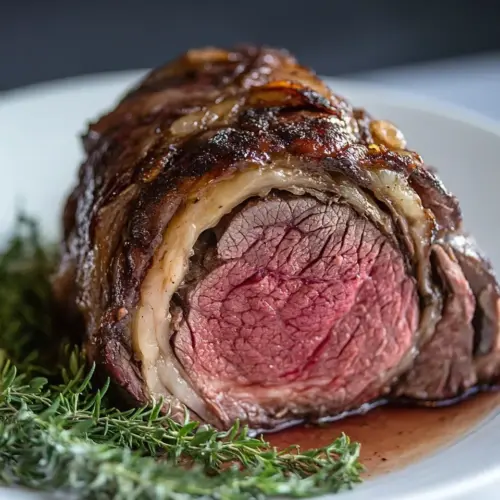
Garlic Butter Prime Rib
Garlic Butter Prime Rib is an indulgent roast with a rich, herb infused crust and tender, juicy interior. This show stopping dish combines savory butter, aromatic garlic, and fresh herbs for an easy weeknight or special occasion dinner that impresses without fuss. Make it for winter gatherings or a celebratory meal for reliably delicious results.
Equipment
- Roasting Pan
- Instant read thermometer
- Mixing Bowl
- Sharp Knife
- Cutting Board
Ingredients
- 15 -pound Bone-In Prime Rib Roast Provide rich, juicy flavor and substantial roasting mass for serving a crowd; bone-in format helps retain moisture and adds depth to the roast. Pat dry before seasoning to achieve a better crust and allow adequate resting time after cooking for even juices.
- 1 cup unsalted butter Add creamy richness and help create a flavorful herb-infused butter crust that bastes the roast while it cooks. Soften at room temperature for easy mixing with herbs and garlic, then spread or spoon over the meat to enhance tenderness and mouthfeel.
- 5 cloves garlic minced Provide pungent, aromatic bite and infuse the butter mixture with savory garlicky notes that permeate the roast surface. Mince finely to distribute evenly and press into the fat and meat to flavor both the crust and underlying layers during roasting.
- 1 teaspoon garlic powder Contribute concentrated roasted garlic flavor and deepen the savory profile without adding moisture; helps round out the fresh garlic. Sprinkle lightly and evenly to avoid overpowering the dish, particularly when combined with fresh herbs and butter.
- 1/2 tsp black pepper Add sharp, warming heat and help balance the richness of butter and beef; coarser grind can provide pleasant peppery pops. Season to taste and use sparingly across the roast surface to enhance overall flavor complexity.
- 1 tbsp fresh rosemary chopped Bring resinous, piney aromatics that pair naturally with beef and butter; chopped form releases oils into the butter for an herby crust. Mix into the softened butter so the rosemary evenly infuses the roast during cooking and resting.
- 1 tbsp fresh thyme chopped Introduce bright, lemony, slightly floral notes that lift the dish and complement rosemary and garlic; chopping releases fragrant essential oils. Combine thoroughly with butter to ensure thyme flavors are distributed across the roast surface.
- 1 tbsp sea salt Provide essential salting to enhance natural beef flavors and help form a savory crust when combined with the butter and herbs. Use even coating and allow time before roasting for the salt to season the meat through the surface for best flavor.
Instructions
- Preheat the oven to 500 degrees Fahrenheit.: The kitchen will fill with warm, dry air as the oven charges up, which is ideal for forming a deeply browned crust quickly. You want the oven to be fully heated to ensure an immediate sear on the surface of the roast, which locks in juices. A common mistake is placing the roast in before the oven is truly hot, which yields a less pronounced crust. If your oven runs hot or cool, use an oven thermometer to verify the temperature, and allow a few extra minutes for recovery after opening the door.
- Use paper towels to pat any excess moisture off of the prime rib and transfer it to a large roasting pan or baking dish.: Drying the surface ensures the butter and herbs will adhere and encourages browning rather than steaming. You should feel the meat surface become tacky after drying, and any dampness left will slow crust development. One pitfall is skipping this step, which can lead to a wet exterior and a muted crust. Also, avoid overcrowding the pan so hot air can circulate around the roast.
- Combine the softened butter, minced garlic, garlic powder, and fresh herbs in a small bowl and stir well until combined.: At this stage the mixture should smell intensely of garlic and herbs, and the butter should be silky and spreadable. Mixing by hand helps you sense the texture, ensuring no large herb stems remain. If you overwork the mixture it can become overly soft, making it harder to build an even paste on the roast. Taste a tiny bit to check balance, but be cautious with raw garlic on the tongue.
- Rub the garlic butter mixture over the entire prime rib. Stand the prime rib upright so that the fat cap is pointing up.: The tactile act of massaging the paste into the meat helps it find every contour, and you should see herb flecks cling to the surface. Positioning the fat cap up allows the melting butter and internal fat to baste the roast as it cooks, producing a juicy interior and rich mouthfeel. A mistake here is applying too little paste, which limits crust flavor, or pressing the mixture too hard so it falls off. Ensure an even, generous coating for consistent results.
- Roast at 500 degrees for 5 minutes per pound. For a 5-pound prime rib, this will take 25 minutes.: During this initial high heat period you will notice sizzling and the edges beginning to brown, releasing a deep savory aroma. This quick, hot burst forms the outer caramelized layer that contrasts with the tender center. Avoid extending this high heat stage past the recommended time, because the outer portion can overcook and become tough. Use visual cues, the crust should be a deep golden to brown color, not burnt.
- Open the oven door to let out some heat and lower the oven temperature to 300 degrees F.: Allowing the oven to stabilize prevents a sudden temperature spike on the meat that could unevenly cook the exterior. You will feel a change in oven atmosphere when you open the door, and the roast will stop the intense browning process. A common error is closing the door immediately and not waiting for the oven to steady at the lower setting, which can lengthen or skew cooking times.
- Continue baking until the internal temperature reaches 120 to 125 degrees F for rare, 130 to 135 degrees F for medium-rare, or 138 to 140 degrees F for medium. For a 5-pound prime rib, this will require just under two hours of roasting for medium-rare prime rib.: I listen for the quiet ticking of the oven fan and check the roast's surface for even browning while the interior slowly climbs in temperature. The gradual cooking mellows connective tissue and renders fat, producing silky tenderness. Avoid relying on time alone, because oven performance and roast shape vary; instead, use an instant read thermometer and aim for the lower end of the target temperature since the roast will continue to rise while resting.
- To check the temperature of the meat, insert an instant read thermometer into the thickest part of the roast and wait until the numbers stop moving to get an accurate read.: The thermometer will provide a stable reading after a few seconds, and you will notice the digits settle once thermal equilibrium is reached. This method is far more reliable than probing by feel. A typical misstep is inserting the probe near a bone or into a fatty pocket, which yields misleadingly high or low results. Always aim for the center mass of the meat, away from bones.
- Once the meat has reached your desired level of doneness, pull it out of the oven and let the meat rest for at least 15 minutes. As the prime rib rests, you can prepare an au jus or gravy from the drippings in the bottom of the roasting pan.: Resting allows juices to redistribute, so when you slice the roast they will stay within the fibers rather than spilling onto the cutting board. You will see the surface relax and the aromas intensify as the roast cools slightly. One trap is slicing too soon, which causes loss of juices and a drier result. Use the resting time to skim fat from the drippings if you plan to make a sauce.
- Transfer the meat to a cutting board and use a sharp knife to slice it into steaks. If you have a bone-in rib roast, slice the ribs off of the roast prior to cutting it into steaks.: The act of slicing should reveal a tender, rosy interior with a savory crust. A sharp knife gives clean cuts and preserves juices, while a sawing motion can tear the grain. A mistake is using a dull blade, which results in ragged edges and lost juices. If bone removal is needed, cut along the natural seam and then proceed to portion the boneless sections.
- Serve prime rib with your favorite side dishes, and enjoy!: This final moment is celebratory, with the rich scent of roasted beef and herbs filling the table. When plated, the slices show their marbling and the herb crust, inviting eager forks. Avoid keeping the roast under heat lamps for extended periods, because they can dry the slices. Instead, serve shortly after resting for the best texture and flavor.
Notes
- Butter selection matters: I prefer a high quality grass fed or European style butter because it has a richer flavor and better mouthfeel, which shows up in the finished crust.
- Herb flexibility: You can swap or add herbs to the paste, but keep quantities balanced so the herb oils do not overpower the natural beef flavor.
- Dry brine option: If you dry brine the roast a day ahead, it will intensify flavor and help form an even crust without needing extra salt in the herb butter.
- Storage: Store leftovers in an airtight container in the refrigerator for up to 5 days, sliced or whole, to preserve juiciness and flavor.
- Thermometer tip: The most reliable way to hit the correct doneness is to use an instant read thermometer and remove the roast slightly under your target, allowing carry over to finish it.