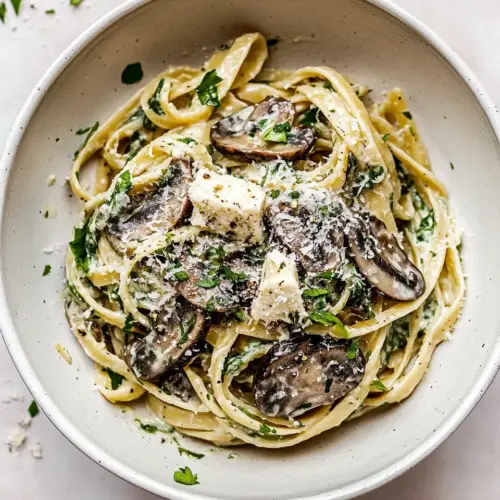
Garlic Butter Mushroom and Goat Cheese Fettuccine
Garlic Butter Mushroom and Goat Cheese Fettuccine is a creamy, savory pasta with earthy mushrooms and tangy goat cheese, perfect for an easy weeknight dinner. The garlic butter sauce and reserved pasta water create a silky coating that clings to wide fettuccine, while fresh herbs and lemon brighten the flavors. Quick to make and crowd pleasing, this dish is a cozy choice worth trying tonight.
Equipment
- Large Pot
- Large Skillet
- Colander
Ingredients
- 4 tablespoons butter Melted to create a rich, silky base for the sauce and to help brown mushrooms evenly; contributes savory flavor and mouthfeel while carrying aromatics through the dish. Use clarified or whole butter depending on desired richness and watch heat to prevent burning.
- 6 cloves garlic Minced finely to infuse the butter with pungent, aromatic flavor and provide a savory backbone; releases oils when gently cooked to perfume the entire pasta. Add toward the end of sautéing to avoid bitterness from overcooking.
- 1 teaspoon crushed red pepper flakes Sprinkled sparingly to introduce gentle heat and a subtle smoky kick that complements the richness of butter and goat cheese; helps balance creaminess with a lingering warmth. Adjust amount to taste for desired spice level.
- 1/4 cup chopped fresh herbs I used oregano, basil, and cilantro Chopped to provide bright, fresh herbal notes and lift the dish with complexity; combination of oregano, basil, and cilantro adds earthiness, sweet anise, and citrusy freshness. Fold in near the end to retain fragrant color and aroma.
- 16 ounces cremini mushrooms sliced Sliced and sautéed to contribute meaty texture and umami depth; mushrooms absorb the garlic-butter flavors while releasing savory juices that form part of the sauce. Cook until golden to concentrate flavor and prevent sogginess.
- 1 bunch tuscan kale or baby spinach about 2 cups chopped Chopped and wilted into the pasta to add vibrant color, nutrients, and a slight bitter-green contrast to the creamy goat cheese; yields tender leaves that meld with the sauce. Choose kale for heartiness or spinach for a delicate finish and adjust cooking time accordingly.
- kosher salt and pepper Added cautiously to season and enhance all flavors, with salt drawing out moisture from mushrooms and pepper providing aromatic bite; used to taste during cooking and after plating for balance. Use kosher salt for controlled salting and freshly ground pepper for best flavor.
- 3/4 pound fettuccine Cooked until al dente to serve as the starchy vehicle for the sauce and to provide satisfying chew; fettuccine's wide ribbons hold creamy goat cheese and mushroom pieces well. Reserve some pasta water to loosen and emulsify the sauce if needed.
- 6 ounces goat cheese Crumbling into the warm pasta to create a tangy, creamy sauce that contrasts the richness of butter and earthy mushrooms; goat cheese melts into a lusciously smooth coating. Add gradually and whisk with pasta water to achieve desired creaminess.
- fresh chopped basil and lemon for serving Garnished chopped basil and squeezed lemon to finish with bright, herbaceous aroma and a zesty acid lift that cuts through richness; basil adds fresh herbal perfume while lemon offers citrus brightness. Scatter just before serving for peak freshness.
Instructions
- Bring a large pot of salted water to a boil. Boil the pasta according to package directions until al dente. Just before draining, reserve 2 cups of the pasta cooking water. Drain.: The kitchen fills with a warm starchy steam that hints at comfort ahead, and the sound of rolling boil signals readiness. Salting the water is non negotiable, because it seasons the fettuccine from the inside out, making the pasta itself flavorful rather than relying only on the sauce. When you test for doneness, look for a tender center that still has a hint of firmness, and when you lift a strand it should hold its shape without collapsing. Reserving from the pot feels counterintuitive, but that starchy water is the glue that turns melted goat cheese and butter into a glossy emulsion. A common mistake is draining all the water, leaving you with a lumpy, dry sauce; keep at least some on hand to adjust the texture.
- Meanwhile, heat a large skillet over medium heat. Add the butter, garlic and crushed red pepper and cook, stirring often until the garlic is fragrant and beginning to caramelize, be careful not to burn the garlic. Add the herbs, mushrooms and kale, season with salt and pepper. Cook until the mushrooms are tender, about 5 minutes.: As the butter melts it foams and becomes a golden pool that carries the flavors, and the aroma of sizzling garlic should bloom quickly and intoxicatingly. Stirring often ensures the garlic softens evenly and gently caramelizes, which brings out its natural sweetness and reduces sharpness. The crushed red pepper should bloom in the warm fat, dispersing a subtle heat that you can feel on the back of your throat rather than overpowering the palate. Watch the pan closely, because burnt garlic will impart an acrid taste and cannot be rescued; if you see dark flecks, start over or remove them immediately.
- When the pasta is ready, add it to the skillet along with the goat cheese and 1/2 cup of the reserved pasta cooking water. Toss well to combine, adding more pasta water if needed to thin the sauce. Remove from the heat and finish with a sprinkle of fresh basil and a squeeze of lemon. Enjoy!: The skillet transitions from fragrant to richly savory as the mushrooms release their moisture and begin to brown at the edges, producing a deeper, nutty aroma. The fresh herbs wilt slightly, releasing green notes that balance the umami, while the chopped kale softens and takes on a vibrant color. Use medium heat so the mushrooms can develop caramelized spots rather than briskly steaming, which would mute their flavor. Listen for gentle sizzling and keep turning the ingredients so they color evenly. A typical misstep is overcrowding the pan, which prevents browning and leaves the mushrooms limp and pale; if necessary, cook them in batches for the best texture.
- When the pasta is ready, add it to the skillet along with the goat cheese and 1/2 cup of the reserved pasta cooking water.: At this moment the kitchen hums with anticipation as hot fettuccine meets the skillet's savory mixture. The heat and a small splash of starchy water coax the crumbled goat cheese into creamy ribbons that cling to the noodles, forming a sauce that glistens. Tossing vigorously helps the sauce emulsify, coating each strand so the flavors distribute evenly. If the sauce seems thick or clumpy, add more reserved water a little at a time until you reach a glossy, silky consistency. A common error is adding too much water at once, which dilutes flavor, so go slowly and adjust until it feels balanced.
- Toss well to combine, adding more pasta water if needed to thin the sauce. Remove from the heat and finish with a sprinkle of fresh basil and a squeeze of lemon. Enjoy!: The final toss should create a harmonious union where the sauce clings to the fettuccine , flecks of herb scatter through, and the goat cheese appears as creamy pockets. The scent should be layered, with buttery warmth, garlic perfume, and an herbaceous bright top note from the basil and lemon. Taste and correct for seasoning with a pinch of kosher salt and pepper if needed. Serve immediately, because the texture is best right after assembly; leaving it too long can cause the pasta to absorb the sauce and dry out. Avoid reheating aggressively, which can break the emulsion and make the sauce separate.
Notes
- Swap greens for texture Use baby spinach if you prefer a silkier finish and quicker wilt time, or stick with tuscan kale for a chewier, heartier bite that stands up to the sauce.
- Adjust heat level Tame the spice by reducing the crushed red pepper flakes, or increase by adding a touch more to the sauté so the heat blooms in the butter and garlic.
- Herb mix matters Change the herb combination to suit your pantry; oregano gives earthiness, basil adds perfume, and cilantro brings a bright, slightly citrusy edge which complements the lemon finish.
- Control sauce thickness Use the reserved pasta water incrementally to reach a glossy, clingy sauce; add a tablespoon at a time until the texture feels smooth and coats the fettuccine.
- Presentation tip Save a few whole slices of sautéed mushroom to arrange on top of each plate for an attractive, restaurant style finish.
- Make ahead strategy Cook the components separately and store them chilled; gently rewarm the mushrooms and greens in a skillet with a splash of reserved pasta water before tossing with freshly cooked fettuccine and goat cheese.