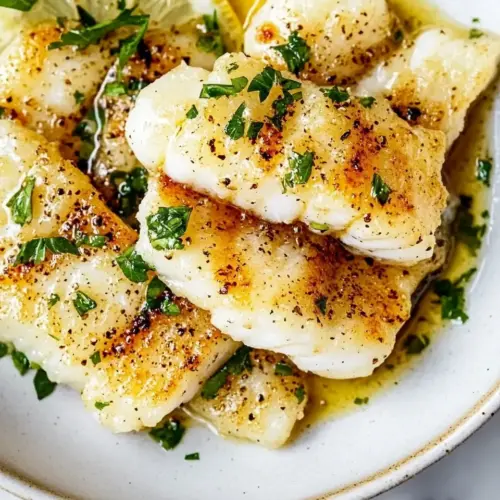
Garlic Butter Fish
Garlic Butter Fish is a crispy, flavorful weeknight favorite that combines golden pan fried firm white fish with a warm, aromatic garlic butter sauce. This easy weeknight dinner delivers a balance of rich butter, bright lemon, and a subtle spicy kick, perfect for quick meals or small gatherings. Make it for a fast, restaurant style plate that always impresses.
Equipment
- Skillet
- Tongs
- Wooden spatula
- Paper towels
Ingredients
- 12 oz . (350 g) firm white fish fillet, halibut, cod or pollock fillet Provide a firm, flaky texture and mild flavor as the main protein; choose halibut, cod, or pollock fillets for even cooking and a tender bite. Pat dry before seasoning to ensure a crisp exterior when pan-fried. Cut into portions if needed to ensure uniform thickness and cooking time.
- salt Enhance overall flavor balance and help season the fish evenly; sprinkle to taste before and after cooking to build layers of seasoning. Use cautiously to avoid over-salting, especially since salted butter is included in the recipe.
- ground black pepper Add warm, earthy heat and depth to the seasoning; grind fresh black pepper over the fish to complement other spices. Adjust coarseness to preference, keeping it subtle to let the fish and butter shine.
- 3 dashes cayenne pepper Introduce bright, sharp heat to lift the dish; add three dashes for a gentle kick without overpowering the buttery sauce. Use sparingly and taste as you go to maintain balance with the lemon and garlic.
- 2 tablespoons cornstarch Create a light, crispy coating and help the seasoning adhere to the fish; dust the fillet evenly with cornstarch before frying. Use a thin, uniform layer to promote a golden crust while keeping the interior moist.
- 2 tablespoons cooking oil Provide the medium for frying and create a crisp exterior on the fish; choose an oil with a high smoke point and heat it until shimmering. Control oil temperature to avoid sogginess and ensure even browning on each side.
- lemon wedges Brighten and cut through the richness with acidity; serve wedges alongside the finished fish for squeezing over just before eating. Offer fresh lemon to let diners adjust acidity to taste and enhance the garlic-butter flavors.
- 1/2 stick salted butter, 4 tablespoons, melted Contribute rich, savory mouthfeel and form the base of the sauce; melt salted butter to combine with garlic for a glossy, flavorful finish. Be mindful of additional salt when using salted butter and adjust seasoning accordingly.
- 3 cloves garlic, minced Provide aromatic, pungent flavor that infuses the butter; mince garlic finely so it cooks quickly and releases its aroma without burning. Sauté briefly in melted butter until fragrant to avoid bitterness and to layer flavor into the sauce.
- 1/2 tablespoon lemon juice Add bright acidity and fresh citrus note to the butter sauce; stir in half a tablespoon of lemon juice to balance richness. Add at the end of cooking to preserve its fresh, tangy character and prevent bitterness.
- 1 tablespoon chopped parsley Offer a fresh, herbaceous finish and visual contrast when sprinkled over the fish; chop parsley finely for even distribution. Add just before serving to retain color and a clean, herbal flavor that complements the garlic butter.
Instructions
- Cut the fish into pieces, not too thin, for easy pan-frying. Season the fish with salt, black pepper, and cayenne pepper. Coat the fish with cornstarch. Set aside.: You will notice a faint whisper of the sea from the raw fish , and once seasoned the surface smells savory and slightly spicy from the cayenne pepper . The tactile step of dusting with cornstarch should leave a light, even veil on the flesh, which when heated will puff and seize into a crisp crust. This tactile coating is critical because it prevents the fish from sticking and seals surface moisture, preserving a tender interior. A common mistake is overcoating, which can make the crust gummy instead of crisp. Work with gentle taps to remove excess starch so you get a thin, even layer.
- Prepare the garlic butter sauce by mixing all the ingredients together. Set aside.: When you combine melted butter , minced garlic , lemon juice , and chopped parsley , the scent should be bright and herbaceous with a warm nutty undertone from the butter. Mixing ahead lets the flavors meld slightly and keeps you from overcooking the garlic while frying. This step matters because adding a ready sauce at the end allows the hot pan fried crust to take on flavor immediately without prolonged heat. Avoid leaving minced garlic sitting in very hot butter for too long, as it will turn bitter if it burns.
- Heat a skillet (preferably non-stick) over medium heat. Add the cooking oil, and once the oil is heated, pan-fry the fish in a single layer until both sides are crispy and golden brown.: You will hear a lively sizzle as the pieces hit the skillet, and a golden rim will appear within a few minutes along the edges. The oil serves to transfer heat evenly so the cornstarch seals quickly into a crunchy shell. Visual cues are key here; look for a uniform golden brown and a consistent sizzle. If the pan smokes excessively, reduce the heat a touch. A common error is crowding the pan, which drops the temperature and leads to steaming instead of crisping, so give each piece space.
- Use a wooden spatula or tongs to gently flip the fish over. Try not to break the fish.: The sound of the flip is a softer sizzle as the second side meets the oil. Gentle handling preserves the flake structure of the interior while allowing the crust to finish crisping. Use a wide spatula or a pair of tongs and support the fillet when turning to avoid tearing. This technique matters because rough flipping can ruin the presentation and release juices that you want to keep inside. A frequent mistake is rushing the flip too early, which can cause sticking; wait until the edge lifts easily from the pan.
- Remove the fish from the skillet and drain on paper towels. Toss the fish with the garlic butter sauce and serve immediately with lemon wedges.: After transferring to paper towels, you will notice a satisfying contrast between the steamy, tender interior and the now slightly glossy, butter kissed crust. Draining removes excess oil so the sauce adheres better and does not get diluted. When you toss the warm pieces with the prepared garlic butter sauce, the aroma deepens and the sauce glazes the surface, creating a shiny, flavorful coating. Finish with a squeeze of lemon to add zing and a shower of chopped parsley for color. A common oversight is letting the fish sit too long before saucing, which cools the crust and prevents the sauce from melting into the surface properly.
Notes
- Swap the fish Replace the named firm white fish with other firm varieties you trust, keeping the method identical for consistent results.
- Adjust the heat Increase or decrease the cayenne to match your spice tolerance, tasting the balance against the butter and lemon.
- Double the sauce Make extra garlic butter and warm it gently to serve on the side for bolder coating and dipping preferences.
- Use unsalted butter If you prefer precise salt control, use unsalted butter and season the sauce to taste just before serving.
- Change the herb Swap parsley for another fresh herb you like, keeping the same amount to preserve brightness and color.