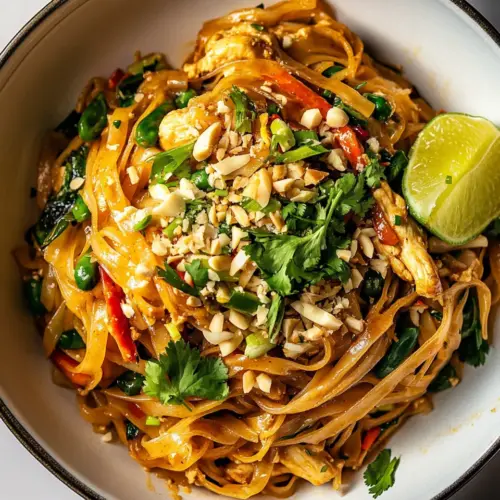
Garlic Butter Chicken Pad Thai
Garlic Butter Chicken Pad Thai is a creamy, savory and slightly sweet one pan dinner that comes together quickly. The rich butter and aromatic garlic meld with tamari, maple, and fish sauce for big flavor, while ground chicken and rice noodles keep it light. Perfect for an easy weeknight dinner that still feels special, it brings restaurant taste to your table without fuss.
Equipment
- Large Skillet
- Mixing Bowl
- Spatula
Ingredients
- 6 ounces Pad Thai/wide rice noodles Soak and soften to provide the chewy noodle base that absorbs the sauce and anchors the dish; cook according to package instructions until tender yet firm and toss with sauce immediately to prevent sticking.
- 1/3 cup tamari or soy sauce Season and deepen the umami profile by adding a salty, savory backbone; mix into the sauce mixture to balance sweet and acidic elements and coat noodles evenly for flavor distribution.
- 3 tablespoons real maple syrup Sweeten and glaze the sauce while contributing a subtle caramel note that balances salty and tangy components; stir into the sauce and adjust amount to taste for desired sweetness.
- 2 tablespoons fish sauce Enhance savory complexity with concentrated seafood umami and a subtle briny tang; add sparingly to the sauce and taste as it intensifies other flavors quickly.
- 2 tablespoons rice vinegar Brighten and lift the overall flavor with gentle acidity that cuts richness and rounds the sauce; whisk into the sauce to provide balance and prevent heaviness.
- black pepper and chili flakes, to taste Season and add heat as desired to personalize the spice level; sprinkle in small amounts while tasting, remembering that flakes and black pepper intensify when cooked.
- 3 tablespoons sesame oil (or olive oil) Sauté and infuse a toasty, fragrant fat that aids in cooking the chicken and aromatics while contributing a subtle nutty flavor; heat gently to release aroma before adding other ingredients.
- 3/4 pound ground chicken Brown and provide lean protein and savory texture that soaks up surrounding flavors; crumble and cook until no longer pink, then combine with sauce and other components.
- 1 red bell pepper, thinly slice Add color, crispness, and mild sweetness for contrast against tender noodles and savory sauce; slice thin and sauté briefly to maintain a slight crunch and fresh flavor.
- 3 tablespoons salted butter Enrich and melt into the sauce to create a silky mouthfeel and buttery richness that complements garlic and noodles; add near the end to finish the sauce and coat ingredients.
- 1 shallot, sliced Caramelize and impart mild onion sweetness while building flavor layers; slice thin and sauté until softened to release natural sugars and balance savory elements.
- 4 -6 cloves garlic, chopped Aromatize and flavor deeply with pungent, garlicky sharpness that becomes mellow and fragrant when cooked; chop and sauté early to infuse oil and sauce with robust aroma.
- 2 -3 eggs, beaten Bind and enrich while adding a tender, custardy texture when scrambled into the pan; beat and cook briefly to incorporate into noodles and provide additional protein.
- 2 cups mung bean sprouts Crunch and freshen the dish with a clean, slightly nutty bite that contrasts cooked textures; toss in at the end to preserve crispness and add lightness.
- 1/2 cup chopped cilantro or Thai basil Brighten and add herbal freshness with bright, citrusy notes that cut richness; chop and sprinkle on top or fold in for aromatic lift and color contrast.
- 4 green onions, chopped Garnish and provide sharp, oniony flavor along with a crisp texture that complements softer components; chop and scatter over the finished dish for freshness.
- 1/3 cup roasted peanuts, chopped Crunch and add a salty, nutty finish that complements the sauce and provides textural contrast; chop coarsely and sprinkle as a final garnish for crunch and flavor.
Instructions
- Soak the rice noodles according to packaged directions. Drain. To make the sauce, in a bowl, combine the tamari/soy sauce, maple syrup, fish sauce, rice vinegar, black pepper, and chili flakes. Add the oil, chicken, and red bell pepper to a large skillet set over medium heat. Cook until the chicken is browned all over, about 5 minutes. Add the butter, shallot, garlic, and a pinch of chili flakes and black pepper. Continue to cook the chicken in the butter until the garlic begins to turn golden, 1-2 minutes. Add the noodles and sauce, tossing to combine. Cook until the noodles are warmed through and begin soaking up the sauce, about 1 minute. Push the noodles to one side of the skillet and add the eggs to the other side. Let cook until the edges start to set, 1 minute. Roughly scramble the egg, then toss it with the noodles. Remove from the heat. Add the bean sprouts, cilantro, and green onions, and toss again. Serve warm noodles topped with basil, green onions, peanuts, and chili flakes. Add a squeeze of lime juice.: The moment you add the drained noodles to the hot skillet you will notice a slippery sheen as they rewarm, and they should be pliable but still hold shape. Proper soaking prevents them from turning to glue when tossed. If they feel brittle, they need a touch more time in warm water. A common error is over soaking, which leaves you with limp noodles that fall apart during tossing.
- To make the sauce, in a bowl, combine the tamari/soy sauce, maple syrup, fish sauce, rice vinegar, black pepper, and chili flakes.: You will smell bright, salty, and sweet notes coming together, a concentrated aroma that promises complexity. Mixing ahead ensures even seasoning when it hits the pan. Taste once, because the balance of salty and sweet is personal. Avoid dumping everything without tasting first, since an overly salty sauce is hard to correct later.
- Add the oil, chicken, and red bell pepper to a large skillet set over medium heat.: As the skillet heats, the oil becomes glossy and fragrant, and the ground chicken will start to sizzle as it touches the surface. The bell pepper will give out a sweet scent and begin softening around the edges. Crowding the pan can steam the meat, so use a roomy skillet for proper browning.
- Cook until the chicken is browned all over, about 5 minutes.: Browning yields savory Maillard notes, you should see small browned bits and hear steady sizzling. Those browned bits carry flavor into the sauce. If the skillet is too cool you will have pale, steamed meat instead of depth, so increase heat slightly if no browning occurs after a few minutes.
- Add the butter, shallot, garlic, and a pinch of chili flakes and black pepper.: The butter will foam and the garlic aroma will quickly intensify, creating a sweet and nutty smell. The shallot will become translucent and slightly caramelized. Watch closely because garlic can go from golden to bitter in an instant; remove from heat momentarily if it seems to be darkening too fast.
- Continue to cook the chicken in the butter until the garlic begins to turn golden, 1 to 2 minutes.: You will notice a gentle popping sound and a warm, buttery scent that carries the spices across the pan. This step layers flavor into the meat and ensures the aromatics are mellow. Overcooking leads to dry meat and bitter garlic, so keep the movement steady and the timing short.
- Add the noodles and sauce, tossing to combine.: When the sauce hits the warm skillet it should steam and sizzle, coating the noodles in a glossy sheen. Tossing helps the noodles pick up sauce evenly. If the pan seems dry, add a splash of reserved noodle soaking water to loosen the sauce. A common slip is adding too much water, which dilutes flavor, so add sparingly.
- Cook until the noodles are warmed through and begin soaking up the sauce, about 1 minute.: You will see the sauce reduce slightly and cling to each noodle strand, the aroma will deepen and the pan will look glossy rather than watery. This quick finish ensures the noodles are flavorful without becoming mushy. Letting them sit too long in liquid will result in overly soft noodles, so work briskly.
- Push the noodles to one side of the skillet and add the eggs to the other side.: The skillet will hiss as the eggs hit the hot surface, and within seconds the edges will set and bubble. Creating a separate space for the eggs lets you control their texture before combining. A mistake is stirring them immediately, which prevents pockets of soft scrambled egg from forming.
- Let cook until the edges start to set, 1 minute.: You should see the egg surface firm slightly while the center remains tender, and the smell of cooked egg will be mild and savory. This timing yields custardy bits that contrast the noodles. Overcooking here produces dry, rubbery egg pieces, so fold them into the noodles once they are still slightly soft.
- Roughly scramble the egg, then toss it with the noodles.: The sound of gentle tearing and the sight of ribbons of yellow combining with the noodles is satisfying, and the eggs add silkiness and body. Toss until evenly distributed so every bite has a bit of egg. If the mixture cools too much before tossing, the egg may clump, so keep the pan hot but not scorching.
- Remove from the heat.: Carrying the pan off the burner preserves vibrancy and prevents overcooking as residual heat continues to work. The colors should remain bright and the sauce glossy. Leaving it on high will dry out the noodles and make the dish heavier than intended.
- Add the bean sprouts, cilantro, and green onions, and toss again.: The fresh aromatics release a green, herbaceous scent while the bean sprouts retain their crisp snap. Tossing now integrates heat and texture without wilting everything. Add these last to prevent lost crunch and to maintain bright flavors; adding them too early will make them soggy.
- Serve warm noodles topped with basil, green onions, peanuts, and chili flakes.: The final assembly offers visual contrast and a burst of crunch from the chopped peanuts . The toasted nutty scent and herb aroma should be immediate at the table. A squeeze of lime juice, if available, wakes the whole plate. Serving too slowly cools the sauce and dampens texture, so plate and serve promptly.
- Add a squeeze of lime juice.: A brief citrus spritz cuts through the richness and brightens the overall flavor profile, giving each bite lift and balance. Do this at the very end so the acidity remains fresh. Avoid squirting too much, as excess acid will overpower the carefully balanced sauce.
Notes
- Swap oils: If you do not have sesame oil, use olive oil for a neutral base; sesame oil gives a nuttier aroma, so add it at the end if you want that hint without overpowering the dish.
- Herb choice: Choose chopped cilantro for a citrusy lift or Thai basil for an anise like note, and add it just before serving to preserve freshness.
- Heat level: Control spice by adjusting chili flakes, adding them to taste while cooking so the heat integrates rather than sitting on top of the sauce.
- Peanut alternative: If nuts are an issue, toasted sunflower seeds provide crunch and toasty flavor, though the profile will change slightly.
- Noodle timing: Soak noodles to tender but firm, they will finish in the pan and absorb sauce without becoming mushy if pre soaked correctly.
- Egg texture: For silkier eggs, cook them low and slow in a corner of the pan and fold them gently; for firmer egg pieces, let them set more before scrambling.