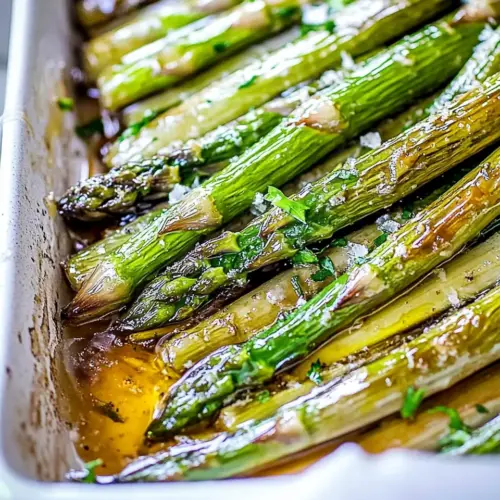
Garlic Browned Butter Asparagus
Garlic Browned Butter Asparagus is a quick and elegant side with nutty browned butter, bright lemon, and garlicky aroma. This easy weeknight side delivers crisp roasted asparagus, a silky sauce, and a sprinkle of fresh parmesan cheese, perfect for simple dinners or holiday tables. Make it for a fast, flavorful vegetable that elevates any meal.
Equipment
- Oven
- Baking Sheet
- Small Saucepan
- Serving jug
Ingredients
- 1 pound asparagus spears woody ends trimmed Trimmed to remove tough ends and provide a tender, crisp texture when sautéed; carries the browned butter and garlic flavors throughout the dish. Offers a vibrant color and fresh, slightly grassy bite that balances rich components. Choose uniform spears for even cooking and pleasant presentation.
- 1 spray cooking oil Sprayed lightly to prevent sticking and promote even browning in the pan without adding extra oil; helps the asparagus sear rather than steam. Provides a convenient, low-fat way to coat the pan quickly and maintain the desired texture of the spears.
- 1 pinch salt to taste Pinned sparingly to enhance the natural flavors and balance the richness of browned butter; helps amplify savory notes without overpowering the delicate asparagus. Adjust to taste to avoid drawing out excess moisture during cooking.
- 1 pinch pepper to taste Sprinkled to introduce mild heat and complexity, complementing garlic and lemon; helps create a balanced flavor profile when used judiciously. Adds subtle warmth that contrasts the dish's fresh and buttery elements.
- 4 tablespoons butter Melted and browned to create nutty, caramelized flavors that deeply enrich the asparagus; forms the primary cooking fat and flavor base. Browning develops toasted milk solids that pair exceptionally well with garlic and lemon juice.
- 1 teaspoon garlic minced, not crushed Minced to release bright, aromatic compounds that infuse the butter and asparagus during cooking; adds pungent, savory depth without large raw pieces. Cooking gently with butter mellows sharpness while preserving fragrant garlic notes.
- 1 tablespoon lemon juice fresh squeezed Squeezed to add bright acidity that cuts through the richness of browned butter and parmesan; lifts and balances the overall flavor profile. Fresh juice provides a clean, citrusy finish that enhances the asparagus's natural taste.
- 2 tablespoons parmesan cheese freshly grated, to serve Grated finely to finish the dish with salty, nutty umami that complements browned butter and garlic; sprinkled to serve for an indulgent, savory touch. Freshly grated texture melts slightly on warm asparagus, enriching every bite.
Instructions
- Preheat oven to 425°F | 220°C.: When the oven reaches full temperature you will get fast, even roasting that preserves the bright green color of the asparagus . You want the oven hot enough so the tips roast quickly and the stalks become tender but not floppy. Listen for a faint hum as the oven cycles, and aim to place the baking sheet in the center rack for balanced heat. Common mistake to avoid at this stage is underestimating heat; a cooler oven will steam instead of roast, producing limp spears.
- Arrange asparagus in a single layer on a baking sheet (or tray). Spray with cooking oil spray; season with salt; and roast in preheated HOT oven until vibrant in colour and tender-crisp, (about 10 minutes).: A single layer ensures each stalk gets direct heat and becomes evenly roasted. Overcrowding will trap steam and prevent browning, so give the spears breathing space. The visual cue to watch for is slight charring on the tips or edges after roasting. A frequent error is piling the asparagus which leads to uneven cooking and soggy stems.
- While the asparagus is in the oven, heat a small saucepan / pot over medium heat. Add butter and cook, stirring constantly, until it melts, froths up and begins to turn golden in colour. Take off heat; add the garlic and stir quickly. Return to the heat for a further minute, while stirring, until the butter reaches a dark amber colour. Remove from heat; add lemon juice and stir to combine. Pour into a small serving jug.: As the asparagus roasts you will smell a vegetal sweetness rising and see the color deepen to an emerald hue, sometimes with tiny browned spots. The stems should be fork tender with a crunchy tip when done. If you prefer more char, leave them an extra minute or two, but watch closely as times vary by thickness. Avoid overcooking since too long in the oven will dull flavor and make the stalks limp.
- To serve, drizzle browned butter over asparagus and sprinkle with parmesan cheese.: Use moderate heat to give you control while the butter transitions from melted to browned. The pan surface should warm evenly without smoking. The sound shifts from quiet to a low sizzle as the water evaporates from the butter . A common slip is using too high heat, which risks burning the butter into a bitter black residue before you can capture the nutty aromas.
- Add butter and cook stirring constantly until it melts froths up and begins to turn golden in colour.: Focus on the sensory cues here; the butter will foam and then tiny brown specks will appear, releasing a toasted, nutty scent. Stirring keeps the milk solids moving so they brown evenly. Remove from the heat promptly when you see a golden amber tone, because carryover heat can push the butter from golden to burnt in seconds. The most common mistake is inattention during this stage, so stay present and watch the color change closely.
- Take off heat add the garlic and stir quickly.: Adding the minced garlic off heat allows it to warm in the residual heat of the browned butter without scorching. You will notice an immediate fragrant pop of aromatic oils. Be cautious, because adding garlic to too hot a pan can make it bitter; this quick off heat stir preserves a mellow, savory character.
- Return to the heat for a further minute while stirring until the butter reaches a dark amber colour.: Briefly returning to the flame deepens the butter color and integrates the garlic into the sauce. Keep the pan moving so the garlic softens and the milk solids toast without burning. The sound will be a soft sizzle and the aroma shifts to a richer, almost caramel like scent. A common mistake is leaving it unattended, which can quickly produce a bitter burned flavor.
- Remove from heat add lemon juice and stir to combine.: The bright tang of fresh lemon cuts through the richness, and you will see small ripples as the juice emulsifies into the warm butter . Smelling the mixture should reveal a pleasant balance of nutty and citrus notes. If the sauce tastes too heavy, an extra drop of lemon can lift it, but add cautiously to avoid overpowering the delicate asparagus .
- Pour into a small serving jug.: Transferring the sauce keeps it warm and makes it easy to drizzle precisely over the roasted asparagus . The butter should be glossy and fluid, coating the back of a spoon. If the butter cools and solidifies, you can briefly rewarm it gently, but do so carefully to avoid overcooking. One mistake is leaving the sauce in the hot pan where residual heat may continue to darken it.
- To serve drizzle browned butter over asparagus and sprinkle with parmesan cheese.: The visual finish should be glossy stalks with a light sheen of amber sauce and a scattering of freshly grated parmesan cheese . Taste one spear to check seasoning, adding an extra pinch of salt or pepper if needed. Serve immediately so the texture remains crisp and the parmesan cheese melts slightly into the warm sauce. A common error is waiting too long to serve, which causes the asparagus to lose its snap and the experience to flatten.
Notes
- Adjust roast time to control texture, roasting an extra minute or two will deepen char and soften the spears for a mellower bite.
- Use thicker asparagus if you prefer a meatier mouthfeel, they tolerate longer roasting without becoming overly limp.
- Increase lemon for a brighter, more acidic finish, adding a little at a time so it does not overpower the browned butter.
- Serve immediately to preserve the textural contrast; delayed serving will result in softer, less vibrant spears.
- Grate parmesan fresh for the best melting and flavor impact, store bought pre grated cheese lacks the same creamy finish.
- Control salt carefully because the final sprinkle of parmesan cheese contributes salty umami, so taste before adding more.