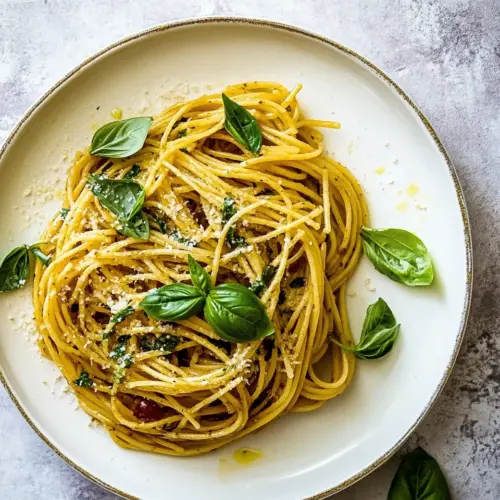
Garlic Basil Brown Butter Pasta
Garlic Basil Brown Butter Pasta is a creamy, nutty, and aromatic pasta that comes together quickly for an easy weeknight dinner. Toasted brown butter and freshly grated pecorino create a silky sauce that clings to bucatini, while bright cherry tomatoes and fragrant basil keep each bite lively. This simple recipe delivers restaurant flavor from pantry staples, perfect for busy evenings when you want something impressive to make.
Equipment
- Large Pot
- Colander
- Large Skillet
- Tongs
Ingredients
- 1 pound bucatini pasta Boil to al dente, providing the main body and texture for the dish that holds the sauce and captures flavors well.
- 6 tablespoons salted butter Brown gently until nutty aromas develop, contributing rich, toasty flavor and a silky mouthfeel that elevates the simple sauce.
- 2 -3 cloves garlic, minced or grated Sauté briefly to release pungent aroma and sharpness, lending bright savory notes that cut through the richness of the butter.
- 1 1/2 teaspoons freshly cracked black pepper Crack coarsely and toast lightly to add bold, aromatic heat and complexity, creating a peppery backbone that complements cheese and basil.
- 1/2 cup pecorino cheese, freshly grated Grate finely to add salty, tangy, umami richness, melting into the hot pasta to create a creamy, savory coating.
- 1 cup fresh basil, roughly chopped Roughly chop and toss through the finished pasta to add fresh, herbaceous brightness and a pop of green that balances richness.
- 2 cups cherry tomatoes, halved Halve and sauté or toss fresh to contribute juicy sweetness and slight acidity, brightening the dish and adding texture contrast.
- 2 tablespoons extra virgin olive oil Drizzle or use to sauté for a subtle fruity undertone and smooth mouthfeel, helping to carry flavors and prevent sticking.
- crushed red pepper flakes Sprinkle sparingly to introduce concentrated heat and a lingering spiciness that contrasts the butter and cheese.
- kosher salt Season to taste to enhance and balance all flavors, bringing out sweetness, saltiness, and overall depth in the final dish.
Instructions
- Bring a large pot of salted water to a boil and cook pasta according to package directions until al dente. Just before draining, reserve 1 cup of the pasta cooking water. Drain. Melt 4 tablespoons butter in a large skillet over medium heat. Add the garlic and pepper and cook 1-2 minutes, until the butter is browning and the garlic is golden and fragrant. Reduce the heat to low and add 1/2 cup pasta water, the pasta, remaining butter, and pecorino. Tossing until melted. Remove from the heat, add 3/4 cup basil and toss, adding in more pasta water if needed to thin the sauce. In a bowl, combine the tomatoes, remaining 1/4 cup basil, olive oil, red pepper flakes, and a pinch of salt. To serve, divide the pasta among bowls and serve topped with tomatoes. Eat and ENJOY.: You will notice the water roar as it reaches a rolling boil, and adding kosher salt intensifies the smell of the pasta as it cooks. The pot should be loud and lively, and the water will look slightly glossy from the salt. Cooking to al dente means the pasta still has a slight resistance when bitten, a firm center that offers a pleasant chew rather than collapsing. A common mistake is relying solely on the clock; instead check by tasting a piece a minute or two before the package time. If the pasta becomes soft and mushy, it will not hold the sauce well and the texture will be disappointing.
- Just before draining reserve 1 cup of the pasta cooking water: The starch rich water will appear slightly cloudy and feel silky when dipped with a spoon. This liquid is essential for loosening and binding the sauce, so scoop it out while the pot is still hot. Without reserving this water you risk a dry, clumpy finish where the grated pecorino cheese does not blend smoothly. Do not pour it down the sink until you are certain you have the right amount.
- Drain: The visual cue here is the water rushing away and the pasta settling back into the colander. Shake gently to remove excess water but do not let the pasta sit and cool, which causes the sauce not to adhere properly. A common oversight is rinsing the pasta, which washes away the starch that helps emulsify the sauce; avoid rinsing unless a cold pasta is specifically required.
- Melt 4 tablespoons butter in a large skillet over medium heat: As the butter melts it will foam and smell creamy. Keep the heat steady at medium so it transitions from golden to a deeper amber without burning. The bubbling sound will calm and the butter will start to release a rich, toasty fragrance as the milk solids brown. Turning the heat too high accelerates burning, creating acrid notes rather than the desirable nutty aroma.
- Add the garlic and pepper and cook 1 to 2 minutes, until the butter is browning and the garlic is golden and fragrant: The moment you add the minced garlic expect a burst of perfume as it sizzles, with tiny bubbles forming around each piece. Keep the garlic moving so it becomes golden rather than dark brown; golden indicates caramelized sweetness that complements the butter. Listen for a gentle sizzle and watch for tiny brown flecks developing in the butter, which signal proper browning. If you smell bitterness or see blackened bits, the garlic has burned and you should start over with fresh butter.
- Reduce the heat to low and add 1/2 cup pasta water, the pasta, remaining butter, and pecorino: When the pasta and reserved starchy water meet the warm browned butter you will see the sauce emulsify into a glossy coating. The addition of warm water helps dissolve the grated pecorino cheese and creates a silky texture that clings to each strand. Toss gently so the cheese melts evenly, and watch for a smooth, slightly thickened sauce that creams without breaking. Adding cold water or too much at once can thin the sauce and prevent the cheese from integrating properly.
- Tossing until melted: You will feel the resistance of the pasta soften as the cheese melds into the sauce, and the aroma will become rich and savory. Tossing evenly distributes the sauce and encourages the starches to create a cohesive finish. Use tongs or a pasta fork to lift and turn the strands so each bite is evenly coated. A typical error is stirring too aggressively or neglecting to toss thoroughly, leading to uneven pockets of sauce and dry sections.
- Remove from the heat, add 3/4 cup basil and toss, adding in more pasta water if needed to thin the sauce: Off the heat, the residual warmth will wilt the basil just enough to release fragrant oils without cooking them to dullness. The basil should look glossy and slightly limp, contributing freshness to the buttery base. If the sauce feels sticky rather than fluid, a splash of the reserved warm pasta water will loosen it to a velvety consistency. Avoid adding cold water which can shock the sauce and cause the cheese to seize up.
- In a bowl combine the tomatoes, remaining 1/4 cup basil, olive oil, red pepper flakes, and a pinch of salt: Tossing the halved cherry tomatoes with extra virgin olive oil and crushed red pepper flakes releases their juices and creates a bright counterpoint to the rich pasta. The mixture will glisten and smell bright and fruity, and resting it briefly helps meld flavors. Over seasoning with salt at this point can mask the sweet acidity of the tomatoes, so taste and adjust sparingly.
- To serve divide the pasta among bowls and serve topped with tomatoes: When plated, the warm pasta should steam gently and release an inviting scent of browned butter, garlic, and basil . Spoon the tomato mixture on top so the cool, acidic bursts sit alongside the warm, savory pasta, creating a pleasing contrast. Serve immediately to enjoy the combination of textures and temperatures; letting it sit will cause the tomatoes to soften and the pasta to absorb excess liquid, dulling the initial brightness.
- Eat and ENJOY: This is the moment to notice the symphony of flavors, from nutty brown butter to sharp pecorino cheese , peppery basil , and juicy cherry tomatoes . Savor each bite and consider how small adjustments could personalize it for next time. A common pitfall is reheating without adding a splash of warm pasta water, which can result in a drier texture, so always re loosen with liquid if keeping leftovers.
Notes
- Boost umami Add a squeeze of the starchy pasta water mixed with more grated pecorino cheese to deepen the savory finish and help the sauce cling.
- Increase brightness Fold in additional chopped basil off heat right before serving to heighten fresh herbal notes and make the dish feel lighter.
- Adjust heat Increase or decrease the crushed red pepper flakes in the tomato mix depending on how much zip you want in each bite.
- Texture play Lightly press some cherry tomatoes to release more juice if you prefer a saucier topping that merges into the pasta.
- Cheese swap Use a finely grated strong sheep milk pecorino cheese for a saltier, tangier profile, or reduce it slightly if you prefer subtler seasoning.
- Butter technique Brown the measured portion of butter slowly to develop deeper nutty flavors, stopping before it smokes to avoid bitterness.
- Herb timing Reserve a small amount of chopped basil for garnish to keep vivid color and fragrance on the plate.